
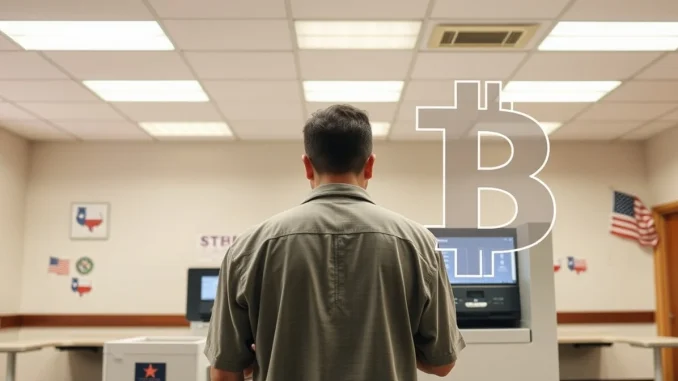
Today in crypto, industry political action committees have poured money into Texas congressional races set for run-off votes on Tuesday, a New York lawsuit seeking ownership of 39,069 dormant Bitcoin wallets raises questions over lost crypto, private keys and property law, and a new supply chain attack campaign is targeting crypto developers.
Crypto PAC money pours into Texas primary runoffs
Two Texas Congressional candidates supported by millions of dollars in spending from interest groups aligned with the cryptocurrency industry are headed for runoffs this week in races for the US Senate and House of Representatives. On Tuesday, Democratic voters in Texas’ 18th congressional district will decide between incumbent Al Green and challenger Christian Menefee to run in November’s general election. Statewide, voters will choose between Texas Attorney General Ken Paxton and incumbent John Cornyn for the Republican primary for US Senate. Both Tuesday races are runoffs after none of the candidates secured a majority in Texas’ March primaries.
Also read: Kraken to revamp app with AI assistant that recommends trades based on user goals
The crypto industry, through spending on media by political action committees (PACs), has stakes in both races, which could influence policy and the makeup of Congress going into 2027. As of Sunday, Protect Progress, affiliated with the Ripple- and Coinbase-backed Fairshake PAC, reported spending $5 million to support Menefee over Green. The PAC spent $2.8 million on ads opposing Green. Menefee also has the endorsement of the Blockchain Leadership Fund, a committee backed by Anchorage Digital and Chainlink Labs, though it had not reported any expenditures as of Monday.
These runoffs are a critical test of the crypto industry’s political influence. The outcome could shape future legislation on digital asset regulation, stablecoin oversight, and blockchain policy at the federal level.
Also read: New Hampshire rejects $100M Bitcoin bond plan; Circle wins national trust bank approval
New York lawsuit tests lost property claim over dormant Bitcoin
A New York lawsuit filed by Noah Doe and two Wyoming-based LLCs, ABC Company and XYZ Company, seeks a court order declaring ownership of 39,069 dormant Bitcoin addresses, raising important questions about the legal treatment of inactive Bitcoin under property laws. Filed on May 1, the suit claims that the coins tied to the listed addresses represent legally abandoned property they found and reported to the New York Police Department and claimed under New York lost-property law.
The plaintiffs claim that the dormant Bitcoin wallets were legally “abandoned” property that they found, including wallets belonging to early Bitcoin miners and addresses attributed to Bitcoin creator Satoshi Nakamoto, among other lost coins and unidentified entities. They argue that these constitute seizable property, akin to traditional bank accounts. The lawsuit raises important questions about the legal treatment of long-dormant Bitcoin wallets, including Satoshi-era tokens that have been inactive for over a decade.
While the legal basis of the lawsuit is questionable, it is unclear how the plaintiff could recover the lost Bitcoin without possessing the private keys to access the wallets. However, even if the court ruled in favor of the plaintiff, it would only be a symbolic move that is not technically enforceable, as the Bitcoin network has no mechanism to “reassign funds without a private key,” Noveleader, lead research analyst at investment research firm Castle Labs, told Cointelegraph, adding:
“The one narrow exception would be if any of these coins are moved to a regulated custodian or exchange, at which point a court could compel that intermediary to act.”
The research analyst argued that a significant portion of these coins may belong to deceased holders, those who lost their keys or simply to long-term holders who haven’t transacted, meaning that none of these instances constitute legal abandonment. The case highlights a fundamental tension between traditional property law and the immutable, permissionless nature of blockchain networks.
‘TrapDoor’ malware targets crypto devs in supply chain attack
The developer platform Socket reported on Sunday that a supply chain attack that it dubbed “TrapDoor” is targeting crypto and artificial intelligence developers in a bid to steal crypto, data or credentials. The campaign has deployed more than 34 malicious packages and 384 related versions, with attackers repeatedly pushing new releases across ecosystems. The malware targets crypto, decentralized finance, AI, and security developers, stealing wallet data, Secure Shell, or SSH keys, cloud credentials, GitHub tokens, browser extension data and API keys.
The malware also injects hidden instructions to hijack AI coding assistants such as Claude and Cursor. “The goal appears to be to trick AI assistants into running a ‘security scan’ or similar workflow that causes secret discovery and exfiltration,” Socket said. Crypto and AI developers have increasingly become targets as malicious actors have been loading poisoned packages into “app stores” for developers, knowing they will install them as part of their normal workflow, often without checking.
This attack vector is particularly dangerous because it exploits the trust developers place in package registries and automated tools. Developers are advised to verify package integrity, use dependency scanning tools, and be cautious of packages with unusual names or recent, rapid version releases.
Why this matters
These three stories illustrate the evolving space of the crypto industry in 2026. Political spending is becoming a primary tool for shaping regulation, legal challenges are testing the boundaries of blockchain property rights, and security threats are growing more sophisticated as the industry intersects with AI development. For investors, developers, and users, staying informed about these developments is essential for handling the risks and opportunities ahead.
FAQs
Q1: What is the significance of the Texas primary runoffs for crypto?
The runoffs will determine which candidates advance to the general election in November, potentially influencing the composition of Congress and future crypto regulation. Crypto PACs have spent millions to support candidates favorable to the industry.
Q2: Can a court actually force the transfer of dormant Bitcoin?
No. The Bitcoin network operates without a central authority, and no court order can compel the network to reassign funds without the corresponding private keys. Any court ruling would be symbolic and unenforceable unless the coins are held by a regulated intermediary.
Q3: How can developers protect themselves from supply chain attacks like ‘TrapDoor’?
Developers should use package integrity verification tools, audit dependencies regularly, avoid installing packages with suspicious or rapid release histories, and be cautious of automated workflows that execute code from untrusted sources.






Be the first to comment