
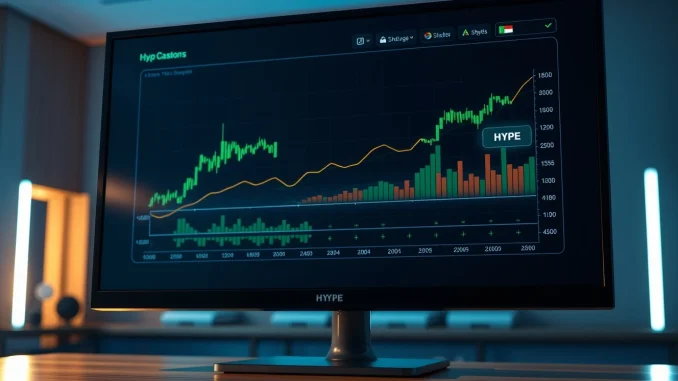
Hyperliquid (HYPE) has emerged as a notable player in the decentralized derivatives trading space, attracting attention with its high-performance Layer 1 blockchain and native token. As of early 2026, the token trades significantly below its all-time high, prompting investors to question whether the protocol’s fundamentals can drive a sustained recovery and a new peak in the coming years. This analysis examines the key factors that could influence HYPE’s price trajectory from 2026 through 2030.
Understanding Hyperliquid’s Market Position
Hyperliquid operates a purpose-built Layer 1 blockchain designed for low-latency, high-throughput trading. Its native token, HYPE, serves multiple roles within the ecosystem: it is used for transaction fees, staking, and governance. The platform has gained traction among professional traders due to its order book model and capital efficiency, which differentiate it from many automated market maker (AMM) based competitors.
Also read: Notcoin (NOT) Price Prediction 2026-2030: Can the Telegram Gaming Token Stage a Recovery?
The protocol’s total value locked (TVL) and daily trading volumes have shown periods of strong growth, particularly during bullish market cycles. However, like many crypto-native projects, Hyperliquid’s activity is highly correlated with broader market sentiment and the overall health of the decentralized finance (DeFi) sector.
Key Factors for HYPE Price Recovery
Tokenomics and Supply Dynamics
HYPE has a fixed maximum supply, with a portion allocated to team, early investors, and ecosystem development. Vesting schedules and unlock events have historically created selling pressure. As of 2026, a significant percentage of the initial allocations have been distributed, meaning future supply-side shocks may be less severe. The protocol also implements a buyback and burn mechanism using a portion of trading fees, which could reduce circulating supply over time if trading volume remains resilient.
Also read: Monero (XMR) Price Prediction 2026–2030: Can Privacy Coins Sustain Momentum?
Network Adoption and Revenue Generation
Hyperliquid generates revenue from trading fees, which are partially used to buy back HYPE. Sustained high trading volumes are essential for this mechanism to meaningfully reduce supply. The platform’s ability to attract and retain liquidity providers and traders will be a critical determinant of its long-term value. Competition from other derivatives protocols, such as dYdX and GMX, as well as centralized exchanges, remains intense.
Broader Market Conditions
The cryptocurrency market’s cyclical nature means that HYPE’s price is unlikely to decouple entirely from Bitcoin and Ethereum. A sustained bull market, driven by factors such as institutional adoption, regulatory clarity, or macroeconomic tailwinds, would provide a favorable environment for HYPE to challenge its previous highs. Conversely, a prolonged bear market could suppress prices regardless of project-specific developments.
Price Scenarios for 2026–2030
Bullish Scenario: If Hyperliquid continues to capture market share in the derivatives sector, with daily trading volumes exceeding $1 billion and TVL growing steadily, the buyback mechanism could significantly reduce circulating supply. Combined with a broader crypto bull run, HYPE could potentially surpass its previous all-time high within the 2027–2028 timeframe. Some analysts point to the possibility of a 3x–5x increase from current levels under optimal conditions.
Moderate Scenario: In a more conservative outlook, HYPE trades in a range, gradually recovering as the protocol matures but failing to reach new highs. This scenario assumes steady but unspectacular growth in trading volumes, with the token price appreciating in line with the broader market. A return to previous highs could occur by 2029 or 2030, but only if the project maintains its competitive edge.
Bearish Scenario: Should Hyperliquid face significant competition, technical issues, or a prolonged crypto winter, the token could struggle to regain momentum. In this case, HYPE might trade below its all-time high for an extended period, with price appreciation limited to single-digit percentages annually.
Conclusion
Hyperliquid’s fundamentals — including its specialized Layer 1 infrastructure, revenue-generating model, and fixed supply — provide a foundation for potential price appreciation. However, reaching a new all-time high is far from guaranteed. The outcome depends heavily on the protocol’s ability to sustain high trading volumes, the broader market cycle, and the project’s execution against competitors. Investors should weigh these factors carefully and consider the inherent volatility and risk associated with cryptocurrency markets.
FAQs
Q1: What is Hyperliquid (HYPE)?
Hyperliquid is a decentralized derivatives trading platform built on its own Layer 1 blockchain. The HYPE token is used for transaction fees, staking, and governance.
Q2: What was HYPE’s all-time high?
HYPE reached its all-time high in late 2024, shortly after its token generation event. The exact price fluctuates with market data, but it remains a key reference point for investors.
Q3: Can HYPE reach a new all-time high by 2030?
It is possible, but not guaranteed. A new ATH would likely require sustained high trading volumes, effective tokenomics, and a favorable macroeconomic environment for cryptocurrencies.





Be the first to comment