
In this article3 sections
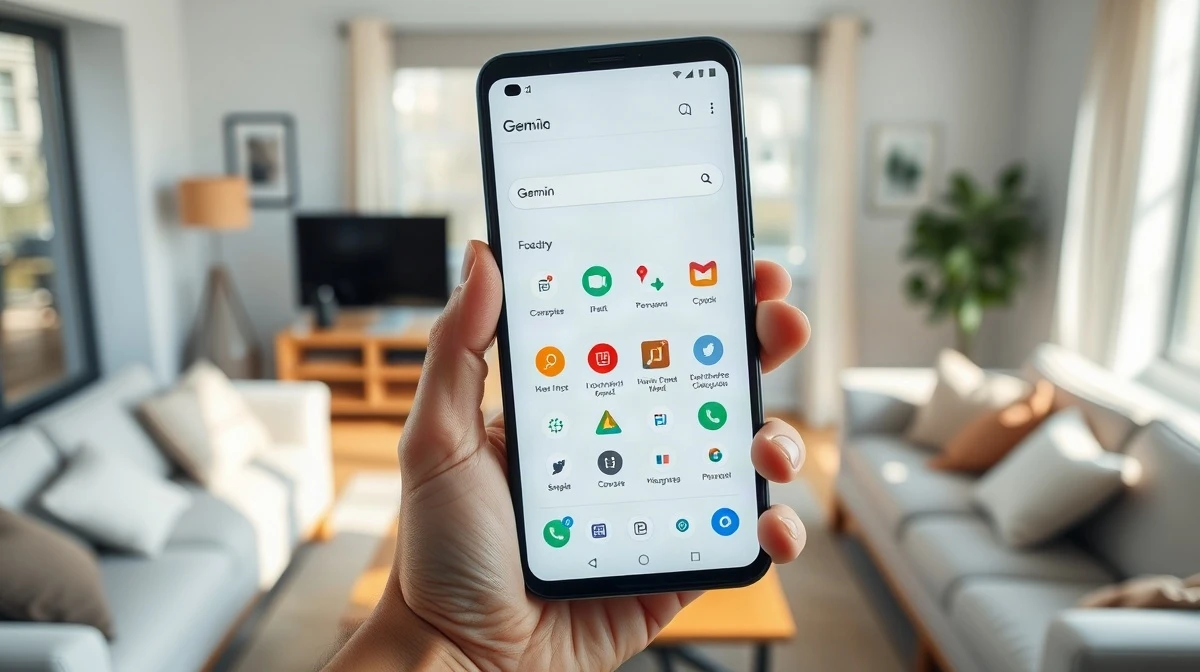
Google’s Wednesday announcement touting new Gemini Live voice features came with a promise: “You shouldn’t have to guess whether a task requires Spark, a Daily Brief, or a quick inbox search.” But the company’s own app design undercuts that message. In the Gemini app, users now deal with between three separately branded features — chat, Spark, and Daily Brief — each with its own icon and dedicated spot in the navigation bar.
This fragmentation is more than a minor UX quibble. It reflects a broader trend across the AI industry, where companies expose their internal product architecture directly to consumers, forcing everyday users to think like engineers just to complete simple tasks. As AI assistants become a primary interface for work and communication, the question of how they’re branded and structured is becoming a critical competitive battleground.
Also read: Microsoft merges Copilot apps, cuts Group Chats, Deep Research, and Mico character
Gemini’s branding sprawl: Spark and Daily Brief under the microscope
Daily Brief, one of the newest additions, is a textbook example of an engineer-designed feature. It’s essentially an AI-generated agenda that offers “proactive, personalized updates” by pulling data from Google’s apps like Gmail and Calendar. In theory, it sounds useful. In practice, the Brief struggles to distinguish between what’s urgent, actionable, or worth remembering — and what’s just an unsolicited nudge to follow through on things you’ve already forgotten about.
The feature even prompts users to continue research started in the chatbot, or worse, reminds them of prior Google searches. For users who’ve been researching college scholarships or animal rescues, receiving an AI tap on the shoulder about those topics later doesn’t feel helpful — it feels invasive. The line between proactive assistance and surveillance is thin, and Daily Brief currently straddles it in a way that could erode user trust.
Also read: Google brings Gemini Spark to Mac, adds real-time tracking and app integrations
Spark, on the other hand, represents one of the more genuinely useful aspects of Gemini. It’s an AI agent that can take action on your behalf, like booking a reservation or drafting an email. But Google has packaged it as a standalone brand, complete with its own icon and navigation slot. While internal Google teams may benefit from distinct product identities, mainstream users shouldn’t need to understand which “side” of the AI app they need to be in for a given task. They should be able to type a request and let the AI figure out the rest — spinning up an agent if the task calls for one.
The industry-wide problem: exposing internal architecture to consumers
Google isn’t alone in this approach. The AI industry at large seems to have a habit of exposing its internal architecture directly to consumers rather than hiding it behind a simpler interface. Anthropic’s Claude app, for example, requires users to choose between “Chat” and “Cowork” modes — and until this week, those two modes didn’t even share a memory of past conversations. OpenAI’s ChatGPT has a similar split, forcing users to swap between “Chat” and “Work” depending on the task.
This is engineering-minded design at its most user-hostile. Consumers are being asked to learn the brand names for what are essentially interaction modes or surfaces, all powered by the same underlying AI model. It’s as if a car company required drivers to choose between “Drive” and “Commute” modes, each with its own badge and dashboard layout, instead of just letting them turn the key and go.
The contrast with Apple’s approach is stark. Apple’s somewhat anticlimactic Siri strategy has been to make existing apps and features smarter — Spotlight Search, the Photos app, the Camera, and Siri voice requests — without asking users to learn a new interface. iPhone owners don’t need to change any of their existing behavior to benefit from AI enhancements. The AI is simply baked into the tools they already use.
Why text-based AI assistants are winning
This same principle may explain the rise of text-based AI services, where users simply text a chatbot like Poke, Ollie, Lindy, or Orchid, and the assistant just does what’s asked. Text messaging is a clean, simple, universally understood interface. It doesn’t require extra mental effort to figure out which feature or product inside a larger app you’re supposed to use.
As a16z investment partner Justine Moore recently wrote, “People don’t want to open an app every time they need help – they want a contact they can text like a friend. And the gold standard is iMessage.” That insight cuts to the heart of the problem: users don’t want to manage a maze of branded features; they want a single, reliable point of contact that understands them.
For Google, the path forward is clear but not easy. The company needs to decide whether Gemini is a platform with distinct products or a single assistant that can handle anything. The current hybrid approach — where features like Spark and Daily Brief are both separate brands and integrated parts of Gemini — creates confusion and dilutes the user experience. If Google truly believes users shouldn’t have to guess which feature to use, it should take its own advice and unify the experience, hiding the internal complexity behind a simple, conversational interface.
As the AI assistant market matures, the winners will likely be those who make their technology invisible — not those who put their internal org chart on the home screen. The race isn’t just about who has the most powerful model; it’s about who can build an interface that feels less like a software product and more like a helpful companion.
This article discusses consumer AI product design and user experience. It does not constitute financial advice, and the AI market remains volatile and uncertain.