
In this article4 sections
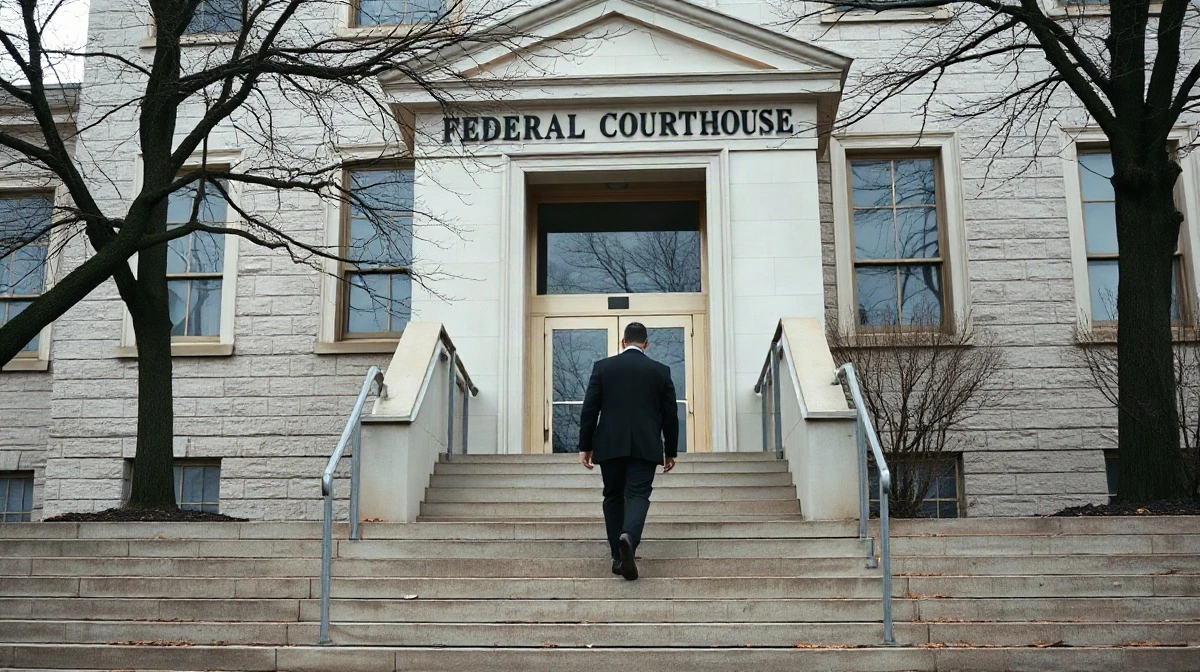
Patrick Steven Yaroch, a former FBI agent, pleaded guilty in federal court in Alexandria, Virginia, to wire fraud and money laundering for taking $2,474,380.66 in cryptocurrency from wallets the bureau had gathered in its own cases, according to Cointribune. Court papers describe roughly 100 fraudulent transfers linked to 35 separate investigations, a case the Justice Department’s Office of the Inspector General had flagged in August and the Eastern District of Virginia announced with the plea.
Key facts
- Yaroch, 37, of Ashburn, Virginia, admitted to wire fraud and money laundering; U.S. District Judge Patricia Tolliver Giles accepted the plea and set sentencing for March 4, 2027 (case 1:26-CR-208).
- The illicit total was $2,474,380.66, carried out in about 100 transfers drawing on credentials tied to 35 FBI investigations, including wallets controlled by investigation subjects, nation-state actors and at least one the FBI created for an operation.
- He worked in the FBI’s Boston division from 2017 through early 2025, then in the Counterintelligence and Espionage Division at headquarters from February 2025 through July 31, 2026, the date the FBI terminated him.
- Between Nov. 25, 2025, and Jan. 13, 2026, he moved about $93,082 into one account and spread it across credit cards, a car and loan repayments.
- He gave Portuguese lawyers power of attorney on June 15, 2026, to obtain a tax identification number and access his finance portal, and arranged travel to Portugal for September 2026.
Seed phrases, swaps and a vineyard plan
Starting no later than December 2024, Yaroch used access to system-held wallet credentials and seed phrases to move coins into wallets he controlled, then swapped the assets and ran further transactions meant to hide their source. The agreed statement of facts says the conduct compromised multiple investigations into criminal groups and nation-state adversaries and exposed FBI sources and methods. The U.S. Attorney’s Office for the Eastern District of Virginia announced the plea through First Assistant U.S. Attorney Theophani K. Stamos and Daniel S. Wierzbicki, special agent in charge of the FBI Washington Field Office’s Counterintelligence Division.
Also read: Chinese national extradited to US over $36.9M crypto scam
According to Bitcoin Magazine, Yaroch asked ChatGPT how to maximize investment returns and where in the European Union to settle; after the chatbot suggested buying a vineyard in Portugal, he began the move, telling two department employees about the activity himself on July 29, 2026. That earlier account described about 10 transfers totaling roughly $1 million, a scale smaller than the plea figures.
Crypto Briefing reported details the other accounts did not: the stolen assets included funds belonging to at least 10 crime victims, and investigators recovered about $188,600 held on Kraken and around $933,800 from the Suilend lending protocol, plus a Trezor hardware wallet and matching seed phrases. Those two recoveries account for roughly $1.12 million of the total. Sources differ on the plea date and on Yaroch’s role title — Cointribune says Thursday with sentencing set for March 4, 2027, Crypto Briefing dates the plea to the same day and describes him as a supervisory special agent, while Bitcoin Magazine dates it November 6.
Why it matters
The case turns a spotlight on how agencies hold seized digital assets. A seed phrase gives whoever has it the same power as the wallet’s owner, so internal access controls matter as much as encryption. The damage extended past the dollar figure: investigations into criminal groups and foreign adversaries were compromised, and the plea says FBI employees were deprived of their ability to protect public safety and national security. For victims, the gap between what was stolen and what has been recovered shapes what they get back.
What to watch
Sentencing before Judge Giles on March 4, 2027, is the next fixed date, where the court weighs a maximum of 20 years against the plea agreement. Whether investigators trace additional assets is the open question alongside it.
Reported by Cointribune.
Sources: Cointribune, Bitcoin Magazine, Crypto Briefing