
In this article5 sections
Former UK Prime Minister Boris Johnson told a London audience on November 16, 2026 that his doubts about Bitcoin have not shifted, arguing that the largest cryptocurrency lacks a clear authority and offers no clear route to recover stolen funds, according to Decrypt.
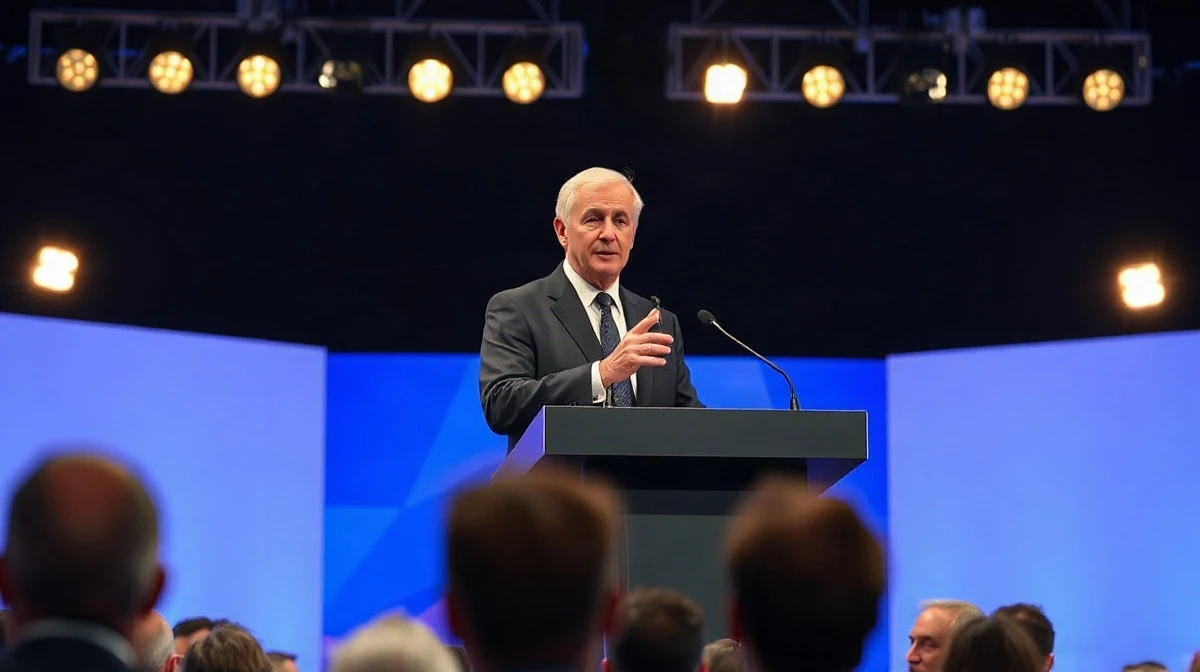
Speaking on a Breakpoint main-stage panel titled “Crypto is Key to the UK’s Economic Future,” Johnson set out his argument about accountability, at one point garbling the name of Bitcoin’s pseudonymous creator in a way he appears to have done on purpose.
Also read: Binance hackers swap $46.4M in stolen Solana for Bitcoin
Key facts
- Johnson said that “as far as I can see, nobody knows who’s in charge” of Bitcoin, apart from a name he rendered as “Yakimoto Nakasori.”
- He said that if six billion were stolen from a cryptocurrency he would not know who to apply to or how to recover the money.
- He was asked about his March 2026 Daily Mail column, which called Bitcoin a “giant Ponzi scheme,” and did not retract it; Strategy executive chairman Michael Saylor publicly rejected that framing at the time.
- Lord Ross Kempsell, a Conservative peer and former Johnson aide, said the UK is on the edge of extensive crypto regulation and that within the rules there is room for a “high growth industry.”
- Breakpoint ran November 15 to 17 at Olympia London with expected attendance above 8,000, and its agenda centred on stablecoins, tokenized assets and AI-related blockchain activity, Crypto Briefing reported.
Bitcoin’s leadership problem, in Johnson’s words
Johnson framed his objection around two gaps rather than around price: nobody identifiable is responsible for Bitcoin, and nobody is on the hook if things go wrong. He described himself as “not a great crypto buff” and said he holds little or none of it. His view, he said, was shaped by a man in his Oxfordshire village who lost thousands and kept paying in more in the hope of recovering the losses.
When moderator Gareth Jenkinson of The Block pushed back, saying blockchains are more traceable than cash, Johnson had asked who guarantees Bitcoin. Jenkinson’s answer was that no one has to guarantee it.
Johnson extended the argument to the word itself, noting that “crypto” derives from the Greek for hidden, and said that is a poor sales pitch.
Blockchain is a different question
Johnson separated the technology from the asset. He said his doubts about crypto should not be read as wanting to slow down blockchain development, and that London should be at the forefront of the field, including asset tokenization. That split tracks the conference’s own emphasis, where major financial firms including Revolut, Mastercard and DTCC took part in sessions on stablecoins and tokenized assets, per Crypto Briefing.
On regulation, Kempsell pointed to the Financial Conduct Authority’s work on its regulatory perimeter and the Bank of England’s stablecoin framework. The FCA’s consumer research, conducted in August and September 2025, put crypto ownership at 8% of UK adults, down from 12% in 2024 but still double the 2021 level. Kempsell said more than 8% of UK adults now hold some crypto asset, a slightly higher figure than the FCA’s 2025 reading.
The FCA finalised its crypto rulebook in June 2026, ahead of a mandatory regime due in late 2027, shortly after the Bank of England dropped planned individual stablecoin holding caps in favour of a £40 billion per-coin issuance limit. Kempsell also said the UK’s position outside the EU’s Markets in Crypto-Assets rules lets it set its own framework.
Why it matters
Johnson’s remarks come from outside the industry but land on governance and consumer recourse, the two questions regulators already weigh when treating decentralised assets. They also illustrate a split now visible across the UK debate: scepticism aimed at Bitcoin, alongside official and industry enthusiasm for tokenized assets and stablecoins, products that come with identifiable issuers. For readers weighing Bitcoin exposure, the panel is a reminder that accountability and recovery mechanisms remain contested.
What to watch
The UK’s mandatory crypto regime is scheduled for late 2027, and the EU is set to revise MiCA in 2027 to cover foreign stablecoin issuers. Both will test whether the accountability gaps Johnson described get addressed by rule-making rather than by protocol.
This is not financial advice; cryptocurrency markets are volatile and uncertain.
Reported by Decrypt.
Sources: Decrypt, Crypto Briefing