
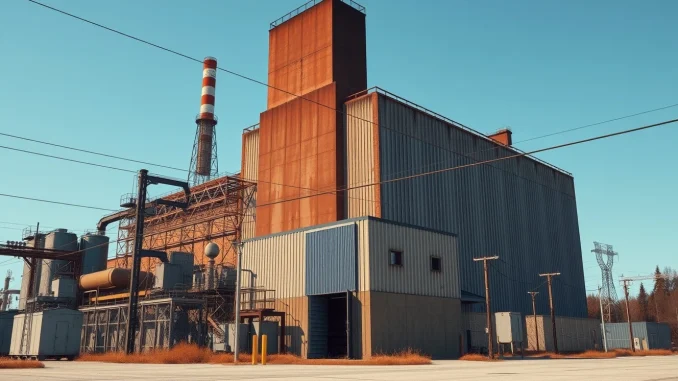
In a move highlighting a major shift in American industry, aluminum producer Alcoa is finalizing a deal to sell a long-idle smelter to Bitcoin mining firm New York Digital Investment Group (NYDIG). The potential sale of the Massena East facility in upstate New York, reported in April 2026, points to a growing trend where retired industrial sites are finding new life powering the digital economy.
Alcoa Nears Deal for Idle New York Smelter
According to a report from Bloomberg, Alcoa CEO Bill Oplinger stated the company is in advanced discussions with NYDIG. He expects the transaction for the Massena East smelter to close around mid-2026. The site has been inactive since 2014. Alcoa shut it down a decade ago, citing high energy costs and intense global competition.
This isn’t an isolated deal. It’s part of a broader pattern across the United States. Earlier in 2026, Century Aluminum sold its Hawesville smelter in Kentucky to crypto miner TeraWulf for $200 million. That site is also slated for conversion into a facility for high-performance computing and artificial intelligence.
Why Old Smelters Attract Bitcoin Miners
The appeal is straightforward: infrastructure. Aluminum smelters are power-hungry beasts. They operate 24/7 and require massive, reliable electricity. To support this, they come with pre-built, high-capacity connections to the electrical grid.
Also read: Spain’s CNMV Chair Rules Out MiCA Deadline Extension for Crypto Firms, Impacting Binance
These assets include:
- Large substations capable of handling hundreds of megawatts.
- Existing transmission lines and interconnection points.
- Industrial-zoned land with sturdy physical foundations.
For a Bitcoin mining company or data center operator, securing similar infrastructure from scratch can take years. It involves dealing with complex utility approvals and regulatory hurdles. Acquiring a former smelter offers a significant shortcut. The Massena site has another key advantage: access to hydropower from the New York Power Authority. This provides a source of lower-cost, lower-carbon electricity, a critical factor for energy-intensive computing.
The Financial Logic Behind the Shift
Industry watchers note that the economics are driving this change. Traditional aluminum smelting in the U.S. has faced profitability challenges for years. Meanwhile, demand for computing power for cryptocurrencies and AI is surging. This suggests that the highest and best use for some of these industrial assets is no longer making metal, but generating and managing data. The sale allows Alcoa to monetize an idle asset. For NYDIG, it represents a faster, potentially cheaper path to expanding its mining capacity.
NYDIG’s Expanding Mining Footprint
The reported deal aligns with NYDIG’s strategy of growing its Bitcoin mining infrastructure. The firm, owned by financial services company Stone Ridge, is not new to the Massena area. It already holds a stake in Coinmint, a company that operates mining hardware at a separate facility on the same industrial campus under a long-term lease.
In 2025, NYDIG also agreed to acquire the Bitcoin mining business of Crusoe Energy. That deal included Crusoe’s operations that use stranded natural gas to power mining rigs. The potential acquisition of the Alcoa smelter would give NYDIG direct ownership of a major, grid-connected asset with dedicated power infrastructure. This could signal a move toward greater vertical integration and control over its mining operations.
Broader Industry Pivot to AI and Computing
NYDIG’s push into mining infrastructure comes as other industry players are diversifying. Bitcoin mining margins can be volatile, tied to the cryptocurrency’s price and mining difficulty. In response, several miners are expanding into adjacent fields like artificial intelligence and cloud computing.
For example, earlier in 2026, Marathon Digital Holdings acquired a majority stake in French data infrastructure firm Exaion. This move was explicitly aimed at gaining a foothold in AI services. Other publicly traded miners, including Hive Blockchain, Hut 8, and the aforementioned TeraWulf, have announced plans to repurpose parts of their mining facilities for general data center use. Some companies, like CoreWeave, have transitioned almost entirely to providing GPU-powered cloud infrastructure for AI.
The implication is clear. The hardware and infrastructure for Bitcoin mining—specialized computers (ASICs) and reliable, coolable facilities—can sometimes be adapted for other high-performance computing tasks. This flexibility provides a potential hedge for companies in a cyclical industry.
What This Means for Local Economies and the Grid
The repurposing of sites like Massena East has mixed effects. On one hand, it can bring new investment and high-tech jobs to regions that lost traditional industrial employment. The facilities continue to be significant consumers of local power, supporting utility revenues.
However, this trend also places new demands on regional electricity grids. Data centers and Bitcoin mining operations are famously power-intensive. Their concentrated energy use can strain local capacity, potentially affecting electricity costs and reliability for other customers. This has sparked debates in several states about the societal value and energy impact of such facilities.
Conclusion
The reported sale of Alcoa’s Massena East smelter to NYDIG is a tangible example of a larger economic transformation. Industrial assets built for the 20th century are being retrofitted for the digital age. This deal underscores how Bitcoin mining and AI data centers are becoming major drivers for repurposing dormant heavy industrial sites. The trend highlights the ongoing convergence of physical infrastructure and the digital economy, with significant implications for real estate, energy markets, and regional development across the United States.
FAQs
Q1: What is Alcoa selling to NYDIG?
Alcoa is reportedly selling its dormant Massena East aluminum smelter in upstate New York to Bitcoin mining and investment firm New York Digital Investment Group (NYDIG). The facility has been idle since 2014.
Q2: Why would a Bitcoin mining company want an old smelter?
Old smelters have existing high-capacity electrical infrastructure, including substations and grid interconnections. This allows a mining company to bypass the lengthy and costly process of securing new power access, providing a faster route to operational capacity.
Q3: Is this the first deal of its kind?
No. It’s part of a growing trend. In early 2026, Century Aluminum sold its Hawesville, Kentucky smelter to TeraWulf for conversion into a high-performance computing and AI data center.
Q4: What are the benefits of using a site like Massena East for mining?
The Massena site has access to hydropower from the New York Power Authority. This can provide lower-cost and lower-carbon electricity compared to fossil fuels, which is a major cost factor and environmental consideration for energy-intensive Bitcoin mining.
Q5: Are other Bitcoin miners moving into different businesses?
Yes. Several major mining companies are diversifying into areas like artificial intelligence (AI) cloud services and general data center operations. This includes firms like Hive, Hut 8, and Marathon Digital, which are seeking additional revenue streams beyond cryptocurrency mining.




Be the first to comment