
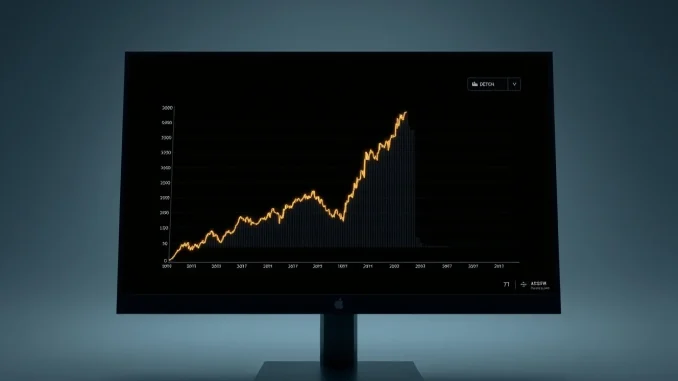
The 1inch Network token (1INCH) has weathered significant volatility since its 2020 launch. As of early April 2026, analysts are scrutinizing whether the core DeFi aggregator can mount a sustained recovery through the end of the decade. This analysis examines the protocol’s fundamentals, market position, and the broader forces that will shape its trajectory.
1INCH Token: Current Status and Protocol Fundamentals
Data from CoinGecko shows 1INCH trading around $0.48 in early April 2026. This represents a decline of over 95% from its all-time high near $8.50 in early 2021. The token’s utility is tied directly to the 1inch Aggregation Protocol and its Liquidity Protocol. Users can pay transaction fees with 1INCH for a discount, and liquidity providers earn rewards in the token.
Also read: Notcoin (NOT) Price Prediction 2026-2030: Can the Telegram Gaming Token Stage a Recovery?
According to the project’s official documentation, the 1inch Network has processed over $300 billion in cumulative trading volume. Its key advantage remains sourcing liquidity from hundreds of decentralized exchanges (DEXs) to find the best possible swap rates for users. This suggests a product-market fit that has persisted through multiple market cycles.
Market Forces Influencing DeFi and 1INCH
The decentralized finance sector faces several headwinds and tailwinds. Regulatory clarity, particularly in the United States and European Union, remains a dominant theme. The implementation of the EU’s Markets in Crypto-Assets (MiCA) regulation is ongoing. Industry watchers note that clear rules could reduce systemic risk and attract institutional capital.
Also read: Monero (XMR) Price Prediction 2026–2030: Can Privacy Coins Sustain Momentum?
Conversely, high Ethereum gas fees have historically challenged all DeFi applications, including aggregators. The continued development of Layer 2 scaling solutions like Arbitrum and Optimism, which 1inch has integrated, may alleviate this pressure. The implication is that lower fees could drive more volume through aggregators.
Competitive Pressure in the DEX Aggregator Space
1inch does not operate in a vacuum. It competes directly with other aggregators like ParaSwap, Matcha, and the native swap functions of large wallets like MetaMask. Data from Dune Analytics dashboards indicates that 1inch often competes for the top spot in weekly aggregator volumes, but its lead is not unassailable.
This competitive intensity means that continuous protocol development and user experience improvements are non-negotiable. The 1inch Foundation’s treasury, funded partly by swap fees, must be deployed effectively to maintain its edge. What this means for investors is that token value is closely linked to the protocol’s ability to retain and grow its market share.
Historical Price Analysis and Volatility
Examining past performance provides context, not a blueprint. 1INCH’s price history is marked by sharp rallies and deep corrections, often mirroring broader crypto market sentiment.
- 2021 Peak: The token soared during the last major bull market, driven by explosive growth in DeFi total value locked (TVL).
- 2022-2023 Downturn: It fell sharply during the “crypto winter,” exacerbated by the failures of entities like FTX and Celsius.
- 2024-2025 Recovery Attempt: Price action showed responsiveness to renewed interest in Ethereum and Layer 2 networks.
This pattern suggests 1INCH is a high-beta asset. It tends to amplify the movements of the broader crypto and DeFi markets.
Analyst Perspectives on Long-Term Valuation Drivers
Forecasts from research firms like Messari and CoinShares emphasize fundamental metrics over pure price speculation. They focus on protocol revenue, user growth, and fee generation. A report from Messari in Q4 2025 noted that aggregators like 1inch benefit from a “flywheel effect.” More volume generates more fee revenue, which can fund development and incentives, attracting more users.
Some analysts point to tokenomics. The total supply of 1INCH is capped at 1.5 billion tokens, with a circulating supply of approximately 1.1 billion as of April 2026. A gradual release of tokens from the community treasury and ecosystem fund could create selling pressure if not managed alongside growing demand.
Potential Scenarios for 2027-2030
Projecting years into the future involves weighing probabilities. Several scenarios could unfold for 1INCH.
Bull Case: Widespread adoption of DeFi for real-world assets (RWAs) and derivatives trading occurs. 1inch captures a leading share of this new volume. Regulatory frameworks become enabling rather than restrictive. In this scenario, protocol revenue grows substantially, supporting a higher token valuation based on utility and fee capture.
Base Case: DeFi growth continues at a steady, moderate pace. 1inch maintains its position as a top-tier aggregator but faces stiff competition. Token price appreciation is more closely tied to general crypto market appreciation, with modest outperformance due to protocol-specific developments.
Bear Case: Regulatory crackdowns in major markets severely limit DeFi’s growth or usability. A superior technological solution displaces the aggregation model. User activity remains concentrated on a few large DEXs, diminishing the need for aggregators. This could lead to declining relevance and token value.
Critical Risks and Challenges
No analysis is complete without acknowledging risks. For 1INCH, these are substantial.
Smart contract risk is ever-present, though the protocol has undergone multiple audits. A major security breach could devastate confidence. Regulatory risk is perhaps the largest unknown. How governments classify and regulate governance and utility tokens like 1INCH will directly impact its accessibility on centralized exchanges and its use cases.
Finally, technological obsolescence is a threat. The DeFi space innovates rapidly. A new model for trading or liquidity provision could emerge that makes the current aggregation model less critical. The 1inch team’s ability to adapt will be tested.
Conclusion
The path for 1INCH price prediction through 2030 is inextricably linked to the health and evolution of the entire DeFi sector. The token’s potential for a major recovery hinges on the 1inch Network’s execution in a competitive field, favorable regulatory developments, and a return of resilient capital flows to decentralized applications. While the protocol has demonstrated resilience and utility, investors must weigh its proven aggregator technology against significant market and regulatory uncertainties. The coming years will show if 1INCH can transition from a cyclical trading asset to one valued for sustained, fee-generating utility.
FAQs
Q1: What is the primary use case for the 1INCH token?
The 1INCH token is primarily used for governance of the 1inch Network decentralized autonomous organization (DAO) and for receiving discounts on swap fees when using the 1inch Aggregation Protocol. Liquidity providers can also earn 1INCH as a reward.
Q2: How does 1inch generate revenue?
The protocol generates revenue by taking a small fee from swaps executed through its aggregator. A portion of this fee is used to buy back and burn 1INCH tokens, while another portion funds the treasury for development and grants.
Q3: What are the biggest competitors to the 1inch Network?
Key competitors include other DEX aggregators like ParaSwap and Matcha, as well as the built-in swap functions in major cryptocurrency wallets. Large individual DEXs like Uniswap also compete for direct trading volume.
Q4: Has 1inch been affected by regulatory actions?
Like all DeFi projects, 1inch operates in a evolving regulatory environment. To date, the decentralized and non-custodial nature of its aggregation protocol has shielded it from some direct regulatory actions that have targeted centralized entities. However, future regulations could impact its operations or token classification.
Q5: What metrics should investors watch to gauge 1inch’s health?
Important metrics include total trading volume processed through the aggregator, protocol fee revenue, the number of active users, total value locked (TVL) in its liquidity pools, and the rate of token burns from fee revenue.




Be the first to comment