
Worldcoin’s cryptocurrency, WLD, fell sharply on Friday, April 17, 2026, dropping over 13% in value. This decline came as its parent company, World, announced significant new partnerships to integrate its biometric identity verification technology with major platforms like Zoom and Docusign. The move aims to combat the rising threat of AI-generated deepfakes but has sparked a complex market reaction.
Worldcoin Price Tanks on Integration News
Data from CoinGecko shows Worldcoin’s WLD token fell 13.4% to approximately $0.28. This drop occurred despite a broader cryptocurrency market gain of 2.2% on the same day. The market’s negative response highlights investor concerns about the company’s strategic direction and the costs of rapid expansion.
Also read: Bitcoin at Risk of Sub-$65K Drop as Geopolitical Tensions and Liquidations Pressure Market
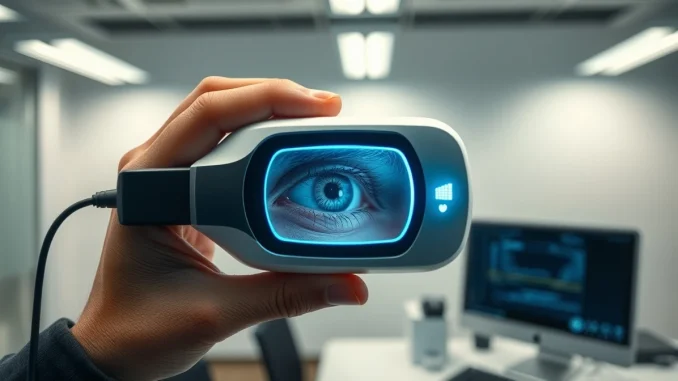
World, led by OpenAI CEO Sam Altman, revealed the new integrations for its “proof of human” stack. This system uses its proprietary Orb device to scan a user’s iris, creating a unique digital identity. The goal is to verify a person is human without exposing personal data.
Zoom and Docusign Adopt World ID for Deepfake Defense
The core of the announcement involved two major enterprise software providers. Video conferencing giant Zoom is integrating World’s “Deep Face” authentication. This is designed to prevent deepfake avatars from joining video calls. Separately, electronic signature leader Docusign will add World’s ID verification to digital agreements.
Also read: SEC makes digital assets a strategic priority through 2030, promising clearer rules
“As AI agents increasingly act on behalf of real people, the infrastructure to prove a human stands behind each agent becomes critical,” World stated in its announcement. The company also noted that dating app Tinder is expanding its use of World ID verification to users in the United States.
These integrations target a growing problem. Sophisticated deepfake technology is now used in impersonation scams, helping fraudsters bypass standard identity checks. According to a 2025 report from the Federal Trade Commission, losses from impersonation scams surged to over $1.1 billion in the United States alone.
The Privacy Debate Intensifies
While pitched as a security solution, World’s technology faces persistent criticism. Privacy advocates warn that collecting biometric data at a global scale creates significant risks. The centralization of this sensitive information under a single corporate entity is a primary concern.
“Biometric data is irrevocable. You can’t change your iris like you can a password,” said Albert Fox Cahn, executive director of the Surveillance Technology Oversight Project, in a 2025 interview with Tech Policy Press. “Handing this data to a private company creates a powerful tool for surveillance if misused.”
World has attempted to address these concerns. Its system uses zero-knowledge proofs, a cryptographic method that verifies identity without sharing the underlying biometric data. The company also recently introduced an account-based system with key recovery features.
A Crowded Field of Recent Partnerships
The Zoom and Docusign deals are part of a wider push. World has secured integrations with several other prominent firms in recent months. This list includes:
- Amazon Web Services (AWS): For cloud-based identity verification services.
- Shopify: To verify merchant identities on the e-commerce platform.
- Coinbase: The crypto exchange is using World’s AgentKit for its x402 AI agents micropayments protocol.
- VanEck: The asset manager uses World ID for investor verification processes.
This aggressive partnership strategy suggests World is prioritizing widespread adoption of its standard. However, the immediate market reaction to the latest news indicates investors may be worried about the financial burden of these integrations or potential regulatory scrutiny.
Broader Market Context and Investor Sentiment
Worldcoin’s price drop stands in stark contrast to the overall crypto market performance on April 17. The rally was largely driven by news of easing geopolitical tensions between the US and Iran, which helped stabilize oil prices and broader risk assets.
Analysts note that WLD’s price action reflects its unique position. “Worldcoin isn’t just a cryptocurrency; it’s a utility token for a specific network,” said Martha Reyes, Head of Research at Bequant, in a client note. “Its value is tightly linked to adoption of the World ID protocol and perceptions of its long-term viability. Today’s sell-off suggests the market is questioning whether these enterprise deals translate directly to token value.”
The token is used to reward users for verifying their identity with the Orb and to support transactions within the World ecosystem. Its economics are therefore directly tied to network growth and usage—metrics that are not immediately impacted by backend enterprise deals.
The Competitive Field for Digital Identity
World is not alone in the digital identity space. Established players like Microsoft Entra ID and Okta offer sturdy enterprise identity solutions. Decentralized identity protocols, such as those built on the W3C Verifiable Credentials standard, are also gaining traction. These alternatives often avoid biometrics, relying instead on cryptographic keys held by the user.
World’s bet on biometrics is a high-risk, high-reward strategy. If its technology becomes the de facto standard for proving “humanness” online, the network could see enormous value. But the path is fraught with technical hurdles, privacy battles, and competitive threats.
Conclusion
Worldcoin’s sharp decline following its expansion announcement with Zoom and Docusign reveals the complex calculus facing the digital identity sector. While the technology addresses a clear and present danger in AI-driven deepfakes, market skepticism about the business model and enduring privacy concerns weigh heavily. The success of Worldcoin and its iris-scanning protocol will depend not just on signing major partners, but on convincing users, regulators, and investors that its vision for a proof-of-human future is both secure and sustainable.
FAQs
Q1: Why did Worldcoin’s price drop after announcing new partnerships?
The 13% drop likely reflects investor concerns about the costs of rapid enterprise expansion, ongoing privacy debates, and questions about how backend software deals directly increase the value of the WLD token.
Q2: How does World’s iris-scanning technology work?
A user looks into a device called the Orb, which scans the unique patterns of their iris. This creates a cryptographic proof of a unique human identity without storing or sharing the actual iris image.
Q3: What is the main use case for World ID with Zoom and Docusign?
For Zoom, it is to prevent deepfake avatars from joining video calls. For Docusign, it is to add a verified human identity layer to legally binding digital signatures, reducing fraud.
Q4: What are the biggest criticisms of Worldcoin’s approach?
The primary criticisms center on privacy risks from collecting biometric data at scale, the potential for surveillance if the system is compromised or misused, and the centralization of the protocol under a single company.
Q5: How does Worldcoin’s drop compare to the rest of the crypto market on April 17?
While Worldcoin fell over 13%, the broader crypto market, as measured by aggregate indices, rose about 2.2% due to positive geopolitical developments, making WLD’s underperformance particularly notable.






Be the first to comment