
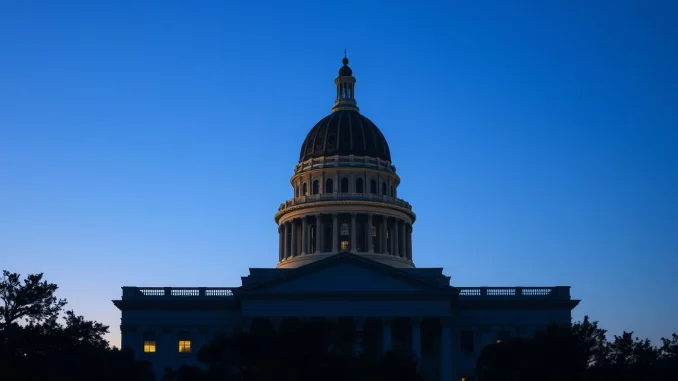
Texas Lieutenant Governor Dan Patrick has launched a direct examination of cryptocurrency operations and prediction market platforms, framing them as potential threats to the state’s strict gambling prohibitions. In a move announced on March 31, 2026, Patrick issued formal interim charges to Texas Senate committees, mandating a study of “the sudden inundation of prediction market gambling” and the state’s coordination with federal crypto rules. This sets the stage for potential regulatory action when lawmakers reconvene in January 2027.
Texas Takes Aim at Prediction Market ‘Loopholes’
According to the official charges document from the Lieutenant Governor’s office, Patrick wants lawmakers to focus specifically on “closing gambling loopholes.” The directive calls for an analysis of “the exploitation of federal law to circumvent Texas gambling prohibitions” on elections through prediction markets.
Prediction markets like Kalshi and Polymarket allow users to place wagers on political outcomes, sports events, and other future occurrences. While these platforms argue they offer financial insights rather than pure gambling, Texas authorities appear skeptical. The state maintains some of the nation’s strictest gambling laws, restricting most betting to casinos on Native American reservations and the state lottery.
“This suggests Texas regulators see prediction markets as an end-run around existing statutes,” said a financial compliance analyst who requested anonymity due to client relationships. “The focus on election betting is particularly telling, as it touches on both gambling concerns and political integrity.”
Also read: Spain’s CNMV Chair Rules Out MiCA Deadline Extension for Crypto Firms, Impacting Binance
Crypto and Blockchain Under the Microscope
Patrick’s charges extend beyond prediction markets to involve digital assets broadly. The lieutenant governor called for an evaluation of Texas’s “coordination with federal rules” on cryptocurrency and blockchain technology. Additionally, he specifically mentioned examining “crypto kiosks” operating within the state.
These kiosks, often found in shopping centers or convenience stores, allow users to buy and sell cryptocurrencies with cash. Their proliferation has raised questions about consumer protection and anti-money laundering compliance. Data from the Texas Department of Banking shows increased examination of money transmission activities involving digital assets over the past two years.
Texas has walked a complex line with crypto. In 2025, Governor Greg Abbott signed a bill creating a state-level Bitcoin reserve. The law allows the Texas Treasury to hold Bitcoin, signaling official acceptance of the asset class. But Patrick’s new charges indicate a simultaneous push for tighter operational oversight.
Industry watchers note the apparent contradiction. “The state wants to hold Bitcoin as a reserve asset while scrutinizing the machines that sell it to everyday Texans,” the analyst noted. “The implication is a bifurcated approach: embrace the asset, regulate the infrastructure.”
The National Context of Prediction Market Scrutiny
Texas is not alone in examining prediction markets. Regulatory authorities in several states have filed lawsuits against platforms like Kalshi and Polymarket. New York and Illinois gaming commissions have taken enforcement actions, arguing these markets constitute illegal gambling rather than legitimate financial instruments.
But Texas had remained relatively quiet until now. The state was not among those filing lawsuits as of late March 2026, according to court records. Patrick’s charges represent the first major, coordinated political effort to study the issue within Texas government.
What this means for investors is potential volatility. Prediction market platforms operating in Texas may face new restrictions or outright bans. Crypto kiosk operators could see increased compliance costs. The study itself creates regulatory uncertainty until the 2027 legislative session.
The 2027 Legislative Timeline and Political Calculus
The Texas Legislature meets biennially, with its next 140-day session scheduled for January 2027. Interim charges like Patrick’s are standard procedure—they direct committees to study issues during the off-years and prepare legislation for the next session.
Patrick, who serves as President of the Senate, said the charges were intended to “advance the priorities of Texas’s conservative majority.” This framing connects crypto and prediction market regulation to broader political values. Conservative groups in Texas have historically opposed gambling expansion, creating natural alignment with prediction market scrutiny.
The crypto component is more complex. Texas has actively courted Bitcoin mining operations with favorable energy policies. The state hosts significant mining infrastructure following China’s 2021 mining ban. According to the Texas Blockchain Council, the industry contributes hundreds of millions to the state economy.
“Patrick is threading a needle,” said a political observer familiar with Texas politics. “He’s appealing to social conservatives on gambling while reassuring economic conservatives that crypto innovation won’t be stifled. The study approach lets him gauge reaction before proposing specific laws.”
AI and Workforce Implications Added to Study Docket
Notably, Patrick included artificial intelligence in his interim charges. He called for a study of the “impact of AI on the Texas workforce and its implications for economic competitiveness.”
This charge comes amid significant AI investment in Texas. Reports in early 2026 indicated Google would support a multibillion-dollar data center in Texas leased to AI company Anthropic. The project’s initial phase is expected to exceed $5 billion.
The AI and crypto studies share a common thread: emerging technology with disruptive economic potential. Texas appears to be adopting a similar playbook for both—study first, regulate with precision later. This cautious approach contrasts with more aggressive stances in some other states.
Conclusion
Texas Lieutenant Governor Dan Patrick has placed cryptocurrency and prediction markets squarely on the state’s regulatory radar. His interim charges mandate a thorough study of both sectors ahead of the 2027 legislative session, with particular focus on gambling loopholes and federal rule coordination. While Texas has embraced certain aspects of crypto, like Bitcoin reserves, it remains wary of prediction markets that might circumvent longstanding gambling prohibitions. The coming months of committee work will shape whether Texas tightens restrictions or finds a middle path for these controversial platforms.
FAQs
Q1: What are interim charges in the Texas Legislature?
Interim charges are directives from legislative leadership—in this case, Lieutenant Governor Dan Patrick—to Senate committees. They instruct committees to study specific issues during the period between regular legislative sessions. The committees then prepare reports and potential legislation for the next session.
Q2: What prediction market platforms are operating in Texas?
Platforms like Kalshi and Polymarket accept users from Texas, though their legal status is unclear under state law. These platforms allow wagers on political elections, sports outcomes, and other events. They have faced legal challenges in other states but hadn’t been directly targeted by Texas authorities until Patrick’s charges.
Q3: How does Texas currently regulate cryptocurrency?
Texas regulates cryptocurrency through money transmission laws overseen by the Texas Department of Banking. The state also has specific rules for virtual currency custodians. In 2025, Texas passed a law allowing its treasury to hold Bitcoin, creating an official state-level Bitcoin reserve.
Q4: When will the Texas Legislature next meet to potentially pass laws on this issue?
The Texas Legislature is scheduled to reconvene for its regular 140-day session in January 2027. Any legislation resulting from these interim charges would be introduced and debated during that session.
Q5: What are crypto kiosks, and why are they mentioned in the charges?
Crypto kiosks are physical machines, often resembling ATMs, that allow users to buy or sell cryptocurrencies with cash. They’ve proliferated in retail locations across Texas. Regulators are concerned about consumer protection, pricing transparency, and anti-money laundering compliance at these largely unstaffed terminals.




Be the first to comment