

Groq has raised $350 million in a new funding round led by investment firm Disruptive, with planned participation from Nvidia, as the company accelerates its transition from an AI chipmaker to a neocloud provider. The round values Groq at $3.5 billion, a significant drop from the $6.9 billion valuation it commanded last September, just before Nvidia hired founder and CEO Jonathan Ross and other key talent under a licensing deal.
A company spokesperson told TechCrunch that Groq does not view the lower valuation as a down round, but rather as establishing a fresh baseline for the “post-Nvidia-licensing-deal version of Groq.” The new capital brings Groq’s total fundraising this year to $1 billion, following a $650 million round in June that kicked off its strategic pivot.
Also read: How to Check If Your ChatGPT, Claude, or Perplexity Account Has Been Hacked
From LPUs to Nvidia-Powered Clouds
Groq originally built custom chips called language processing units (LPUs) designed to compete with Nvidia on AI inference—the compute required to run trained models in real time. But after losing its founding team to Nvidia, the company pivoted to operating data centers powered by Nvidia systems, effectively becoming a customer of its former rival.
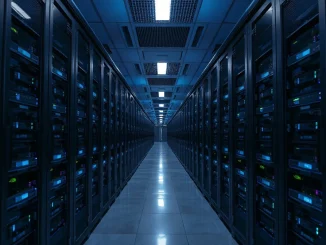
Today, Groq operates 13 data centers across North America, Europe, the Middle East, and Asia Pacific, serving more than 6 million developers, enterprises, and AI-native companies. The company says the fresh funds will support customers seeking “medium and larger sized clusters of Nvidia accelerated computing for training and inference.”
Also read: Amazon is buying and destroying rare books to train its AI models
Groq’s expansion plan is ambitious: it intends to scale from 54 megawatts of capacity to more than 200 megawatts by 2027. That growth trajectory mirrors the broader neocloud boom, where companies like CoreWeave, Lambda, and Nebius are racing to build out GPU infrastructure to meet surging enterprise demand for AI compute.
Inference as the Next Battleground
“We are building Groq into the world’s leading AI inference cloud,” Alex Davis, Groq’s chairman and CEO of Disruptive, said in a statement. “Inference will without a doubt become the largest and most critical layer of AI infrastructure.”
Inference is indeed becoming a key focus as enterprises move AI models from experimentation to production. Unlike training, which is often done in massive batches, inference requires low-latency, always-on compute—a workload that neoclouds are positioning themselves to serve.
However, the profitability of neoclouds remains an open question. CoreWeave, one of the largest players in the space, reported strong second-quarter revenue growth and recently landed major contracts with Meta and Anthropic. Yet investors have expressed concerns about the company’s high capital expenditures, heavy reliance on debt, and exposure to rapidly depreciating hardware. The ability to convert growth into free cash flow is still unproven across the sector.
What Groq’s Pivot Means for the AI Infrastructure Market
Groq’s shift puts it squarely inside Nvidia’s ecosystem, a position shared by most of its neocloud competitors. Nvidia supplies the GPUs powering clouds from CoreWeave, Lambda, and Nebius, while also investing billions into some of those companies as they race to build more capacity.
For Groq, the relationship with Nvidia is both a lifeline and a constraint. The licensing deal that stripped the company of its chip division also removed the risk of competing directly with Nvidia’s dominant hardware business. But it also made Groq dependent on its former rival for the very technology that underpins its new business model.
Groq’s financials remain private, so it’s difficult to assess how the company’s unit economics compare to its publicly traded peers. What is clear is that the neocloud market is attracting massive capital inflows, driven by the belief that AI inference will become a permanent and growing workload for enterprises across every industry.
As the AI infrastructure buildout continues, the key question for Groq and its competitors is whether they can achieve the scale and efficiency needed to generate sustainable returns. With its latest funding, Groq has bought itself more time to prove that its neocloud model can deliver on that promise.
This article is for informational purposes only and does not constitute financial advice. The cryptocurrency and AI infrastructure markets are volatile and uncertain; readers should conduct their own research before making investment decisions.




Be the first to comment