
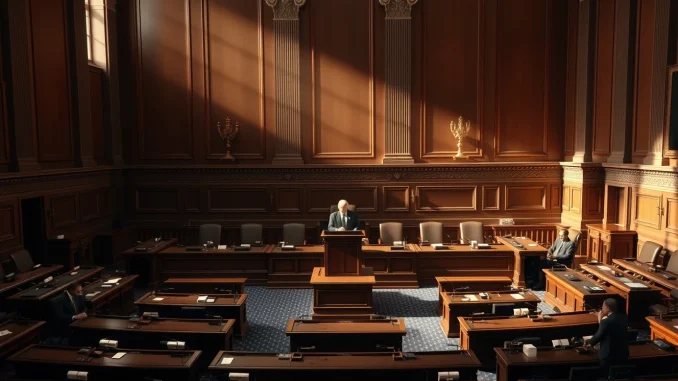
Senator Kirsten Gillibrand said Wednesday that the US Senate could hold a floor vote on the CLARITY Act, a comprehensive digital asset market structure bill, before the August recess — but only if lawmakers first address three key areas: consumer protection, illicit finance, and ethics provisions.
Three conditions for a vote
Speaking at the Consensus conference in Miami, Gillibrand outlined the conditions she considers essential for the bill to advance. She emphasized that without a strong ethics provision, the legislation would lack the necessary support to pass.
“There will be no one voting for this bill if we don’t have an ethics provision,” Gillibrand said. “Because the truth is, is that we cannot allow members of Congress, senior administration officials, presidents or vice presidents, to get rich off of these industries because of their insider status. It is the worst form of pay for play.”
While Gillibrand did not name President Donald Trump directly, her remarks come amid ongoing scrutiny of Trump’s personal crypto ventures, including the launch of his memecoin and his family’s involvement with World Liberty Financial.
Also read: Spain’s CNMV Chair Rules Out MiCA Deadline Extension for Crypto Firms, Impacting Binance
Bill timeline and political headwinds
Gillibrand said that if the Senate can reconcile the market structure bill with the version already passed by the Senate Agriculture Committee, and incorporate the necessary ethics language, a vote could occur “before the August recess,” which begins Aug. 10.
The Senate Banking Committee has not yet rescheduled a markup on the CLARITY Act after postponing it in January. At the time, Coinbase CEO Brian Armstrong said the exchange could not support the legislation as drafted, prompting other crypto firms and advocates to raise concerns about provisions related to decentralized finance, stablecoins, and tokenized equities.
Last week, senators on the banking committee announced a compromise on stablecoin yield, which could help advance the bill. However, that agreement did not address the ethics language that Gillibrand says is critical.
Industry and market reaction
Crypto industry leaders have been closely watching the legislative timeline. Ripple CEO Brad Garlinghouse said Tuesday that lawmakers likely have a two-week window to act before the bill becomes entangled in midterm election politics.
“There’s a window of opportunity, and that’s always important that you act when you find that window of opportunity,” said Summer Mersinger, a former CFTC commissioner and current CEO of the Blockchain Association, during a panel at Consensus. “That doesn’t mean the window’s not going to open again. You just never know what’s going to happen in the intervening events.”
Prediction markets reflect cautious optimism. Traders on Polymarket see a 65% chance of the CLARITY Act becoming law by the end of 2026. On Kalshi, the probability of passage before August stands at 49%.
Conclusion
The CLARITY Act represents the most significant attempt by Congress to establish a federal framework for digital asset markets. While the path to a vote remains uncertain, Gillibrand’s remarks underscore the political and ethical complexities that lawmakers must deal with. The outcome will have lasting implications for crypto regulation, market participants, and the broader financial system.
FAQs
Q1: What is the CLARITY Act?
The CLARITY Act is a proposed US Senate bill that would establish a comprehensive regulatory framework for digital assets, including rules for market structure, stablecoins, and decentralized finance.
Q2: Why does the bill need an ethics provision?
Senator Gillibrand argues that an ethics provision is necessary to prevent members of Congress, senior administration officials, and other public figures from using their insider status to profit from the crypto industry. Without it, she says the bill lacks the support to pass.
Q3: When could the Senate vote on the bill?
Gillibrand said a vote could happen before the August recess, which begins Aug. 10, if lawmakers address consumer protection, illicit finance, and ethics concerns, and reconcile the bill with the version already passed by the Senate Agriculture Committee.




Be the first to comment