
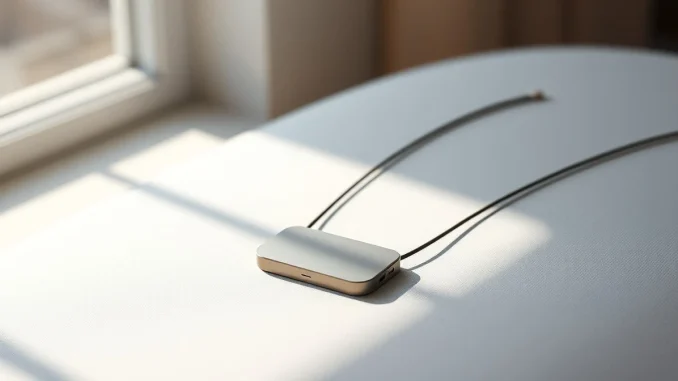
Two years after its initial launch, the AI wearable Friend is getting a major overhaul. Founder Avi Schiffmann announced Friend 2.0 this week, a version that finally adds a voice to the digital companion. The new device, priced at $249, represents a significant $150 price hike from the original $99 model, raising questions about its value proposition in a market where similar devices have struggled.
A New Voice, A New Personality
The core update for Friend 2.0 is the integration of a built-in speaker, enabling the wearable to speak directly to the user with a distinct and consistent personality. The original version relied on sending text messages to a user’s phone. A promotional video released by the company showcases the device offering conversational support and compliments, such as telling a user “It’s not bad to be gay” and reassuring another that their last film was “insane.” These interactions are designed to position the device as a supportive confidant, a role Schiffmann has been keen to define.
Also read: AI Turns Video and Audio Into Searchable Data, but Input Quality Sets the Result
In a post on X, Schiffmann elaborated on the product’s ambiguous identity, stating, “I am interested in this kind of relationship in attempting to offer, some kind of confidant, friend, God, not really sure what it is. But it is not an assistant, and it is not a lover.” This framing deliberately sets Friend apart from productivity-focused AI wearables like the Humane AI Pin, which aimed to replace the smartphone and ultimately failed, shutting down its business in less than a year.
Market Reality Check for AI Wearables
The broader market for AI wearables has been unforgiving. Friend’s most direct competitor, the Humane AI Pin, was a high-profile flop that failed to find a mainstream audience. The category faces a steep uphill battle, as consumers remain skeptical of replacing their smartphones with new, unproven hardware. Friend’s original billboard campaign in the New York City subway system went viral last year for the wrong reasons, as the ads were frequently defaced, a sign of public resistance to the idea of outsourcing human connection to a device.
Also read: Sam Altman Says OpenAI IPO Will Not Happen in 2026: 'Ill-Advised'
Schiffmann’s bold marketing strategy, which includes hinting that the device could be seen as a “God,” is a risky but attention-grabbing approach. It leans into the existential questions surrounding AI companionship rather than shying away from them. However, the substantial price increase for Friend 2.0 creates a higher barrier to entry for a product whose core function—conversational companionship—remains niche.
What This Means for Consumers
For potential buyers, the $249 price tag for Friend 2.0 demands a clear understanding of what they are purchasing. The device is not a productivity tool, a fitness tracker, or a smart assistant in the traditional sense. It is a dedicated companion for conversation and reflection. The addition of a voice makes the interaction more immediate and personal, but the question of whether that interaction provides enough value to justify the cost—and the decision to wear a dedicated device—remains unanswered.
As Schiffmann and his team prepare to ship Friend 2.0, the tech world will be watching closely. The success or failure of this updated wearable will serve as a significant data point for the entire AI companion industry, testing whether consumers are ready to embrace a device whose primary purpose is simply to be a friend.


Be the first to comment