
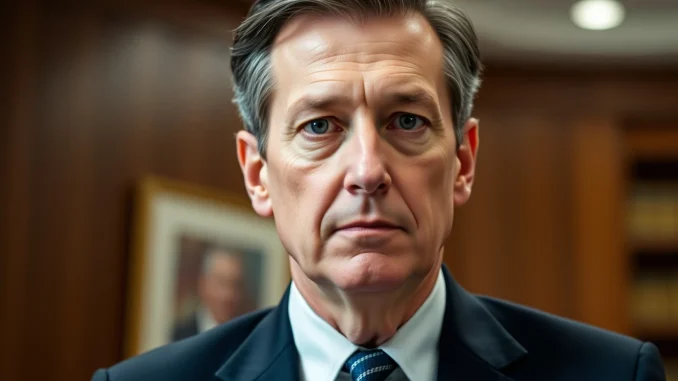
WASHINGTON, D.C. — Kevin Warsh, the nominee to lead the U.S. Federal Reserve, reported millions in assets tied to cryptocurrency and artificial intelligence firms. But his disclosure forms left the value of those specific investments blank. This omission has drawn immediate attention as the Senate prepares to scrutinize his nomination. The central bank’s next leader will shape monetary policy for the world’s largest economy at a time when digital assets and AI are reshaping finance.
Warsh’s Asset Disclosure Reveals Crypto and AI Stakes
According to a filing with the U.S. Office of Government Ethics, Warsh listed holdings in several Excepted Investment Funds (EIFs). These funds hold stakes in notable crypto and AI companies. The crypto-related investments include funds connected to Compound and Dapper Labs. The AI investments involve funds tied to companies like Delphi and Glue. Reuters reported on Tuesday that while Warsh’s total assets exceed $100 million, the disclosure forms did not provide a value range for these particular tech holdings. Ethics office rules typically do not require reporting for assets valued under $1,000. However, the funds themselves are known to hold significant positions in high-value startups. This suggests the blank values are a procedural feature of the EIF reporting, not an indication of negligible worth.
The Context of a High-Stakes Nomination
Former President Donald Trump announced Warsh as his pick to replace Chair Jerome Powell in January. Trump formally advanced the nomination to the Senate in March. Powell’s second term ends on May 15. The Senate Banking Committee scheduled a hearing on Warsh’s nomination for April 21. The Fed chair wields immense influence over U.S. financial policy, interest rates, and banking regulation. A nominee’s personal portfolio is therefore subject to intense review. “Any potential Fed chair’s financial interests are examined for conflicts,” said a policy analyst familiar with confirmation processes. “The question is whether holdings in fast-moving sectors like crypto and AI could create the perception of bias in future regulatory decisions.”
What the Portfolio Tells Us
Warsh’s broader financial disclosure paints a picture of substantial wealth rooted in finance. His largest reported holdings include over $50 million in the Juggernaut Fund and more than $10 million in income from consulting fees for the Duquesne Family Office. This is the investment firm of billionaire Stanley Druckenmiller. The inclusion of crypto and AI funds, however, marks a modern twist. It reflects a growing trend among institutional and wealthy investors to gain exposure to these emerging sectors. For a Fed nominee, these are non-traditional assets. The central bank is increasingly focused on the financial stability implications of both cryptocurrency markets and AI-driven trading.
Also read: Spain’s CNMV Chair Rules Out MiCA Deadline Extension for Crypto Firms, Impacting Binance
The Regulatory Vacuum and Senate Dynamics
Warsh’s nomination hearing comes amid a prolonged leadership vacuum at other key financial regulators. The Securities and Exchange Commission (SEC) and the Commodity Futures Trading Commission (CFTC) both have multiple empty commissioner seats. The SEC currently operates with only three out of five commissioners. The CFTC has just one commissioner. These agencies are central to crafting rules for digital assets. A major crypto market structure bill has been stalled in the Senate since July 2025. This regulatory uncertainty raises the stakes for the Fed’s role. Industry watchers note that the Fed could take a more active part in setting standards for digital finance if congressional gridlock persists.
The Senate Banking Committee will likely question Warsh on how his investments inform his views. They may ask about his approach to regulating novel technologies within the banking system. The lack of specific valuation for the crypto and AI funds could become a focal point. Senators may press for more detail to ensure complete transparency.
Implications for Federal Reserve Policy
The Federal Reserve under Powell has cautiously explored digital currencies and monitored crypto markets. It has also studied AI’s use in financial services and its systemic risks. A chair with direct investment exposure to these fields would bring a different perspective. Some analysts see potential benefits. “A leader who understands the technology and venture capital market could help the Fed adapt more quickly,” one financial technology expert noted. Others warn of risks. The main concern is that personal holdings could influence policy decisions on bank involvement with crypto or AI lending models. The Fed’s independence is its cornerstone. Even the appearance of a conflict could undermine its credibility.
Historical Precedents and Ethical Walls
Previous Fed officials have placed assets in blind trusts or divested holdings to avoid conflicts. The rules for nominees require disclosure, not necessarily divestment. Warsh’s filing shows he has complied with the letter of disclosure law. The Senate committee will judge if that is sufficient. The outcome could set a new precedent for how future nominees handle investments in disruptive technologies. What this means for investors is heightened attention on the Fed’s future stance. Clear guidance from a confirmed chair could reduce market uncertainty. Perceived conflicts might have the opposite effect.
Conclusion
Kevin Warsh’s nomination to lead the Federal Reserve has highlighted the evolving intersection of high finance, technology, and government ethics. His disclosed investments in cryptocurrency and artificial intelligence funds, though not valued on his forms, place him at the center of two of the most dynamic forces in the economy. The Senate confirmation process will now determine if these holdings represent a valuable expertise or a potential complication. The scrutiny of Warsh’s portfolio underscores a broader challenge: how to integrate modern financial interests into the timeless requirement for central bank neutrality.
FAQs
Q1: What crypto companies is Kevin Warsh invested in?
According to his disclosure, Warsh holds positions in Excepted Investment Funds (EIFs) that have stakes in companies including Compound and Dapper Labs. The filing does not specify the exact size or value of his personal stake in these companies.
Q2: Why weren’t the values of the crypto and AI investments listed?
The U.S. Office of Government Ethics rules do not require reporting the value of assets held within Excepted Investment Funds if the value is under $1,000. The funds themselves are the reported asset. The underlying holdings in companies like Compound or Delphi are not individually valued on the form.
Q3: When is the Senate hearing for Kevin Warsh’s nomination?
The Senate Banking Committee announced it will hold a hearing on Warsh’s nomination to be Federal Reserve chair on April 21.
Q4: Who is Kevin Warsh?
Kevin Warsh is a former Federal Reserve governor (2006-2011) and a former Morgan Stanley executive. He was nominated by former President Donald Trump to replace Jerome Powell as Chair of the Federal Reserve.
Q5: Could these investments affect his nomination?
They will likely be a topic of questioning during his Senate confirmation hearing. Senators will examine whether these holdings create any potential for conflict of interest in setting monetary policy or regulating emerging financial technologies.
Q6: What is the total value of Kevin Warsh’s disclosed assets?
Reports indicate his total disclosed assets amount to more than $100 million. This includes traditional investments like the Juggernaut Fund and income from consulting.




Be the first to comment