
DoorDash announced on Monday a suite of new artificial intelligence-powered tools designed to help merchants onboard faster, improve the visual appeal of their menu items, and create standalone websites. The updates target common pain points for restaurant partners, particularly small and independent operators who may lack dedicated marketing or technical resources.
Automated onboarding reduces setup time
The new onboarding tool allows merchants to link their existing website to DoorDash. The system then automatically extracts relevant information, including photos, store hours, and menu items, to generate a draft listing on the platform. Merchants can review and edit the data before publishing. The approach mirrors a feature Amazon launched for its marketplace sellers in 2024, signaling a broader industry shift toward reducing manual data entry for business partners.
Also read: OpenAI Limits GPT-5.6 Rollout After U.S. Government Request, Calls Restrictions a 'Short-Term Step'
AI photo editing for professional presentation
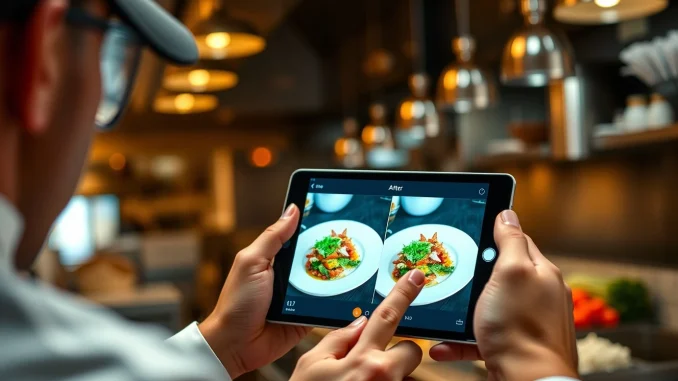
Two new AI-driven photo tools aim to improve how dishes appear in the app. AI Retouch can replace backgrounds, sharpen images, and optimize lighting without altering the food itself. AI Replate goes a step further by manipulating images to make dishes look as though they were plated by a professional, adjusting lighting and color composition. Merchants can also upload a reference image to apply a specific visual style to their existing photos.
These features address a common challenge for restaurants: inconsistent or low-quality food photography can reduce customer engagement and order rates. By providing editing tools within the platform, DoorDash removes the need for merchants to hire professional photographers or learn complex editing software.
Also read: OpenAI, Google, and SpaceX are all building their own AI chips — here's why that matters
Video library enhancements and website builder
DoorDash has also upgraded its video library for merchants. The updated version allows restaurants to tag specific dishes within videos, enabling customers to click and order those items directly. The library now provides analytics including total views, video-driven sales, and new customer acquisition metrics.
Additionally, the company is expanding its commerce platform with a website builder. Restaurant owners can create a full website based on their existing DoorDash content, such as menu items and photos. During testing, DoorDash reported that merchants using the feature saw average order conversion rates of nearly 10%. A new marketing campaign builder also lets merchants automate content creation, email outreach, and scheduling.
Why this matters for merchants and the industry
For restaurant owners, these tools reduce the operational burden of managing an online presence across multiple channels. Faster onboarding means merchants can start accepting orders sooner. Better photography can directly impact sales, as visual presentation is a key factor in customer decision-making. The website builder gives merchants an owned channel independent of third-party apps, which is increasingly important as platforms adjust commission structures and policies.
For DoorDash, the updates strengthen its value proposition to merchants, potentially improving retention and attracting new partners. The company faces competition from Uber Eats, Grubhub, and others, all of which are investing in merchant-facing technology. By embedding AI tools directly into its platform, DoorDash aims to differentiate itself as a partner that helps businesses grow, not just a delivery intermediary.
Conclusion
DoorDash’s latest AI-powered features represent a practical step toward reducing friction for restaurant partners. By automating onboarding, enhancing food photography, and enabling website creation, the company is addressing real operational challenges. The updates reflect a broader trend in the food delivery industry, where platforms are increasingly competing on the quality of tools they offer to merchants, not just on consumer-facing features.
FAQs
Q1: How does DoorDash’s new onboarding tool work?
Merchants can link their existing website to DoorDash. The AI automatically extracts information like photos, store hours, and menu items to create a draft listing. Merchants review and edit the information before publishing.
Q2: Can the AI photo editing tools change the actual food in the image?
No. AI Retouch improves lighting, sharpness, and background without altering the dish. AI Replate adjusts lighting and color to make the food look professionally plated, but does not change the food itself.
Q3: What analytics does the new video library provide?
The library shows total views, video-driven sales, and new customer sales. Merchants can also tag dishes in videos, allowing customers to order those items directly from the video.





Be the first to comment