
In this article5 sections
Audit firm Cyfrin recorded two high-severity defects in the 1inch V6 router’s clear signing descriptor at the end of July 2026, and the affected display rules were still in the public registry as of October 12, Cointribune reported. The descriptor governs what a wallet screen shows when a user signs a transaction on the decentralized exchange aggregator, and it applies to the V6 router on 13 networks, Ethereum among them.
Key facts
- Ticket no. 2688 covers the main V6 router descriptor and carries two high-severity and three medium-severity findings, according to Cyfrin’s classification.
- The first high finding concerns the clipperExchange parameter, hidden on screen even though it designates the contract receiving the user’s funds.
- The second high finding targets the args field, which in certain order execution modes can hold the address receiving the purchased asset.
- The descriptor applies across 13 networks including Ethereum, Arbitrum, Base, BNB Chain and Polygon, with the common file and main descriptor dated April 10, 2026.
- A related zkSync descriptor, ticket no. 2690, was removed from the registry on September 22 because Sourcify could not verify its compiled code.
What the wallet screen does not show
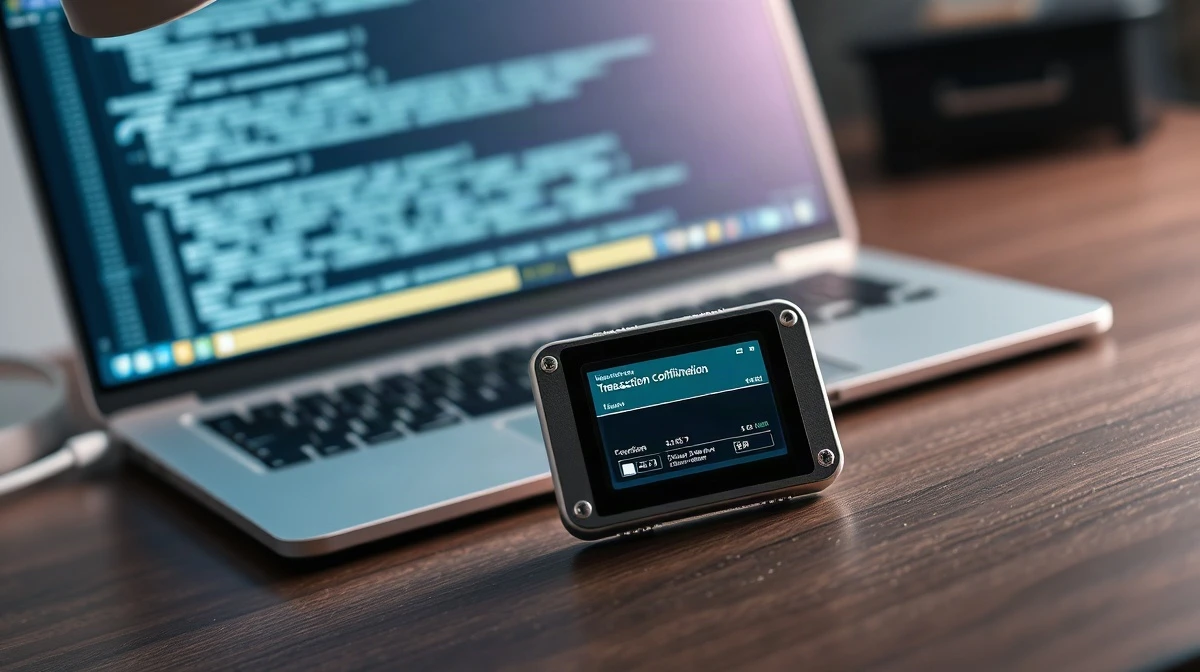
Clear signing translates raw transaction data into plain language on a wallet display, and it relies on public files called descriptors. Each descriptor states which transaction fields the wallet must surface and under which label; a field marked “never” is never shown. Cyfrin’s ticket no. 2688 found that the clipperExchange parameter is supplied by the caller of the function, so a wallet can present an ordinary exchange screen while the destination contract for the user’s funds stays invisible. The hidden args field poses a comparable problem: in some order execution modes it can contain the address that receives the purchased asset, meaning a user may see exact amounts while the asset is routed to an address they never saw.
Also read: Ledger implant attack reaches Europe as AI finds XRP bug
Three medium findings round out the ticket. One order amount always displays as a “to sell” figure, even though one router mode treats it as a “to buy” amount. A second concerns permitAndCall, which masks a spending authorization that may specify the token, the authorized spender’s address, the amount and the expiry. The last relates to deployments that code verification tool Sourcify had not yet confirmed.
The picture is not limited to the main descriptor. A third audit, no. 2689, addresses off-chain signed orders in EIP-712 format; its descriptor hides the makerTraits field, which can carry an order’s expiration date and a restriction on which address may execute it. Cyfrin classifies that finding as high severity as well. The earlier V5 descriptor likewise masks clipperExchange, across six networks.
Also read: Circle and Tether Freeze $318K of Bitget Hack Funds
Attestation and the limits of a signature
The registry offers a safeguard called attestation, defined by the ERC-8176 standard proposal, under which an auditor signs a descriptor they have reviewed. On August 17, the registry incorporated Cyfrin attestations for 181 descriptors. Within the 1inch folder, only older V3 and V4 router versions hold one; the V6 descriptors do not. In audit no. 2689, Cyfrin notes missing code verification on five networks and states that the attestation condition is not met.
An attestation is not a guarantee of meaning. The ERC-8176 project itself says in its limitations section that signature verification does not validate semantic accuracy. Upgradeable contracts and proxies raise a further issue: a proxy keeps its address while its code can change. An analysis published in September listed 80 proxy-related descriptors out of 382 as of September 5, and maintainers chose to keep them and handle the issue inside the standard.
Registry maintainers do patch defects. On September 25, a fix targeted a separate 1inch descriptor for Limit Order Protocol v2 limit orders, whose message said wallets recognizing descriptors by signed type could not apply it, so users signed those orders blindly. Cyfrin’s recommendation in the V6 case is to display the missing fields or drop the description entirely, in which case the wallet falls back to raw signing with no impression of clarity. None of the consulted tickets mention user loss tied to these descriptors.
Why it matters
The 1inch findings sit at the center of the broader effort to stop blind signing, the practice CertiK identified in the February 2025 Bybit hack that the FBI said cost the platform about 1.5 billion dollars. Ledger launched clear signing in 2023, formalized it in the ERC-7730 standard proposal and handed its management to the Ethereum Foundation on May 12, 2026, with MetaMask, Trezor, WalletConnect and Cyfrin in the working group. A readable screen is only as trustworthy as the descriptor behind it, and a hidden recipient field can make a clear signing interface look safer than the transaction it authorizes.
What to watch
Registry watchers will track whether the V6 descriptors are corrected, revised or removed, and whether Cyfrin’s proposed one-line fix to make the makerTraits field visible is adopted. Separately, proposal no. 1738 on proxies has yet to be integrated into the standard; ERC-7730 co-author Kaan Uzdoğan said on GitHub he was awaiting further reviews before approval.
Reported by cointribune.com.
Source: Cointribune