
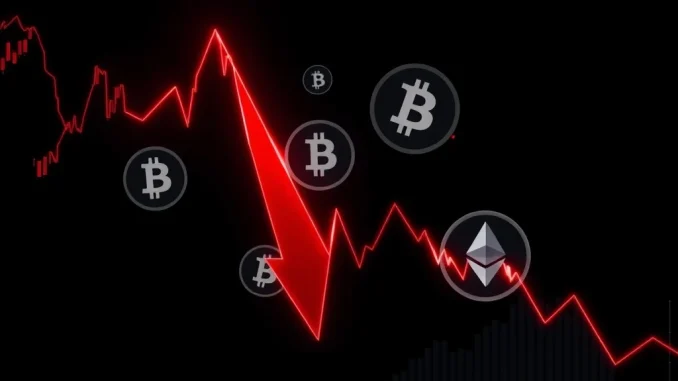
Global, May 2025: Cryptocurrency markets experienced a severe bout of volatility in the past hour, leading to a staggering $125 million worth of futures liquidated across major exchanges. This intense, concentrated selling pressure is part of a broader 24-hour liquidation event totaling over $1.065 billion, underscoring the heightened risk and utilize present in the digital asset derivatives market. The rapid unwind of these leveraged positions highlights the fragile equilibrium in crypto markets and serves as a stark reminder of the mechanics that can amplify price movements.
Futures Liquidated: Anatomy of a $125 Million Hour
The core event centers on the forced closure of leveraged derivative contracts, known as futures. When traders use excessive employ—borrowed capital to amplify potential returns—they must maintain a minimum collateral level, or margin. If the market moves sharply against their position and their collateral falls below this threshold, the exchange automatically closes, or liquidates, their position to prevent further losses. This selling or buying to exit the position can create a cascade, pushing prices further and triggering more liquidations. The $125 million figure represents the total value of these positions that were forcibly closed within a single 60-minute window, a significant concentration of financial stress.
Also read: OpenAI Limits GPT-5.6 Rollout After U.S. Government Request, Calls Restrictions a 'Short-Term Step'
Crypto Futures Market Mechanics and Systemic Risk
To understand the scale, one must examine the structure of the cryptocurrency derivatives ecosystem. Unlike traditional spot trading where assets are bought and sold directly, futures contracts are agreements to buy or sell an asset at a future date. Major platforms like Binance, Bybit, OKX, and Deribit offer apply sometimes exceeding 100x. While this can magnify gains, it exponentially increases risk. The recent data indicates a predominance of long position liquidations, suggesting a rapid price drop caught many bullish traders off guard.
- Utilize Multiplier: A trader with 10x utilize sees a 10% price move as a 100% gain or loss on their collateral.
- Liquidation Cascade: As initial liquidations occur, they create market sell orders, driving the price down further and hitting the next cluster of leveraged long positions, creating a domino effect.
- Funding Rates: Prior to the event, persistently high positive funding rates (fees paid by longs to shorts) often signal an overcrowded long trade, setting the stage for a correction.
Historical Context and Market Psychology
Such liquidation events are not remarkable but are critical markers of market cycles. The May 2021 crash saw single-day liquidations exceed $10 billion, while the FTX collapse in November 2022 triggered waves of contagion. Each event typically follows a pattern: a period of bullish sentiment, rising use, a triggering catalyst (often macroeconomic news, large wallet movements, or technical breakdowns), and a rapid deleveraging phase. The current $1.065 billion 24-hour total, while substantial, remains below historic extremes, suggesting the market’s derivative structure may have matured slightly, though significant fragility remains.
Also read: OpenAI, Google, and SpaceX are all building their own AI chips — here's why that matters
Implications for Traders and Market Stability
The immediate consequence of mass liquidations is a rapid increase in volatility and a potential liquidity vacuum. For the broader market, these events serve as a pressure release valve for excessive utilize, potentially creating healthier long-term conditions by washing out overextended positions. However, they also pose risks:
- For Retail Traders: Those using high tap into face total loss of their collateral, a brutal lesson in risk management.
- For Institutional Players: Large, liquidated positions can force hedge rebalancing in other correlated assets.
- For Exchange Stability: Systems must handle the enormous volume of automatic orders without delay or failure, a key test of infrastructure.
Furthermore, the concentration of futures liquidated on a few major exchanges shows where the majority of speculative activity is housed. Regulatory bodies globally monitor these events closely, as they underscore arguments for use caps and stricter investor protection rules in the crypto derivatives space.
Conclusion
The liquidation of $125 million in crypto futures within one hour is a powerful symptom of the highly leveraged and sentiment-driven nature of the current digital asset market. While devastating for affected traders, such events are integral to the market’s process of finding equilibrium and flushing out unsustainable speculation. The over $1 billion in total liquidations across 24 hours provides a clear, quantitative measure of the volatility and risk present in cryptocurrency derivatives. As the industry evolves, understanding these mechanics of utilize and liquidation becomes paramount for anyone participating in these complex financial markets.
FAQs
Q1: What does “futures liquidated” mean?
A1: It means a leveraged futures trading position was automatically closed by an exchange because the trader’s collateral fell below the required minimum (margin call). This is a forced sale to prevent further loss.
Q2: What causes a wave of liquidations like this?
A2: A sharp, rapid price movement against the dominant leveraged position (e.g., a fast drop when many are leveraged long) triggers initial liquidations. The resulting market orders can push prices further, creating a cascade of more liquidations.
Q3: Who loses the money from liquidated futures?
A3: The traders whose positions are liquidated lose the collateral they posted to open the leveraged trade. This money is used to cover the loss on the contract. The exchange or the counterparties on the winning side of the trade effectively gain it.
Q4: Are liquidations only a crypto market phenomenon?
A4: No, liquidations occur in all leveraged derivatives markets, including traditional commodities and equities. However, the high tap into available and 24/7 nature of crypto can make events more frequent and volatile.
Q5: How can traders protect against liquidation?
A5: Key strategies include using lower apply, maintaining a higher collateral margin than the minimum, employing stop-loss orders (though these can slip in volatile markets), and actively monitoring positions, especially during periods of high volatility or major news events.




Be the first to comment