
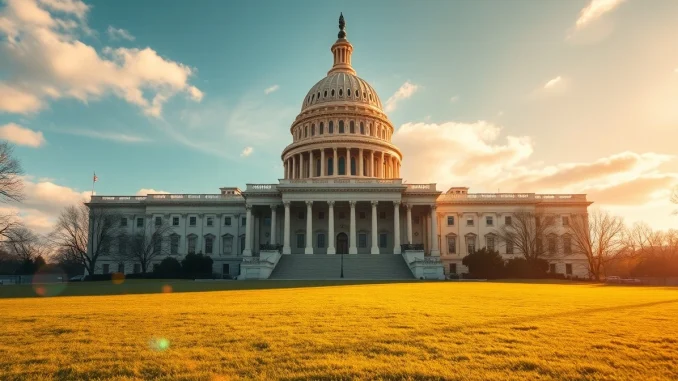
The Digital Asset Market Clarity Act of 2025, known as the CLARITY Act, could reverse the offshore migration of cryptocurrency trading by establishing clear federal rules for digital assets, according to Bill Hughes, senior counsel and director of global regulatory matters at Consensys.
Speaking at the Consensus 2026 conference in Miami, Hughes noted that while the US dollar remains the dominant fiat on-ramp for cryptocurrency — accounting for over $2.4 trillion in volume between July 2024 and June 2025 — the vast majority of trading occurs on exchanges based outside the United States.
Also read: Botanix shutdown: Does Bitcoin DeFi have a demand problem?
Binance alone handled more than 38% of all centralized exchange trading volume in December 2025, according to data from Coingecko. Coinbase, the only US-based exchange in the top 10, held just 6.1% market share.

Also read: Bitcoin Options Traders Hedge Downside as Uncertainty Lingers, Anchorage Digital Reports
Why the CLARITY Act matters for the US crypto industry
The CLARITY Act aims to end years of regulatory uncertainty by creating a federal framework for digital asset classification, trading, and custody. Hughes argued that passing the bill would encourage crypto projects to build and operate within the United States, bringing jobs, tax revenue, and innovation back onshore.
“The biggest market in crypto is the US dollar, but most of that volume is happening outside US borders,” Hughes said. “Clear rules would change that.”
The bill has drawn bipartisan support. A HarrisX poll published in May found that 52% of 2,028 registered US voters surveyed supported the CLARITY Act, with majorities in both Democratic and Republican parties in favor.
Midterm elections create a narrow legislative window
Time is running short for the bill to become law. Hughes warned that the legislative calendar is “unforgiving” due to the upcoming US midterm elections in November 2026.
“The Senate has only weeks to move the bill before the August recess, after which the midterm election calendar takes over,” he said.
If the bill does not pass this year, the next realistic opportunity for comprehensive crypto market structure legislation may not come until 2030, Hughes added.
The Senate Banking Committee has scheduled a markup for the bill on Thursday, May 14, 2026, marking what observers describe as a critical procedural step.
Industry leaders urge action
Brad Garlinghouse, CEO of Ripple Labs, also spoke at Consensus 2026 and cautioned that despite recent progress, the bill’s passage into law remains uncertain.
“We’ve seen momentum, but nothing is guaranteed until the president signs it,” Garlinghouse said.
Related reporting has highlighted that crypto exchanges have lobbied lawmakers to remove provisions targeting risky tokens, adding further complexity to the legislative process.
What the CLARITY Act would do
The bill would establish clear definitions for digital assets, determine which federal agency has primary oversight, and create a pathway for token projects to register and comply with US law. Proponents argue this would reduce the legal risks that have driven many crypto firms to operate from jurisdictions such as Singapore, Switzerland, and the Cayman Islands.
Critics, however, have raised concerns that certain provisions could stifle decentralized finance (DeFi) innovation. The debate over the bill’s impact on DeFi remains unresolved, with industry participants closely watching the markup process.
Conclusion
The CLARITY Act represents the most significant attempt to date to bring comprehensive federal regulation to the US crypto industry. With a Senate markup scheduled and bipartisan public support, the bill has a narrow window to advance before midterm politics overtake the legislative calendar. Whether it succeeds will determine the trajectory of US crypto policy for years to come.
FAQs
Q1: What is the CLARITY Act?
The Digital Asset Market Clarity Act of 2025 is a proposed US federal law that would establish clear regulatory rules for digital assets, including definitions, oversight responsibilities, and compliance pathways for crypto projects.
Q2: Why is crypto trading leaving the US?
Years of regulatory uncertainty, conflicting guidance from agencies like the SEC and CFTC, and enforcement actions have driven many crypto exchanges and projects to operate in jurisdictions with clearer legal frameworks.
Q3: When will the Senate vote on the CLARITY Act?
The Senate Banking Committee has scheduled a markup for May 14, 2026. If approved, the bill would proceed to a full Senate vote, though the timeline is tight before the August recess and midterm campaign season.





Be the first to comment