
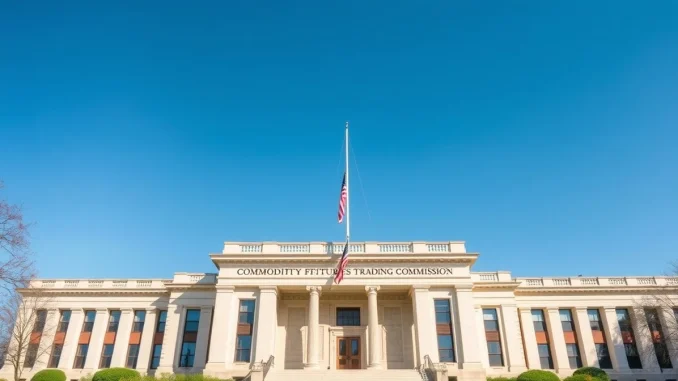
The US Commodity Futures Trading Commission received more than 1,500 responses to its prediction market rulemaking proposal. Respondents split sharply on how the agency should police these platforms. The comment period ended on May 4, 2026.
CFTC prediction market rulemaking draws divided public feedback
The CFTC proposed a rule in March 2026. It would allow the agency to amend or issue new regulations for event contracts on prediction markets. The public comment period drew responses from prediction market operators, crypto firms, and consumer advocacy groups.
Kalshi co-founder and chief operating officer Luana Lopes Lara backed the CFTC in a letter. She said existing regulations were “well-designed and effective.” Lara urged the agency to provide guidance. This would ensure “that the universe of event contracts can continue to be listed, traded, and overseen by the Commission.”
Polymarket US CEO Justin Hertzberg also supported the regulator. He applauded CFTC Chair Mike Selig for “asserting the CFTC’s longstanding exclusive jurisdiction over prediction markets.” Hertzberg added that the company believes the regulator “should continue to exercise its exclusive jurisdiction over prediction markets.”
Also read: Spain’s CNMV Chair Rules Out MiCA Deadline Extension for Crypto Firms, Impacting Binance
Venture capital firm Andreessen Horowitz backed the CFTC as well. The firm argued in its letter that “state actions to regulate or ban prediction markets impose a serious barrier to impartial access.” This is a key rule for CFTC-regulated firms.
But state gambling regulators pushed back hard. The Tennessee Sports Wagering Council, Missouri Gaming Commission, and Pennsylvania Gaming Control Board all criticized the CFTC. They urged the regulator to drop its support for sports event contracts.
State regulators challenge CFTC jurisdiction over event contracts
Pennsylvania Gaming Control Board Executive Director Kevin O’Toole said the CFTC allows prediction markets “to masquerade as unregulated sportsbooks.” Tennessee Sports Wagering Council Executive Director Mary Beth Thomas said the council disputes “that sports event contracts offered on prediction markets fall within the jurisdiction of the CFTC at all.”
Missouri Gaming Commission executive director Michael Leara argued that Congress “did not intend futures markets to include gambling activities.” He urged the CFTC to “properly reserve jurisdiction over sports event contracts for the states.”
The CFTC’s proposed rule comes as it seeks to cement its authority over prediction markets. These platforms have faced legal challenges from multiple US states. The states accuse the platforms of offering unlicensed sports gambling.
Kalshi, Polymarket, and Coinbase are among the companies sued over their sports prediction market offerings. They argue they fall under the CFTC’s sole authority. The regulator has backed this position by suing at least five state governments that took legal action against prediction markets.
CFTC Chair Mike Selig has threatened to sue any state that takes action against prediction markets. This stance has intensified the conflict between federal and state regulators.
Federal lawmakers raise concerns about geopolitical event contracts
Prediction markets also face scrutiny from some federal lawmakers. They worry about platforms offering markets tied to geopolitical events. Well-timed bets on the Iran war raised concerns about possible use by those with insider knowledge.
Dennis Kelleher, CEO and co-founder of consumer advocacy group Better Markets, joined 12 other consumer groups in a joint letter. They told the CFTC it should “prohibit event contracts that involve elections or geopolitical events.” Such contracts could influence government actions, they argued.
Kalshi and Polymarket said last week they have cracked down on insider trading. They ban or prohibit some users, such as politicians, from using their platforms. This came after the US Senate passed a ban on its members and staff using prediction markets.
Industry and consumer groups present competing visions for regulation
The 1,500-plus responses reveal deep divisions. Industry players generally support CFTC oversight. Consumer advocates and state regulators want stricter controls or outright bans on certain contracts.
Better Markets and its allies argue that event contracts on elections and wars could distort democratic processes. They point to the potential for manipulation by foreign actors or insiders. The groups urge the CFTC to use its authority broadly to protect market integrity.
Prediction market operators counter that their platforms provide valuable information. They argue that properly regulated markets can forecast events more accurately than polls or expert opinions. Kalshi and Polymarket emphasize their compliance efforts and cooperation with regulators.
The CFTC now faces the task of analyzing this feedback. It must decide whether to finalize the proposed rule, modify it, or withdraw it. The outcome will shape the future of prediction markets in the United States.
Timeline of CFTC action on prediction markets
The CFTC has taken several steps regarding prediction markets in recent years:
- March 2026: CFTC proposes rule to amend or issue new regulations for event contracts on prediction markets
- May 4, 2026: Public comment period closes with over 1,500 responses
- Ongoing: CFTC sues state governments that took legal action against prediction markets
- Ongoing: Multiple states sue prediction market operators for offering unlicensed sports gambling
This timeline shows the escalating conflict between federal and state authorities. The CFTC’s proposed rule represents its attempt to clarify its jurisdiction. But state regulators show no signs of backing down.
What this means for prediction market users and operators
The outcome of this rulemaking will directly affect how prediction markets operate. If the CFTC finalizes broad authority, platforms may face stricter federal oversight. If states win, operators could face a patchwork of state regulations.
Industry watchers note that the CFTC’s position has support from major players. Kalshi, Polymarket, and venture capital firms want a single federal regulator. This would reduce compliance costs and legal uncertainty.
But state gambling regulators see sports event contracts as gambling. They argue that the CFTC lacks authority over such activities. The implication is that a legal battle may be inevitable.
Consumer advocates want to limit the types of contracts allowed. They fear that election and war markets could be manipulated. This could signal a push for narrower rules that exclude certain categories of events.
Conclusion
The CFTC prediction market rulemaking has exposed deep divisions among stakeholders. Over 1,500 responses show that industry players, state regulators, and consumer groups all want different outcomes. The CFTC must now weigh these competing interests as it decides the future of event contract regulation. The agency’s decision will shape whether prediction markets expand under federal oversight or face restrictions from multiple state authorities. For now, the battle over jurisdiction continues.
FAQs
Q1: What is the CFTC prediction market rulemaking about?
The CFTC proposed a rule in March 2026 that would allow it to amend or issue new regulations for event contracts on prediction markets. The public comment period ended on May 4, 2026, with over 1,500 responses.
Q2: Who supports the CFTC’s position on prediction markets?
Major prediction market operators like Kalshi and Polymarket support CFTC jurisdiction. Venture capital firm Andreessen Horowitz also backs the regulator. They argue that federal oversight provides consistency and prevents state-level barriers.
Q3: Why do state gambling regulators oppose the CFTC?
State regulators in Tennessee, Missouri, and Pennsylvania argue that sports event contracts constitute gambling. They say Congress did not intend futures markets to cover such activities. They want jurisdiction reserved for states.
Q4: What concerns do consumer groups have about prediction markets?
Better Markets and 12 other consumer groups want the CFTC to prohibit event contracts involving elections or geopolitical events. They worry such contracts could influence government actions or be manipulated by insiders.
Q5: How have prediction market operators responded to insider trading concerns?
Kalshi and Polymarket said they have cracked down on insider trading. They ban or prohibit some users, such as politicians, from using their platforms. This followed a US Senate ban on its members and staff using prediction markets.





Be the first to comment