
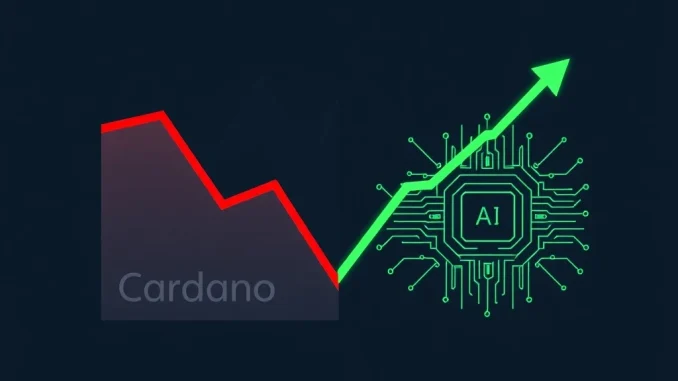
Global, May 2025: The cryptocurrency analytics sector experienced a significant shift with the closure of Parsec Analytics, a firm that provided data and forecasts for the Cardano ecosystem for five years. This development arrives as the broader market shows volatility, with both Cardano (ADA) and Optimism (OP) facing recent price declines. Concurrently, emerging projects like DeepSnitch AI are generating discussion with ambitious growth projections. This article provides a factual analysis of these events and their potential implications for Cardano’s price trajectory toward 2026 and 2030, focusing on market structure, technological development, and analytical challenges.
Cardano Price Prediction Context and Analytical Challenges
The closure of Parsec Analytics removes a multi-year source of market intelligence for Cardano investors. Founded in 2020, the firm specialized in on-chain data analysis, smart contract audits, and long-term valuation models for the ADA token. Their shutdown highlights the inherent difficulties in sustaining specialized crypto-analytics businesses, particularly during extended market downturns. For investors, this creates a gap in consistent, long-form analysis, shifting reliance to other data providers, academic research, and foundational project metrics. Predicting any cryptocurrency’s price involves assessing numerous volatile factors, including network adoption, developer activity, macroeconomic conditions, and regulatory developments. The absence of a established analytical voice like Parsec necessitates a more diversified approach to evaluating Cardano’s future.
Also read: Tom Lee’s BitMine Acquires $41M in ETH, Treasury Approaches 5% Supply Target
Current Market Conditions for Layer-1 and Layer-2 Protocols
The reported declines for both Cardano and Optimism reflect broader trends affecting layer-1 and layer-2 blockchain protocols. Market corrections often follow periods of accelerated growth or precede major network upgrades. For Cardano, price action must be contextualized within its development roadmap, notably the completion of the Basho phase focusing on scaling and the ongoing Chang era targeting decentralized governance. Key metrics for objective analysis include:
- Network Activity: Daily active addresses, transaction volume, and decentralized application (dApp) usage.
- Development Vitality: GitHub commit frequency, core update releases, and proposal submissions.
- Staking Dynamics: Total value staked, pool decentralization, and staking yield sustainability.
- Ecosystem Growth: Total value locked (TVL) in DeFi, number of native tokens, and NFT market activity.
For Optimism, as a leading Ethereum layer-2 scaling solution, its price is often correlated with Ethereum’s performance and the adoption of its OP Stack technology by other chains. Declines may relate to competitive pressures from other rollups or fluctuations in transaction fee revenue.
Also read: Ethereum Open Interest Hits All-Time High on Binance: What It Means for ETH Price
The Rise of AI-Centric Crypto Projects and DeepSnitch AI
Amidst the volatility for established projects, a segment focused on artificial intelligence has captured market attention. DeepSnitch AI represents this trend, positioning itself at the intersection of blockchain and AI with claims of targeting significant returns. It is key to approach such projections with rigorous scrutiny. The “100x gains” narrative common in crypto marketing often lacks substantive, verifiable technical or economic roadmaps. Investors should distinguish between speculative hype and projects demonstrating:
- A clear, testable AI product or service with a defined utility.
- A transparent tokenomic model that aligns incentives without excessive inflation.
- Verifiable partnerships, research papers, or open-source code repositories.
- A team with proven expertise in both AI development and blockchain engineering.
The performance of AI-themed tokens is typically uncorrelated with the fundamental progress of chains like Cardano, representing a distinct, higher-risk sector of the digital asset market.
Framework for Evaluating Cardano’s 2026 and 2030 Trajectory
Constructing a price prediction for Cardano in 2026 and 2030 requires moving beyond short-term volatility to assess long-term value drivers. A credible framework is multi-faceted and avoids single-point forecasts. The table below outlines primary factors and their potential impact direction.
| Factor Category | Potential Positive Impact | Potential Negative Impact |
|---|---|---|
| Technological Development | Successful implementation of Hydra scaling, peer-to-peer networking upgrades, and fluid governance via CIP-1694. | Development delays, failure of key scaling solutions to achieve adoption, or critical security vulnerabilities. |
| Ecosystem Adoption | Significant growth in real-world DeFi, NFT, and identity solutions built on Cardano; increased institutional staking. | Failure to attract major dApp developers; continued dominance of Ethereum and Solana in developer mindshare. |
| Macro & Regulatory | Clear, supportive global cryptocurrency regulations; increased institutional investment inflows. | Restrictive regulations targeting proof-of-stake assets or smart contract platforms; prolonged high-interest rate environments. |
| Competitive Market | Cardano’s methodical approach proves advantageous in security and sustainability over competitors. | Emergence of superior technology; aggressive scaling by Ethereum post-danksharding reduces need for alternative L1s. |
By 2026, the market will likely have judged the success of Cardano’s current governance transition and scaling efforts. By 2030, the evaluation will hinge on whether the network has secured a durable, high-utility niche in the global blockchain infrastructure.
Historical Precedents and Analyst Methodology
Professional analysts typically avoid precise price targets, instead modeling scenarios based on adoption curves and network value metrics. Historical precedents, such as the multi-year journey of Ethereum from its initial launch to its current position, show that utility and developer community are stronger long-term price indicators than short-term trading sentiment. Following the closure of a firm like Parsec Analytics, the analytical burden shifts to individual investors and remaining institutions. They must now synthesize data from:
- On-chain analytics platforms (e.g., Messari, IntoTheBlock).
- Academic and industry research papers on blockchain economics.
- Direct monitoring of Cardano Improvement Proposals (CIPs) and core developer updates.
- Comparative analysis with other smart contract platforms.
This approach fosters a more resilient and independent investment thesis, less susceptible to the disappearance of any single commentary source.
Conclusion
The shutdown of Parsec Analytics marks the end of a specific chapter in Cardano market analysis but does not alter the fundamental variables determining its price. Evaluating the Cardano price prediction for 2026 and 2030 demands a focus on verifiable network progress, ecosystem growth, and the evolving regulatory field. While current declines for Cardano and Optimism reflect near-term market sentiment, and projects like DeepSnitch AI highlight the market’s appetite for high-growth narratives, long-term valuation remains tied to utility and adoption. Investors should prioritize transparent data, technological milestones, and real-world use cases over speculative forecasts to work through the path toward the next decade.
FAQs
Q1: Why did Parsec Analytics shut down?
While the firm has not released a detailed public statement, common reasons for analytics startups closing after several years include unsustainable business models during crypto winters, intense competition from larger data platforms, or a strategic pivot by the founding team. The closure highlights the challenging economics of niche crypto data services.
Q2: How reliable are “100x gain” predictions for projects like DeepSnitch AI?
Extremely high-gain predictions are inherently speculative and often serve as marketing tools. They should be treated with extreme caution. Reliability depends entirely on the project delivering historic utility and adoption, a historically rare outcome. Due diligence on the technology, team, and tokenomics is essential.
Q3: What are the main factors that could positively influence Cardano’s price by 2030?
Key positive drivers include the successful, large-scale implementation of its Hydra scaling solution, the establishment of a solid and active decentralized governance system, significant growth in real-world DeFi and enterprise applications on its network, and a favorable global regulatory climate for proof-of-stake blockchains.
Q4: How does Optimism’s performance relate to Cardano’s price prediction?
There is no direct technical correlation. However, both are part of the broader smart contract platform sector. Significant outperformance by layer-2 solutions like Optimism could theoretically draw developer attention and capital away from alternative layer-1 chains like Cardano, influencing its competitive position and, thus, long-term valuation.
Q5: Where can investors find reliable data for Cardano analysis now?
Investors can utilize a combination of sources: direct data from Cardano blockchain explorers like Cardanoscan, aggregated on-chain metrics from platforms like Messari or Santiment, official updates from the Cardano Foundation and Input Output Global (IOG), and tracking of GitHub repositories for development activity.





Be the first to comment