
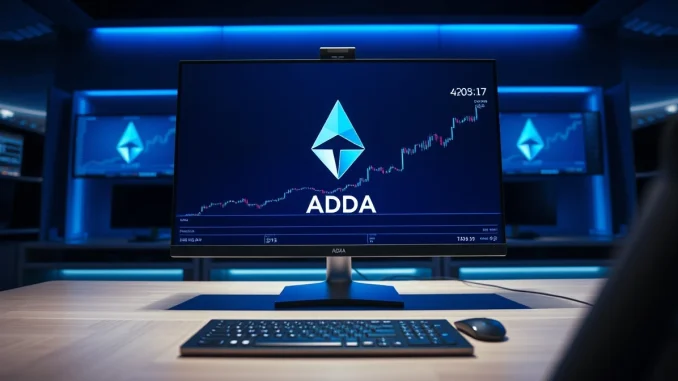
Cardano (ADA) remains one of the most closely watched assets in the cryptocurrency market, with ongoing development and a strong community driving long-term interest. As the network continues to evolve through its roadmap phases, many investors are asking whether ADA can reach the $2 mark within the next several years. This analysis examines the fundamentals, market cycles, and adoption trends that could influence Cardano’s price trajectory from 2026 through 2030.
Understanding Cardano’s Current Position
Cardano has distinguished itself through a research-driven approach to blockchain development, emphasizing peer-reviewed protocols and formal verification. The network’s transition to the Basho and Voltaire eras focuses on scalability, interoperability, and decentralized governance. These upgrades are critical for long-term value creation, as they aim to improve transaction throughput and enable community-driven decision-making.
Also read: Notcoin (NOT) Price Prediction 2026-2030: Can the Telegram Gaming Token Stage a Recovery?
Recent data shows that Cardano’s total value locked (TVL) in decentralized applications has grown steadily, though it remains smaller compared to Ethereum and Solana. The network’s focus on real-world use cases, particularly in supply chain tracking and identity verification, provides a different value proposition that may appeal to institutional and enterprise users over time.
Market Cycle Analysis and Price Projections
Cryptocurrency markets are historically cyclical, with major price movements often correlating with Bitcoin halving events and broader macroeconomic conditions. The next halving is expected in 2028, which historically has preceded significant rallies across the altcoin market. If this pattern holds, ADA could see increased momentum in the late 2020s.
Also read: Monero (XMR) Price Prediction 2026–2030: Can Privacy Coins Sustain Momentum?
Key Factors Influencing ADA’s Path to $2
Several variables will determine whether Cardano can reach $2 per token:
- Network adoption and dApp ecosystem growth: A thriving ecosystem of decentralized applications, particularly in DeFi and real-world asset tokenization, would increase demand for ADA as a utility token.
- Institutional interest and regulatory clarity: Clearer regulations in major markets like the United States and Europe could unlock significant capital inflows. Cardano’s emphasis on compliance and sustainability may give it an edge in regulated environments.
- Macroeconomic environment: Lower interest rates and a risk-on sentiment in global markets typically benefit cryptocurrencies. Conversely, tight monetary policy could suppress speculative demand.
- Technological milestones: Successful implementation of Hydra, Cardano’s layer-2 scaling solution, and full decentralized governance under Voltaire would strengthen the network’s fundamentals.
A $2 price target implies a market capitalization of roughly $70 billion at current circulating supply, which would place Cardano among the top five cryptocurrencies by market cap. While achievable in a bullish market cycle, this would require sustained adoption and favorable market conditions.
Long-Term Outlook: 2026 to 2030
The period from 2026 to 2030 is likely to be central for Cardano. The network’s governance transition could make it one of the most decentralized blockchain platforms, potentially attracting users who prioritize community control. Additionally, the growing interest in tokenizing real-world assets—such as real estate, commodities, and bonds—could provide a strong use case for Cardano’s low-energy proof-of-stake model.
However, risks remain. Competition from Ethereum, Solana, and emerging layer-1 blockchains is intense. Cardano’s slower development pace has drawn criticism, and the network must demonstrate that its methodical approach leads to superior security and scalability outcomes. Without clear adoption metrics, speculative price targets may remain difficult to justify.
Conclusion
Cardano’s price trajectory to $2 by 2030 is possible but far from guaranteed. The network’s strong fundamentals, governance upgrades, and focus on real-world applications provide a solid foundation. However, market cycles, competition, and macroeconomic factors will play decisive roles. Investors should view price predictions as speculative scenarios rather than guarantees, and focus on the underlying development and adoption trends that will ultimately determine Cardano’s long-term value.
FAQs
Q1: What is the highest price Cardano has ever reached?
Cardano’s all-time high was approximately $3.10, reached in September 2021 during the broader cryptocurrency bull market.
Q2: What are the main risks to Cardano’s price reaching $2?
Key risks include slower-than-expected adoption of its dApp ecosystem, regulatory headwinds, intense competition from other blockchains, and broader macroeconomic downturns that reduce risk appetite for speculative assets.
Q3: How does Cardano’s technology differ from Ethereum’s?
Cardano uses a proof-of-stake consensus mechanism called Ouroboros, which is designed to be more energy-efficient than Ethereum’s previous proof-of-work system. Cardano also emphasizes formal verification and peer-reviewed research for protocol upgrades, whereas Ethereum has taken a more iterative, community-driven approach to development.





Be the first to comment