
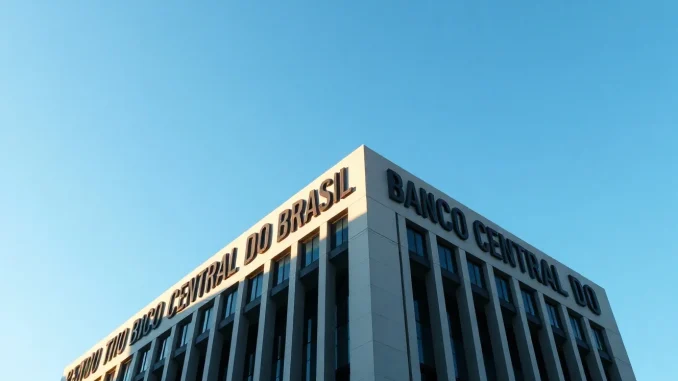
Brazil’s central bank, Banco Central do Brasil (BCB), has formally prohibited the use of virtual assets — including cryptocurrencies and stablecoins — for settlement within regulated cross-border payment and transfer services operating under the country’s eFX framework. The move, enacted through Resolution BCB No. 561 on May 1, 2026, tightens oversight of crypto-linked international flows and reinforces the central bank’s authority over foreign exchange channels.
What the new resolution changes
Resolution BCB No. 561 amends existing rules for eFX, a regulated category covering international payments and transfers. Under the new rules, payments or receipts between an eFX provider and its foreign counterparty must be carried out exclusively through a foreign exchange transaction or movement in a non-resident Brazilian real account. The use of virtual assets for settlement is explicitly prohibited.
Also read: Botanix shutdown: Does Bitcoin DeFi have a demand problem?
The restriction also applies under transitional rules for eFX providers not yet listed among approved categories. These firms may continue offering eFX services only if they apply for authorization from the central bank by May 31, 2027. However, even during this transition period, their payments and receipts must use foreign exchange transactions or non-resident real accounts — not virtual assets.
Not a blanket ban, but a targeted restriction
The rule does not amount to a comprehensive ban on crypto transfers in Brazil. Instead, it closes off the use of crypto and stablecoins specifically within the regulated eFX channel. This reinforces the central bank’s broader effort to keep cross-border payment flows within supervised foreign exchange rails, ensuring that transactions remain traceable and subject to existing financial oversight.
Also read: Bitcoin Options Traders Hedge Downside as Uncertainty Lingers, Anchorage Digital Reports
Brazil has been steadily folding virtual assets into its financial and foreign exchange rulebook as stablecoins become a larger part of the country’s crypto activity. In November 2025, the central bank detailed new rules for virtual asset service providers, including authorization requirements and rules for services involving virtual assets in the foreign-exchange market.
Why stablecoins are in the crosshairs
The central bank’s push follows growing concern over the use of stablecoins for payments and cross-border transfers. In February, Reuters reported that BCB Governor Gabriel Galipolo said crypto use had surged in the country over the previous two to three years, with approximately 90% of flows linked to stablecoins. He noted that this raised concerns around taxation, money laundering, and asset backing.
The eFX rule comes as Brazil’s central bank has also signaled concern over stablecoins issued by companies outside its regulatory perimeter. In a technical note sent to Congress, the central bank said stablecoins issued by entities not subject to BCB supervision could face a ban or strict conditions in the domestic market. The document warned that real-denominated stablecoins issued outside BCB supervision may pose risks to regulatory equality and monetary sovereignty, while foreign-currency stablecoins raise concerns around jurisdiction, capital flows, and fragmentation of the payments system.
Conclusion
Resolution BCB No. 561 marks a significant step in Brazil’s efforts to regulate the intersection of cryptocurrency and traditional finance. By barring virtual assets from settlement within regulated cross-border payment rails, the central bank is drawing a clear line between supervised financial channels and the crypto ecosystem. For market participants and users, the rule signals that while crypto is not banned in Brazil, its use in regulated foreign exchange transactions will face increasing scrutiny. The long-term implications will depend on how the central bank continues to refine its approach to stablecoins and virtual asset service providers.
FAQs
Q1: Does Resolution BCB No. 561 ban all crypto transactions in Brazil?
No. The resolution specifically prohibits the use of virtual assets for settlement within regulated eFX payment rails. Crypto transactions outside this channel remain unaffected, though they are subject to other existing regulations.
Q2: What is the eFX framework in Brazil?
eFX is a regulated category established by Brazil’s central bank covering international payment and transfer services. Providers operating under this framework must comply with specific foreign exchange rules and oversight requirements.
Q3: Why is Brazil targeting stablecoins specifically?
Stablecoins account for an estimated 90% of crypto flows in Brazil, raising concerns about taxation, money laundering, and monetary sovereignty. The central bank has expressed particular concern about stablecoins issued by entities outside its regulatory supervision.






Be the first to comment