
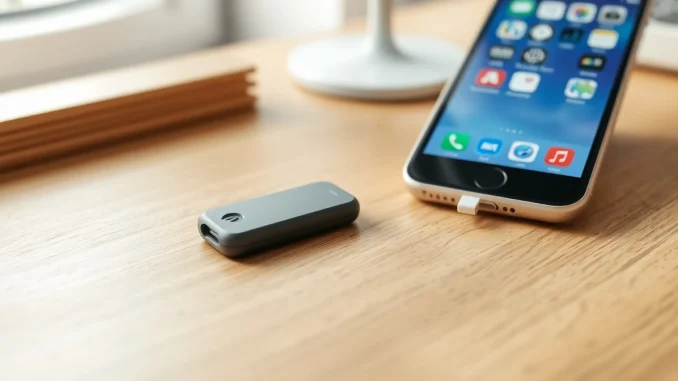
Screen-time apps have a fundamental flaw: they rely on your willpower. Notifications and timers are easy to dismiss when you’re mid-scroll. The Autonomous Key, a $9 NFC device from the ergonomics company Autonomous, takes a different approach by introducing a physical barrier between you and your most distracting apps.
The key pairs with a companion app, allowing you to lock away apps like Instagram or TikTok. To regain access, you must physically scan the key with your phone. Each unlock session lasts up to 60 minutes before the apps automatically lock again. This turns a mindless impulse into a deliberate decision, especially if you leave the key in another room or at the office.
Also read: Bank of Italy Study Finds Stablecoin Remittances Offer No Consistent Cost Advantage
A physical barrier where software falls short
The core idea isn’t new — other devices like Blok ($29), Unpluq ($26.50), and Brick ($59) have explored similar territory. However, Autonomous Key undercuts them all on price while covering the essential functionality. Brick offers extras like Sleep Mode and in-app purchase blocking, but for many users, the key’s simplicity is its strength.
The key itself is compact, measuring about 3 inches long, and works with Android 8.0 or later and iPhones running iOS 15 or later. It can be paired with multiple phones, making it a practical option for families or people with multiple devices.
Also read: Bhutan's Gelephu Mindfulness City Taps 3iQ to Manage Part of Its Bitcoin Treasury
There are no subscriptions or premium tiers — a notable contrast to many app-based blockers that gate features behind recurring fees.
AI insights with a sassy edge
The companion app tracks how often you unlock distracting apps, how long they remain accessible, and the times of day you’re most likely to reach for them. It then summarizes your habits with a deliberately sassy AI personality. For example, if you repeatedly unlock apps immediately after locking them, it might note that the key clearly wasn’t far enough away and suggest putting it somewhere less convenient.
This adds a layer of self-awareness that static timers lack. The AI isn’t just counting minutes — it’s pointing out behavioral patterns you might otherwise ignore.
Practical limitations and what’s next
During testing, the NFC scan occasionally required multiple attempts to register. That makes it less suitable for locking essential apps like messaging or email that you may need throughout the day. There’s also the question of losing the key — the current workaround is to uninstall and reinstall the companion app if your apps are locked. If they’re already unlocked, you can simply remove the key from your account. The company says a backup unlock method is in development.
The Autonomous Key is currently in beta following a Kickstarter campaign and began shipping earlier this month. It’s available in five colors: pink, orange, blue, gray, and brown.
For anyone who has repeatedly failed to stick with digital wellbeing tools, the key’s physical friction might be the missing piece. It won’t solve every distraction problem, but at $9, it’s a low-cost experiment in making your phone work for you — not the other way around.


Be the first to comment