
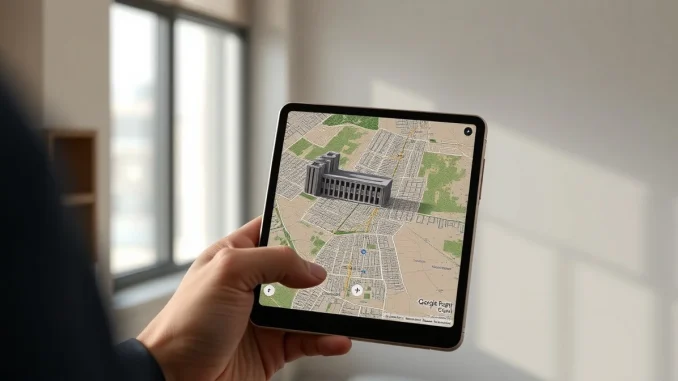
Google has pulled its new AI image generation feature in Google Earth just one day after launching it, following criticism that the tool could be used to create and spread misinformation. The feature, introduced on Thursday, July 31, 2026, allowed users to use the company’s Nano Banana 2 image generator to overlay fabricated images onto real satellite maps.
The backlash was swift. A BBC journalist posted sarcastically on social media, “There’s no way that this new AI image generation feature on Google Earth, one of the most reliable sources of visual evidence for journalists and researchers, could possibly be abused to spread misinformation online.”
Also read: Sam Altman Says AI Needs to Slow Down. His Own Company Just Showed Why.
A tool meant for creativity, but with a dangerous flip side
Google described the feature as a way to “get creative with geography,” allowing users to generate images and place them anywhere on the map. However, the ability to superimpose realistic-looking images over actual locations raised immediate red flags among researchers and journalists who rely on Google Earth as a trusted source of visual evidence.
In a statement, Google said: “We’ve seen geospatial professionals using this feature for a range of useful purposes, however we’ve also seen people sharing screenshots of generated imagery that appear to violate our policies. We’re rolling back this feature in Google Earth while we work on implementing stronger guardrails.”
Also read: India's App Revenue Hits Record $345M in Q2 as AI and Streaming Drive Spending
The rapid reversal highlights the growing tension between AI innovation and the need for safeguards, especially when the tool touches on mapping and satellite imagery, which carry an implicit promise of accuracy.
Misinformation in the age of AI-generated imagery
The criticism of Google’s tool is understandable, but it also points to a broader reality: in the age of AI, most imagery on the web can be easily manipulated. Creating semi-credible disinformation no longer requires advanced Photoshop skills—just access to an AI image generator, which Google itself sells, as do many other companies.
This incident is part of a wider pattern. In recent months, AI-generated images have been used to create fake news photos, impersonate public figures, and spread false narratives on social media. The challenge for platforms like Google is balancing the creative potential of AI with the risk of amplifying misinformation.
For journalists and researchers, the rollback is a relief, but it also serves as a reminder that even trusted tools can become vectors for disinformation if not properly controlled.
What this means for Google and AI policy
Google’s decision to pull the feature so quickly suggests the company is sensitive to the reputational risk of being seen as enabling misinformation, especially in an election year and amid growing regulatory scrutiny of AI.
The company has not said when the feature might return, but the promise of “stronger guardrails” indicates that it sees value in the tool if it can be made safer. That could mean restrictions on what types of images can be generated, watermarking requirements, or limits on where generated images can be placed.
For now, Google Earth remains free of AI-generated imagery, but the episode underscores a key question for the tech industry: how to harness the power of generative AI without eroding trust in platforms that people depend on for accurate information.



Be the first to comment