
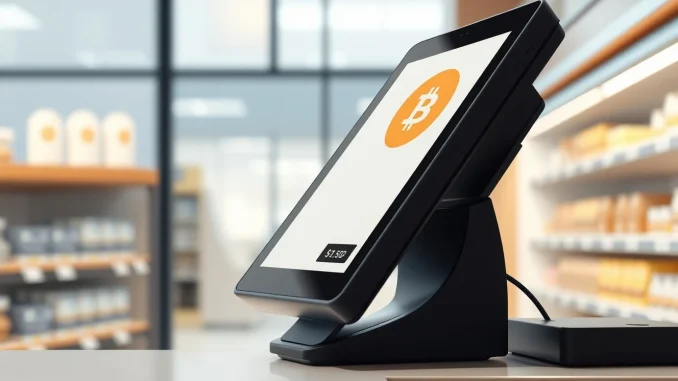
Square, the payments division of Block, has begun a major rollout allowing US merchants to accept Bitcoin directly at their point-of-sale terminals. Announced on March 30, 2026, the feature automatically converts cryptocurrency to US dollars at checkout, aiming to make Bitcoin a practical payment tool for everyday transactions.
How Square’s Bitcoin Payment System Works
According to company statements, the process is designed for simplicity. When a customer pays with Bitcoin, the transaction converts to cash instantly. Merchants receive dollars by default, eliminating exposure to Bitcoin’s price volatility. “Eligible US sellers will have payments automatically enabled and will receive US dollars by default,” said Miles Suter, Bitcoin product lead at Block, in a post on X.
The system requires no additional setup from merchants. Settlement is near-instant. A key incentive: Square will charge zero processing fees for these Bitcoin transactions through the end of 2026.
Merchants also have an option. They can choose to automatically convert a portion of their daily sales into Bitcoin, a feature Suter called “stacking.” This suggests Square sees value in offering businesses a path to holding the cryptocurrency directly.
Also read: Spain’s CNMV Chair Rules Out MiCA Deadline Extension for Crypto Firms, Impacting Binance
The Strategic Push for Mainstream Crypto Commerce
This move is not sudden. Block first outlined plans for this rollout in May 2025. The goal, as stated by executives, is to advance the use of “Bitcoin as everyday money.” For Block, this is a logical extension of its existing crypto infrastructure, which includes the Cash App for consumer Bitcoin trading.
Industry watchers note the timing is significant. After a period of market consolidation, major payment processors are integrating crypto not as a speculative asset, but as a functional medium of exchange. Square’s approach removes two major hurdles for merchants: price risk and the complexity of handling cryptocurrency directly.
“By settling in dollars and handling the conversion, Square absorbs the volatility risk that has scared off most traditional retailers,” said a payments analyst who requested anonymity because they were not authorized to speak publicly. “This could signal a shift from ‘crypto payments’ as a niche to a standardized feature.”
Block’s Substantial Bitcoin Bet
Block’s commitment to Bitcoin extends beyond software. According to data from BitcoinTreasuries.net, Block holds 8,883 BTC on its corporate balance sheet. This positions it as the 14th-largest publicly traded holder of the cryptocurrency, with an average reported cost of $32,939 per coin.
This substantial treasury means Block has a vested interest in encouraging Bitcoin’s utility. Enabling payments at millions of merchant terminals creates real-world demand and use cases, which could support the asset’s long-term value proposition.
Eligibility and Geographic Rollout
The feature is currently available to US-based sellers who meet Square’s standard verification requirements. There is one notable exclusion: businesses based in New York State. This is likely due to the state’s complex BitLicense regulatory framework for cryptocurrency activities.
The rollout is phased over the month following the March 30 announcement. Square expects Bitcoin payment acceptance to be available to all its US merchants by approximately April 10, 2026.
What this means for investors is a potential expansion of Square’s total addressable market. It could attract merchants interested in catering to crypto-holding customers without taking on operational complexity.
Broader Context: Bitcoin’s Evolving Financial Role
Square’s launch coincides with Bitcoin’s expansion into other financial areas. Beyond payments and its store-of-value narrative, Bitcoin is increasingly used as collateral in lending.
- Exchange-Based Lending: In January 2026, Coinbase reintroduced Bitcoin-backed loans in the US, allowing users to borrow up to $100,000 in USDC stablecoin.
- Traditional Finance Integration: Firms like mortgage lender Rate have launched programs allowing verified crypto holdings to meet underwriting requirements without asset liquidation.
- Structured Products: Companies like Nexo reported facilitating over $140 million in borrowing through crypto-backed loans in 2025 via private channels.
This trend suggests financial institutions are building infrastructure around Bitcoin’s liquidity and perceived value, treating it more like a traditional financial asset.
Potential Impact and Market Reaction
The immediate impact could be psychological. Square’s move lends institutional credibility to Bitcoin payments. However, the practical effect depends on merchant adoption and consumer willingness to spend Bitcoin rather than hold it.
Data from other crypto payment processors shows mixed results. Consumer spending behavior often favors using traditional currencies for daily purchases, saving crypto for investment. Square’s dollar-conversion model might overcome this by making the experience identical for the merchant, regardless of the customer’s payment choice.
The implication is a quieter, more practical form of adoption. If successful, it could pressure competitors like PayPal and Stripe to enhance or reintroduce their own native crypto payment options.
Conclusion
Square’s rollout of Bitcoin payments at point-of-sale represents a significant step in cryptocurrency’s commercial integration. By removing volatility risk and simplifying settlement for merchants, Square is testing whether Bitcoin can function at scale as a payment method. The success of this initiative will be measured not by Bitcoin’s price, but by transaction volume and merchant uptake through 2026. This move underscores a broader industry trend: building usable financial products around digital assets, moving beyond speculation toward utility.
FAQs
Q1: Do merchants receive Bitcoin or US dollars when a customer pays with Bitcoin?
Merchants receive US dollars by default. The Bitcoin is instantly converted at the point of sale, so the merchant never holds the cryptocurrency unless they opt into the “stacking” feature.
Q2: Are there fees for merchants to accept Bitcoin payments with Square?
Square has stated it will charge zero processing fees for Bitcoin transactions through the end of 2026. Standard processing fees for the settled dollar amount may apply after that date.
Q3: Can any Square merchant in the US use this feature?
The feature is rolling out to eligible US sellers who meet verification requirements. Businesses based in New York State are currently excluded, likely due to state-specific cryptocurrency regulations.
Q4: What happens if the Bitcoin price changes during the transaction?
The conversion from Bitcoin to dollars happens instantly at checkout. This means the merchant is guaranteed a fixed dollar amount, and Square or its partners manage the exchange rate risk.
Q5: How does this differ from previous ways merchants could accept crypto?
Earlier solutions often required merchants to use separate crypto payment processors or handle volatile assets directly. Square’s integration is automatic within its existing point-of-sale system and guarantees dollar settlement, making it operationally simpler.






Be the first to comment