
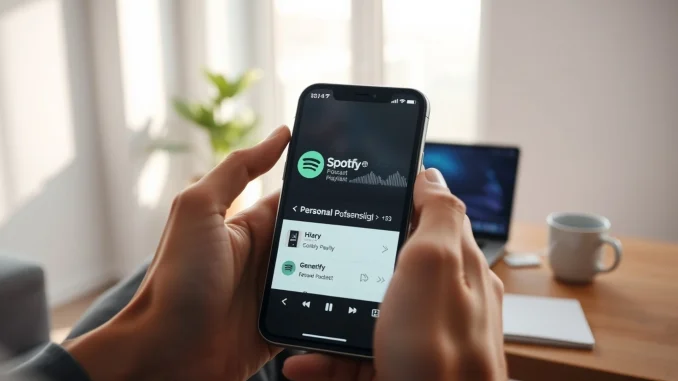
Spotify is taking a cautious step into the world of AI-generated audio. The company has released a new command-line interface (CLI) tool, currently in beta, that allows users to create personal podcasts from their own documents, notes, or schedules and import them directly into their Spotify library.
How the New Spotify CLI Tool Works
The feature is not a consumer-friendly button within the app. Instead, Spotify is targeting users who are already comfortable with programming tools. To use it, you need access to an AI coding agent like OpenAI’s Codex, Anthropic’s Claude Code, or OpenClaw. After installing the tool from its GitHub page and logging into Spotify through a browser, users can write a natural-language prompt — such as “Build me an audio session that dives deep into the history of the World Cup with details about key players, where it’s been held, and what I should know about the games this year” — and the agent will generate a podcast-style audio file. That file is then saved to the user’s Spotify library for personal listening only. It is not shared publicly with other Spotify users.
Also read: Claude is quietly winning over paying AI consumers, data shows, even as ChatGPT still dominates
Context: The Rise of AI-Generated Personal Audio
Spotify’s move follows a broader trend in the tech industry. In recent years, apps like Google’s NotebookLM, Hero, and Adobe Acrobat have introduced features that convert written material — such as research papers, daily schedules, or articles — into spoken audio, often mimicking the format of a podcast. These tools have been particularly popular among students, researchers, and professionals who want to consume information hands-free. Spotify’s entry into this space is notable because it leverages the company’s existing massive user base and listening infrastructure, allowing users to centralize their personal AI-generated audio alongside their music and traditional podcasts.
Why This Matters for Spotify Users
For the average listener, this feature is not yet accessible. It requires technical know-how to set up and run the CLI tool, and it depends on third-party AI coding agents. However, the move signals Spotify’s long-term ambition to become a platform for all forms of audio — including highly personalized, AI-generated content. The company’s blog post explicitly states that users are “already starting to use their agents to create personal audio that guides their day: from summaries of class notes before an exam to briefings of what’s on their calendar.” By offering a direct import path, Spotify is positioning itself as the default listening destination for this emerging category of AI-generated personal audio.
Also read: Databricks' former AI chief claims his new chip can cut AI's energy bill by 1,000x
Conclusion
Spotify’s beta CLI tool represents a strategic, if technically niche, step toward integrating AI-generated personal audio into its ecosystem. While the current implementation requires programming skills, it lays the groundwork for a future where creating a custom podcast from your own documents is as simple as pressing a button. For now, it remains a developer-focused experiment — but one that hints at a significant shift in how we consume personalized audio content.
FAQs
Q1: Can any Spotify user create AI-generated podcasts with this tool?
No. The tool is in beta and requires users to have access to and familiarity with AI coding agents like OpenAI’s Codex or Anthropic’s Claude Code. It is not a consumer-facing feature within the Spotify app.
Q2: Are the AI-generated podcasts I create shared with other Spotify users?
No. The generated podcasts are saved to your personal Spotify library and are not visible or accessible to other users. They are for private listening only.
Q3: What kind of content can I turn into a podcast using this tool?
Users can upload or reference documents, notes, class materials, schedules, or any text-based content. The AI agent then generates an audio session based on a user’s prompt, summarizing or discussing the material in a podcast-style format.




Be the first to comment