
[ad_1]
Money has changed a lot over time, from barter systems to digital payments. Now, we’re seeing the rise of programmable money, which is changing the way transactions are made. This new type of money uses smart contracts to automatically process payments when certain conditions are met. Unlike traditional money, which needs human involvement to make transactions, programmable money moves on its own according to rules written in code.
Also read: NyesteCasino.com Reports: iGaming Industry Navigates Dual Pressures of Regulation and Growth
That will all be enabled through blockchain. Smart contracts make the processes faster, more secure, and more transparent. That is already one revolution slowly dawning on such industries as finance, supply chain, and electronic commerce. By understanding how programmable money works and its various benefits, this can help individual and business smart financial decisions.
What Is Programmable Money?
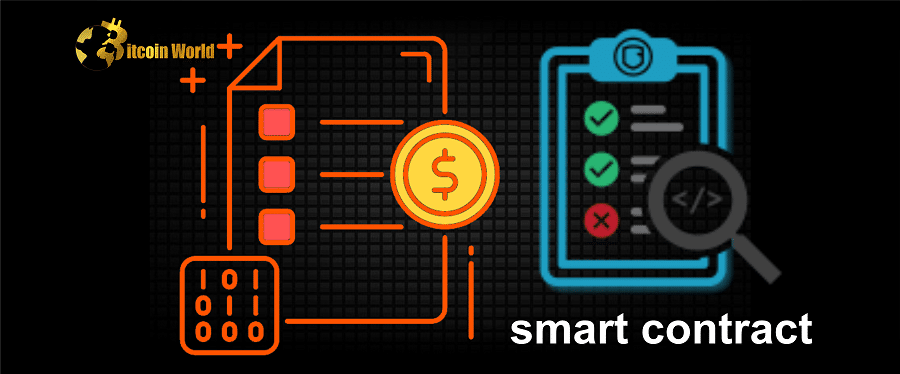
Smart contracts are self-executing agreements resident on a blockchain. No middlemen, such as banks or payment processors, are required.
Also read: Football, Crypto and $5 Million of Rewards in 1win’s World Cup Mega Tournament
A good example is whereby a company hires a freelancer, and upon the work being done and verified, a smart contract can automatically release the payment. This automates and reduces delays in adding fairness to both parties. Unlike the traditional banking systems that take days to effect transactions, programmable money enables instant and trustless transactions.
How Smart Contracts Work in Payments
Smart contracts are built using blockchain networks like Ethereum, Solana, and Cardano. These contracts contain rules that trigger actions when conditions are met. Here’s how they work in payments:
Agreement Setup – Two or more parties define payment terms in a smart contract.
Verification – The contract checks whether the conditions are met, such as product delivery or service completion.
Execution – Once the criteria are fulfilled, the smart contract releases the payment automatically.
Record Keeping – Every transaction is recorded on the blockchain, ensuring transparency and security.
By removing manual processes, smart contracts improve efficiency and reduce costs associated with third-party involvement.
Benefits of Programmable Money
Programmable money offers several advantages over traditional financial systems:
Faster Transactions – Payments occur in real time without needing manual approval.
Lower Costs – No intermediaries mean fewer transaction fees.
Security – Blockchain ensures fraud prevention and tamper-proof records.
Transparency – All transactions are recorded publicly, reducing disputes.
Automation – Payments are processed automatically, improving efficiency.
Global Access – Cross-border payments become easier and cheaper.
These benefits make programmable money attractive to businesses, freelancers, and financial institutions.
Use Cases of Programmable Money
Smart contracts enable various real-world applications for programmable money. Some of the most impactful use cases include:
Use Case
Description
Payroll Automation
Companies can use smart contracts to pay employees automatically on a set schedule.
Supply Chain Payments
Suppliers receive payments instantly when they deliver and verify goods.
Insurance Payouts
The system processes and pays out claims automatically when conditions are met.
Lending and Borrowing
Automated agreements issue and repay loans.
Subscription Services
The system handles payments for memberships or services without manual renewals.
Escrow Services
The system holds and releases funds only when both parties fulfill their obligations.
These use cases show how different industries can benefit from smart contract-based transactions.
Challenges and Limitations
While programmable money offers many advantages, there are also challenges to consider:
Technical Complexity – Not everyone understands blockchain and smart contracts.
Regulatory Uncertainty – Governments are still developing rules for digital payments.
Security Risks – Smart contracts can have coding errors that hackers exploit.
Limited Adoption – Many businesses still rely on traditional banking systems.
Network Fees – Transactions on some blockchains can become expensive during high demand.
Despite these challenges, ongoing innovation is making programmable money more accessible and reliable.
The Future of Programmable Money
Programmable money will be a big element in the international financial systems. More businesses and people realize its potential, therefore, have started to adopt it. Governments are also exploring CBDCs with smart contract features.
Blockchain, as it evolves, will have lower transaction costs and greater security. Financial institutions will adopt smart-contract-powered payments, making each digital transaction frictionless. In turn, programmable money in this process replaces a host of traditional bank processes over due course.
Programmable money through smart contracts is the new order to make payments for speed, security, and automation, reducing reliance on intermediaries. That means businesses can automate payroll, supply chain payments, and insurance claims, while people conduct transactions instantly and transparently.
While there are still challenges ahead, the future of programmable money is bright. As blockchain technology continues to advance, more industries will adopt financial solutions based on smart contracts. Understanding this innovation today empowers individuals and enterprises to prepare for the future in digital payments.
[ad_2]
Source link

Written by
CoinPulseHQ Editorial
The CoinPulseHQ Editorial team is a dedicated group of cryptocurrency journalists, market analysts, and blockchain researchers committed to delivering accurate, timely, and comprehensive digital asset coverage. With combined experience spanning over two decades in financial journalism and technology reporting, our editorial staff monitors global cryptocurrency markets around the clock to bring readers breaking news, in-depth analysis, and expert commentary. The team specializes in Bitcoin and Ethereum price analysis, regulatory developments across major jurisdictions, DeFi protocol reviews, NFT market trends, and Web3 innovation.
Related Articles
- Nightrush.com Responds to the AI Personalization Wave Reshaping iGaming And Raises the Bar
Norwich, United Kingdom, 10th June 2026, PlayNewswire...
- FairGambling Launches Crypto Casino Review and Analytics Platform With Provably Fair Tools and Extra Rewards
New York, USA, 5th June 2026, PlayNewswire...
- Crypto Platform 1win Welcomes Ilia Topuria as the 1win VIP Community Member
Mexico City, Mexico, 3rd June 2026, PlayNewswire...
- Enhanced Secures $1M in Strategic Pre-Seed Funding to Bring Structured Yield to More Assets Onchain
Kuala Lumpur, Malaysia, 10th April 2026, Chainwire...
- Bybit Launches AI Skills: Powering AI Agents for Crypto Trading With Zero Setup, 253 API Endpoints and Growing
Dubai, UAE, 13th March 2026, Chainwire...


Be the first to comment