
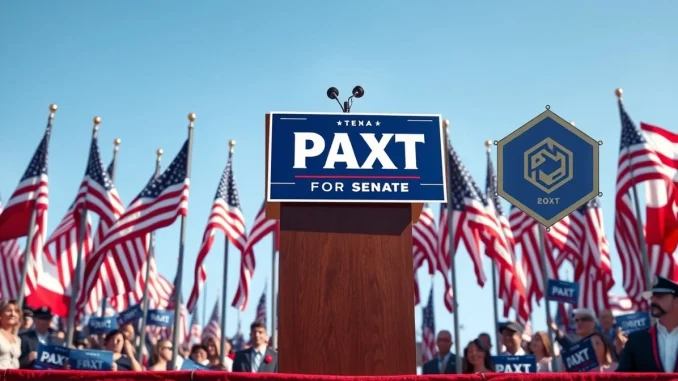
A crypto-aligned political action committee, Fellowship PAC, has poured $1.75 million into the Texas Senate race. The group is backing Attorney General Ken Paxton. He faces incumbent Senator John Cornyn in a May 26 runoff. The PAC is led by Tether’s head of government affairs. This spending is part of a broader $3 million campaign.
The Fellowship PAC disclosed the expenditures in a Tuesday filing with the Federal Election Commission. The bulk of the money supports Paxton. But the PAC also funded ads for other candidates. These include Mike Collins in Georgia, Barry Moore in Alabama, and Blake Miguez and Julia Letlow in Louisiana.
Also read: Tokenized RWAs surge 589% as Zcash, Galaxy, and Kraken drive crypto news
All payments went through the Nxum Group. That marketing firm was co-founded by Bo Hines. Hines is a former White House crypto adviser and CEO of Tether US. The connection raises questions about the PAC’s influence.
Fellowship PAC Spending Details
The FEC filing shows a clear pattern. Fellowship PAC spent $1.75 million on Paxton. Another $350,000 went to Collins. Moore received $350,000. Miguez got $250,000. Letlow got $350,000. The total for these five candidates is $3 million.
Also read: Saylor signals another Bitcoin buy as Strategy shareholders vote on dividend change
This is a big bet on the Texas Senate race. Paxton is a controversial figure. He faced impeachment in 2023 over corruption allegations. The Texas House voted to impeach him. But the Texas Senate later acquitted him. Now he wants to unseat Cornyn, a three-term senator.
The PAC launched in September 2025. It claimed to have over $100 million from undisclosed investors. But FEC records show only $11 million in contributions. No public filings identify the backers. This lack of transparency is notable.
How Crypto PACs Influence Elections
Crypto-backed PACs are becoming major players. Fellowship PAC joins Fairshake and others. Fairshake spent over $131 million in 2024. That money targeted key battleground states. The goal is to elect pro-crypto candidates.
Industry watchers note that this spending could shift outcomes. The 2026 midterms are a test case. Crypto firms want favorable regulation. They support candidates who back digital assets. The Texas Senate race is a prime example.
Paxton has positioned himself as a crypto ally. He has supported blockchain initiatives in Texas. Cornyn has a mixed record on crypto. The runoff will determine the Republican nominee. The winner faces Democrat James Talarico in November.
Kalshi Suspends Texas Candidate
Prediction markets are also involved. Kalshi, a platform for event contracts, announced penalties on Wednesday. Three candidates were suspended for betting on their own races. One was Ezekiel Enriquez of Texas.
Enriquez bought less than $100 worth of contracts. He bet on his own candidacy for Texas’ 21st Congressional District. Kalshi suspended him for five years. He also paid a $784.20 fine. This shows the risks of insider trading on prediction markets.
The incident highlights a growing issue. Candidates and insiders can use these platforms to profit. Regulators are watching closely. The Commodity Futures Trading Commission has jurisdiction over some markets. But enforcement remains uneven.
Background on Ken Paxton and John Cornyn
Ken Paxton has been Texas Attorney General since 2015. His tenure has been marked by legal battles. He was indicted on securities fraud charges in 2015. Those charges are still pending. He also faced a whistleblower lawsuit. The impeachment in 2023 stemmed from allegations of bribery and abuse of office.
John Cornyn has served in the Senate since 2002. He is a senior Republican. He has chaired the Senate Judiciary Committee. His voting record on crypto is cautious. He has supported some blockchain bills but opposed others.
The runoff is set for May 26. Early voting starts in early May. The winner will be the Republican nominee. The general election is in November. Texas is a solidly Republican state. But demographic changes are making it more competitive.
Broader Implications for 2026 Midterms
The Fellowship PAC spending is part of a larger trend. Crypto money is flowing into politics. The 2024 cycle saw record spending. The 2026 cycle could be even bigger. Fairshake and its affiliates are already active. They have reserved ad time in key states.
What this means for investors is clear. Crypto companies want a friendly regulatory environment. They are willing to spend heavily to get it. The Texas Senate race is a test case. If Paxton wins, it could signal a shift. If Cornyn wins, it might slow the momentum.
Industry watchers note that the PAC’s undisclosed donors are a concern. Critics say this undermines transparency. Supporters argue it is standard political strategy. Either way, the money is having an impact.
Conclusion
The Fellowship PAC’s $1.75 million bet on Ken Paxton underscores the growing role of crypto money in politics. The Texas Senate race is a key battleground. The outcome could influence regulatory policy for years. As the 2026 midterms approach, expect more spending from crypto-aligned groups. The fight for control of the Senate is just beginning.
FAQs
Q1: What is the Fellowship PAC?
A: The Fellowship PAC is a crypto-aligned political action committee. It was launched in September 2025. It is led by Tether’s head of government affairs. The PAC supports pro-crypto candidates.
Q2: How much did Fellowship PAC spend on the Texas Senate race?
A: The PAC spent $1.75 million supporting Ken Paxton. This is the largest single expenditure in its FEC filing.
Q3: Who is Ken Paxton?
A: Ken Paxton is the Texas Attorney General. He is a Republican candidate for the US Senate. He faces incumbent John Cornyn in a May 26 runoff.
Q4: Why are crypto PACs spending so much on elections?
A: Crypto companies want favorable regulation. They support candidates who back digital assets. The 2026 midterms are a key opportunity to influence policy.
Q5: What happened with Kalshi and the Texas candidate?
A: Kalshi suspended Ezekiel Enriquez for five years. He bet on his own candidacy. He also paid a $784.20 fine. This is part of a broader crackdown on insider trading in prediction markets.




Be the first to comment