
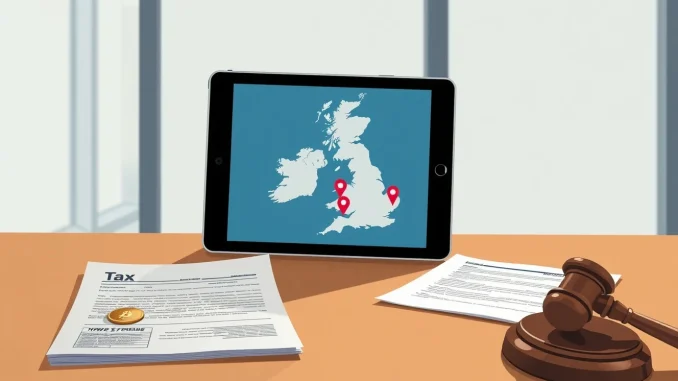
Three major stories are shaping the cryptocurrency sector today. A leading exchange is pushing Washington for significant tax changes, UK authorities have conducted nationwide raids, and a prominent blockchain founder has taken legal action. These developments highlight ongoing tensions between innovation, regulation, and user protection in the digital asset space.
Kraken’s Call for US Crypto Tax Reform
Cryptocurrency exchange Kraken has issued a public plea for changes to US tax reporting rules. The call follows the company’s submission of millions of tax forms to the Internal Revenue Service (IRS) for the 2025 tax year. According to a blog post published on April 22, 2026, Kraken reported sending over 56 million 1099-DA forms to the tax agency.
Data from the exchange shows a significant portion of these reports involved very small sums. Kraken stated that approximately 18.5 million forms were for transactions valued at less than $1. Furthermore, about 28 million forms covered transactions of $10 or less. In total, 75% of all forms submitted were for transactions under $50.
This volume of paperwork forms the basis of Kraken’s argument. The exchange is advocating for a de minimis exemption. This policy would exclude small, routine digital asset payments from capital gains reporting requirements. Industry watchers note that similar exemptions exist for foreign currency transactions and minor stock sales.
Also read: Spain’s CNMV Chair Rules Out MiCA Deadline Extension for Crypto Firms, Impacting Binance
Kraken also targeted the tax treatment of staking rewards. The current framework often creates ‘phantom income,’ where holders owe taxes on the value of rewards they have not sold or otherwise realized. “This is not about helping crypto companies,” Kraken’s post stated. “It is about 55 million Americans… who are handling a tax system designed before digital assets existed.”
What this means for investors is continued complexity without legislative action. The exchange’s push suggests a growing industry effort to align crypto tax policy with practical reality.
UK Financial Watchdog Targets Illegal Crypto Trading
In a separate development, the UK Financial Conduct Authority (FCA) executed coordinated raids across the country. The operation on April 22, 2026, targeted sites suspected of hosting illegal peer-to-peer (P2P) cryptocurrency trading.
The regulator, working with HM Revenue & Customs and a regional crime unit, inspected eight locations. Officials issued on-site cease-and-desist orders and gathered evidence for criminal investigations. This marks the FCA’s first major enforcement operation specifically focused on unregistered P2P crypto trading platforms.
Steve Smart, the FCA’s executive director of enforcement, was clear about the risks. “Unregistered peer-to-peer crypto traders operating in the UK are doing so illegally and pose a financial crime risk,” he said. In the UK, any business conducting crypto asset activities must register with the FCA for anti-money laundering (AML) purposes. The FCA confirmed that no P2P crypto traders or platforms currently hold this required registration.
P2P crypto trading allows direct transactions between individuals, bypassing centralized exchanges. While not inherently illegal, unregistered operations violate UK financial law. This action follows other FCA moves against illegal crypto ATM networks and unlicensed exchanges. The implication is a sustained regulatory crackdown on the non-compliant corners of the UK’s crypto market.
Understanding the Regulatory Stance
Analysts see this as part of a broader pattern. Regulators worldwide are increasing scrutiny of off-exchange trading venues. These platforms can lack the customer protections and monitoring systems of larger, registered exchanges. The FCA’s decisive move signals low tolerance for operations that sidestep AML rules. For users, the message is to verify a platform’s registration status before trading.
Justin Sun Files Lawsuit Over Frozen Tokens
The third major story involves Tron founder Justin Sun and a legal dispute over token access. On April 22, 2026, Sun announced he had filed a lawsuit in a California federal court against World Liberty Financial (WLFI).
In a social media post, Sun alleged the company froze his tokens and threatened to destroy them “without any proper justification.” He stated the legal action was necessary to protect his rights as a token holder after failed negotiations. “I have tried in good faith to resolve this situation… But the project team has refused my requests to unfreeze my tokens,” Sun wrote.
This lawsuit escalates a conflict that began earlier in April. Sun previously criticized WLFI for long lockup periods on its governance token. He also raised concerns about a recent governance proposal, noting that 76% of the voting power came from just ten wallets. This, he argued, indicated a lack of transparency.
The case touches on key issues in decentralized finance: governance rights, token liquidity, and the power of project developers. A legal ruling could set a precedent for how courts handle disputes involving frozen digital assets and governance mechanisms.
Connecting the Dots in a Maturing Industry
While distinct, today’s three stories share a common thread: the growing pains of a maturing industry. Kraken’s tax reform effort addresses systemic friction between old rules and new technology. The UK raids demonstrate active enforcement against illegal operations. Sun’s lawsuit tests how traditional legal systems handle novel crypto-native disputes.
For market participants, these events underscore a shifting environment. Compliance and regulatory engagement are becoming unavoidable. The era of operating in a regulatory gray area is closing rapidly in major jurisdictions. This suggests that future growth may increasingly depend on clear rules and lawful operation.
Conclusion
Today’s crypto news reveals an industry at a crossroads. Significant efforts are underway to reform tax policy, enforce existing laws, and resolve disputes through legal channels. The push from Kraken, the action by the UK FCA, and the lawsuit from Justin Sun collectively highlight the ongoing integration of cryptocurrency into the mainstream financial and legal framework. For investors and users, staying informed on these regulatory and legal fronts is now as important as tracking market prices.
FAQs
Q1: What is a de minimis tax exemption, and why does Kraken want it?
A de minimis exemption sets a minimum value below which transactions are not subject to tax reporting. Kraken argues that reporting millions of transactions worth less than $1 creates unnecessary paperwork for both the exchange and users, and that the current system is ill-suited for small, frequent crypto payments.
Q2: Is peer-to-peer (P2P) crypto trading illegal in the UK?
P2P trading itself is not illegal. However, operating as a P2P crypto trading *business* in the UK requires registration with the Financial Conduct Authority (FCA) for anti-money laundering purposes. The FCA raided sites that were operating as unregistered businesses, which is against the law.
Q3: What are ‘phantom taxes’ on staking rewards?
Phantom taxes refer to a situation where a cryptocurrency holder owes income tax on the value of staking rewards they have earned but not yet sold. The tax liability is created even though the holder hasn’t converted the rewards into cash, which can create a cash flow problem if the token’s value declines.
Q4: What is the significance of Justin Sun’s lawsuit?
The lawsuit could establish important legal precedents regarding the rights of token holders and the authority of project teams to freeze or control assets. It tests how traditional courts will handle disputes that arise from the governance rules of decentralized projects.
Q5: Has the FCA taken action against crypto businesses before?
Yes. The FCA has a history of enforcement in the crypto sector. Prior actions include prosecuting operators of illegal crypto ATM networks and making arrests linked to unlicensed cryptocurrency exchanges. The P2P trading raids are an extension of this ongoing regulatory effort.






Be the first to comment