
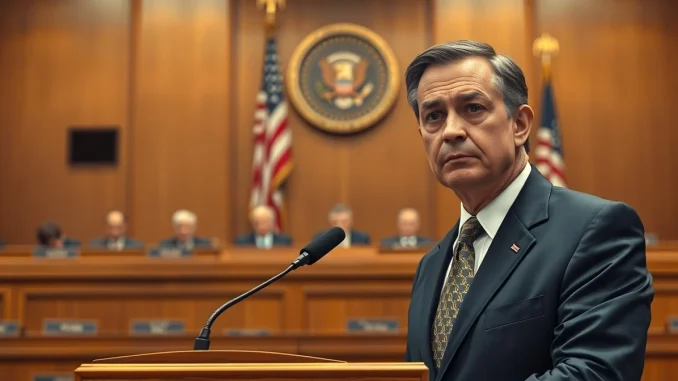
WASHINGTON, D.C. — A sharp political clash over financial regulation has erupted. Senator Elizabeth Warren has publicly accused Securities and Exchange Commission Chair Paul Atkins of providing misleading information to Congress about the agency’s enforcement activity. The allegation centers on a significant drop in cases brought by the SEC during the 2025 fiscal year.
Warren’s Allegation and the Data Discrepancy
According to a letter sent by Senator Warren on April 16, 2026, and reviewed for this report, the Massachusetts Democrat claims Chair Atkins “may have been deliberately trying” to mislead the Senate Banking Committee. The conflict stems from a hearing on February 12, 2026. At that hearing, Warren questioned Atkins about publicly available data suggesting a decline in SEC enforcement. Atkins responded that he was “not sure what data” Warren was examining.
Also read: Bitcoin at Risk of Sub-$65K Drop as Geopolitical Tensions and Liquidations Pressure Market
But the SEC’s own enforcement report for fiscal year 2025, released on April 7, 2026, appears to validate Warren’s initial concern. Data from the report shows the number of enforcement actions initiated by the SEC was lower than any point in the preceding decade. “Now, it is clear that my assertion regarding the SEC’s declining enforcement actions was correct,” Warren wrote in her letter.
Analyzing the SEC’s Enforcement Numbers
The raw figures tell a stark story. While the SEC has not yet published a full comparative table for 2025, historical data provides context. In fiscal year 2024, the agency initiated over 700 enforcement actions. Preliminary analysis of the 2025 report suggests a drop to approximately 600 cases. This would represent the lowest total since the mid-2010s.
Also read: SEC makes digital assets a strategic priority through 2030, promising clearer rules
Warren called the data “deeply disturbing.” She argued it shows the SEC has “largely abdicated its enforcement responsibilities.” Industry watchers note that enforcement metrics are a key barometer of regulatory vigor. A sustained decline could signal a shift in policy priority away from aggressive oversight.
What this means for investors is a potential change in the risk calculus. Fewer enforcement actions might suggest reduced deterrence for market misconduct.
The Crypto Enforcement Rollback
The debate is not happening in a vacuum. A specific area of contention is the SEC’s approach to cryptocurrency firms. Under the current administration, the agency has settled or dismissed several high-profile crypto-related lawsuits that were launched during the previous administration. This policy shift has drawn criticism from Warren and other lawmakers who favor a stricter stance.
“The SEC has rolled back its enforcement against crypto companies,” Warren’s letter states, framing it as part of a broader retreat. This suggests the enforcement decline may be particularly pronounced in newer, complex areas like digital assets.
The Timeline of Testimony and Data Release
The chronology of events is central to Warren’s accusation. The 2025 fiscal year ended on September 30, 2025. The congressional hearing where Warren questioned Atkins occurred on February 12, 2026—more than four months later. The official enforcement data was not released until April 7, 2026.
Warren contends that Atkins, as chair, should have been aware of the agency’s annual performance metrics well before the February hearing. His “deflection and claim to be unsure of the ‘data’ I was examining now appear deeply misleading,” she wrote. The implication is that Atkins knew the numbers were low but chose not to acknowledge it publicly.
Political and Regulatory Implications
This dispute sits at the intersection of political oversight and bureaucratic management. The SEC chair is a presidential appointee, and enforcement philosophy often aligns with the sitting administration’s goals. A decline in actions could reflect a deliberate policy choice to reduce regulatory burdens on business.
But Warren’s letter challenges the transparency of that shift. She has asked Atkins a series of pointed questions, including whether he was aware of the enforcement totals during his February testimony. She requested a response by April 28, 2026. The SEC has not yet publicly responded to Warren’s letter or to requests for comment on this story.
This could signal a prolonged confrontation. The Senate Banking Committee, where Warren serves as the top Democrat, has broad oversight authority over the SEC. Sustained pressure could lead to further hearings or demands for internal documents.
Historical Context for SEC Enforcement
Enforcement levels at the SEC have fluctuated with different chairs and political climates. For example, following the 2008 financial crisis, enforcement activity surged as the agency sought to address systemic failures. In more recent years, the focus has alternated between traditional securities fraud and emerging areas like crypto and ESG (Environmental, Social, and Governance).
The current reported drop to a decade-low is notable. It raises questions about resource allocation, investigative priorities, and the message being sent to Wall Street. Some analysts suggest a strategic pivot toward larger, more complex cases might reduce the total number but increase the individual impact. The SEC’s 2025 report will be scrutinized for evidence of such a shift.
Conclusion
Senator Elizabeth Warren’s accusation that SEC Chair Paul Atkins misled Congress marks a significant escalation in tensions over financial regulation. The core issue is a demonstrable decline in SEC enforcement actions for fiscal year 2025, which Warren says contradicts Atkins’s testimony. This dispute highlights the ongoing debate over the proper intensity of market oversight. The SEC’s response, due by April 28, will be closely watched by lawmakers, investors, and the financial industry. The outcome will affect perceptions of regulatory accountability and the enforcement field for years to come.
FAQs
Q1: What exactly is Senator Elizabeth Warren accusing SEC Chair Paul Atkins of?
Warren alleges that during a February 2026 congressional hearing, Atkins was misleading when he claimed not to know what data she referenced about declining SEC enforcement. She says the SEC’s own April 2026 report, showing enforcement at a decade low, proves her point and suggests his testimony may have been deliberately evasive.
Q2: What does the SEC’s enforcement data for fiscal year 2025 show?
According to the report released April 7, 2026, the number of enforcement actions initiated by the Securities and Exchange Commission fell to its lowest level in at least ten years. While exact comparative figures require deeper analysis, the trend indicates a significant drop from the totals seen in the late 2010s and early 2020s.
Q3: How has the SEC’s approach to cryptocurrency enforcement changed?
Under the current administration, the SEC has moved to settle or dismiss a number of cryptocurrency-related lawsuits that were initiated under the prior administration. Critics like Senator Warren view this as a rollback of enforcement in a high-risk sector, which they argue is part of the broader decline in regulatory activity.
Q4: What happens next in this conflict between Senator Warren and the SEC?
Warren has given Chair Atkins until April 28, 2026, to respond in writing to a series of questions about his awareness of the enforcement data. Depending on the response, the Senate Banking Committee could pursue further oversight actions, including additional hearings or subpoenas for information.
Q5: Why does the number of SEC enforcement actions matter?
Enforcement totals are a primary metric for assessing the agency’s regulatory vigor. A sustained decline can indicate a policy shift toward lighter oversight, potentially altering the deterrent effect on financial misconduct and changing the risk environment for investors and public companies.






Be the first to comment