
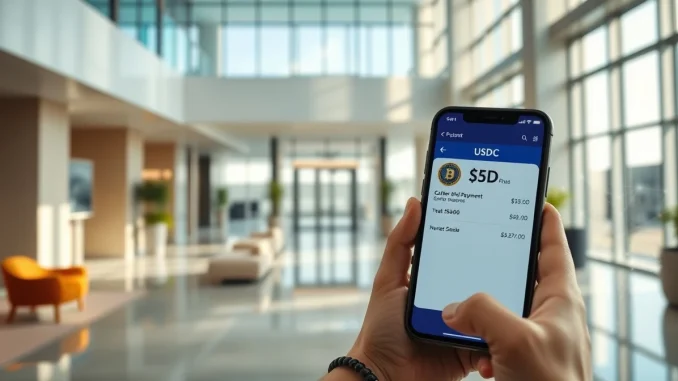
Singapore-based crypto travel platform Travala has introduced a protocol that allows artificial intelligence agents to search, reserve, and pay for hotels using USDC on the Base layer-2 blockchain. The move extends agentic AI stablecoin payments into the travel booking sector, though final payment authorization still requires manual approval from the traveler.
How the Travala Travel MCP works
The Travala Travel MCP is currently live through Claude Desktop, and external developers can integrate it into their own travel agents, the company announced in a statement. The system connects Travala’s hotel inventory to AI agents via the Model Context Protocol, an open standard for linking AI applications to external tools. Payments are processed using Coinbase’s x402 protocol on Base, enabling gasless USDC transactions with near-instant settlement and costs of about $0.01 per booking.
Also read: Russia sanctions British teenager for exposing stablecoin used to bypass sanctions
Travala said the setup uses ERC-7715 session keys, allowing the AI agent to request a payment while keeping final signing authority within the traveler’s wallet. The protocol can maintain context across searches, bookings, and cancellations in a single chat thread, providing a more cohesive user experience.
Human oversight remains central
Despite the automation, final payment authorization still requires manual approval from the traveler. This means the system is not fully autonomous but represents a significant step beyond chatbots that only recommend itineraries. The launch comes as crypto companies increasingly explore stablecoin applications for machine-to-machine commerce, following a wave of crypto payment infrastructure aimed at AI agents.
Also read: Bitcoin at Risk of Sub-$65K Drop as Geopolitical Tensions and Liquidations Pressure Market
Cointelegraph recently reported that x402-linked wallets on Base surpassed 100 million transactions, while firms like Fireblocks, MoonPay, Exodus, and Oobit have launched products for AI-driven stablecoin payments.
Broader implications for travel and crypto
Travala framed the launch as an early step toward autonomous travel booking, even as travelers retain final approval over payments. The company is offering developers a 10% Coinbase Wrapped BTC (cbBTC) rebate on completed stays booked through its agents. CEO Juan Otero described the development as “the death of the checkout button” and the start of “a truly autonomous travel economy.”
The protocol covers more than 2.2 million hotels, including listings from Marriott, Hilton, and IHG, sourced through aggregator partners. Travala plans to expand beyond hotels to other travel products, including flights, and expects its AVA loyalty token to support future use cases.
Industry context and competition
Founded in 2017, Travala competes with crypto-friendly travel platforms such as Sleap.io and Alternative Airlines. However, this latest protocol shifts the comparison from crypto checkout infrastructure toward AI-agent booking infrastructure. The company says it accepts more than 100 cryptocurrencies alongside fiat currencies.
The development signals growing interest in using stablecoins for automated, low-cost transactions in real-world commerce, with travel booking emerging as a practical test case for AI-driven payments.
Conclusion
Travala’s new protocol represents a notable step in integrating AI agents with stablecoin payments for travel bookings, though full autonomy remains a future goal. By combining gasless USDC transactions on Base with human oversight, the platform aims to balance automation with security. The move reflects broader industry trends toward machine-to-machine commerce and could pave the way for more sophisticated AI-driven travel services.
FAQs
Q1: Can AI agents book hotels without any human involvement using Travala’s new protocol?
No, final payment authorization still requires manual approval from the traveler, so the system is not fully autonomous.
Q2: What blockchain does Travala’s new protocol use for payments?
The protocol uses Coinbase’s x402 protocol on Base, a layer-2 blockchain, enabling gasless USDC transactions with near-instant settlement.
Q3: How many hotels are available through the Travala Travel MCP?
The protocol covers more than 2.2 million hotels, including listings from major chains like Marriott, Hilton, and IHG.





Be the first to comment