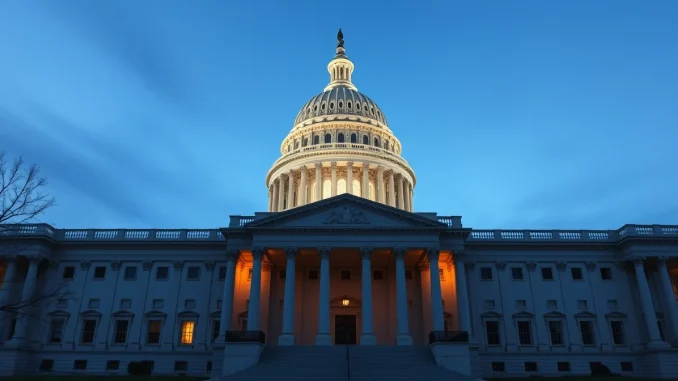
WASHINGTON, D.C. — A bipartisan legislative effort aims to fundamentally reshape how federal officials interact with prediction markets, proposing sweeping restrictions that would ban the president, members of Congress, and their immediate families from wagering on political outcomes. Introduced in March 2026, the Preventing Real-time Exploitation and Deceptive Insider Congressional Trading Act (PREDICT Act) represents the most significant regulatory push yet against what lawmakers describe as potential avenues for insider trading and corruption.
Prediction Markets Face Unprecedented Legislative Scrutiny
The PREDICT Act emerges amid growing concerns about the intersection of government information and speculative markets. Consequently, lawmakers from both parties have expressed alarm about platforms like Kalshi and Polymarket offering contracts on political events, policy decisions, and military actions. Representative Nikki Budzinski, a co-sponsor of the legislation, articulated the core concern during the bill’s introduction. “We’ve seen instances of little-known traders making massive profits on events ranging from war with Iran to how long a government shutdown will last,” Budzinski stated, “raising necessary questions about the use of inside information.”
Furthermore, the regulatory landscape for prediction markets has evolved rapidly. The Commodity Futures Trading Commission (CFTC) historically prohibited contracts resembling gambling. However, recent years witnessed a shift in enforcement approach, prompting legislative backlash. Simultaneously, eleven states initiated legal actions against prediction market platforms by early 2026, with two additional states considering similar measures. This multi-front regulatory pressure creates a complex environment for market operators and participants alike.
Understanding the PREDICT Act’s Core Provisions
The proposed legislation establishes clear boundaries for federal officials. Specifically, it would prohibit members of Congress, the president, vice president, and all political appointees from placing wagers on prediction markets concerning “political events, policy decisions, and other government actions.” The ban extends comprehensively to spouses and dependents, closing potential loopholes for indirect participation. Violations would trigger substantial penalties, including a fine equaling 10% of the contract’s total value and mandatory disgorgement of all profits to the U.S. Treasury.
Legislative Context and Companion Efforts
Notably, the PREDICT Act does not exist in isolation. Earlier in March 2026, Democratic Senators introduced the Banning Event Trading on Sensitive Operations and Federal Functions (BETS OFF) Act. This companion legislation addresses similar concerns but focuses specifically on trading related to sensitive government operations. Senator Chris Murphy referenced alleged insider trading surrounding military actions involving Iran during the Trump administration as partial motivation. “It was likely that people used inside information to make bets,” Murphy asserted, highlighting the perceived vulnerability of current regulations.
Additionally, a separate bipartisan bill introduced by Senators John Curtis and Adam Schiff targets the CFTC’s regulatory framework. Their proposal seeks to ban CFTC-registered entities from listing contracts that resemble “a sports bet or casino-style game.” The senators criticized the commission for what they characterized as an abrupt reversal of long-standing policy against gambling-style contracts. This legislative trio—the PREDICT Act, BETS OFF Act, and the Curtis-Schiff bill—creates a comprehensive challenge to prediction markets’ current operational model.
Market Response and Platform Adjustments
Facing mounting regulatory pressure, major prediction market platforms have proactively implemented stricter rules. For instance, Kalshi and Polymarket, two leading platforms, recently updated their terms of service to prohibit professional athletes and political candidates from wagering on relevant markets. These self-regulatory measures aim to address concerns about conflicts of interest and insider knowledge before mandated by law. Nevertheless, platform operators argue that prediction markets serve legitimate purposes by aggregating information and providing economic signals, distinguishing them from pure gambling.
The debate centers on whether these markets constitute valuable information mechanisms or speculative gambling venues. Proponents cite their accuracy in forecasting election outcomes and policy decisions, often surpassing traditional polls. Conversely, critics emphasize the potential for manipulation and the moral hazard of profiting from sensitive government knowledge. This tension between innovation and regulation defines the current policy discussion.
Historical Precedents and Regulatory Evolution
Prediction markets operate within a complex legal history. The CFTC maintained authority over event contracts for decades, traditionally prohibiting gaming-related offerings. However, technological advancement and new financial products tested these boundaries. The following timeline illustrates key regulatory developments:
- 2012: CFTC explicitly prohibits binary options on political events
- 2020: Polymarket launches, offering contracts on election outcomes
- 2024: CFTC begins reconsidering its stance on event contracts
- 2025: Multiple states file lawsuits against prediction market platforms
- March 2026: PREDICT Act, BETS OFF Act, and Curtis-Schiff bill introduced
This regulatory journey reflects broader societal concerns about information asymmetry in financial markets. Insider trading laws traditionally applied to securities, but prediction markets present novel challenges. Government officials possess non-public information about policy timelines, legislative negotiations, and diplomatic developments. Consequently, wagering on related markets could exploit this privileged access, undermining public trust in governmental institutions.
Comparative Analysis: Prediction Markets vs. Traditional Investments
The legislation raises fundamental questions about what constitutes appropriate financial activity for public officials. Federal ethics rules already restrict traditional stock trading based on non-public information. However, prediction markets differ significantly in structure and purpose. The table below highlights key distinctions:
| Aspect | Traditional Securities | Prediction Markets |
|---|---|---|
| Underlying Value | Company performance, assets | Outcome probability of specific events |
| Information Sensitivity | Corporate non-public data | Governmental/political non-public data |
| Regulatory Framework | SEC oversight, disclosure rules | CFTC oversight, evolving standards |
| Time Horizon | Often long-term | Short-term, event-specific |
This comparison illustrates why existing insider trading statutes might inadequately address prediction market activities. The PREDICT Act attempts to create specific prohibitions tailored to this emerging financial space. Legal experts note that while the bill’s intentions align with ethical governance principles, its practical enforcement would require monitoring mechanisms not currently established.
Potential Impacts and Implementation Challenges
If enacted, the PREDICT Act would establish new compliance requirements for thousands of federal officials. Every member of Congress, presidential appointee, and their family members would need to abstain from prediction market participation. Enforcement would likely involve coordination between ethics committees, the CFTC, and potentially the Department of Justice. Moreover, defining “political events” and “government actions” precisely presents drafting challenges, as these terms encompass broad categories of potential wagers.
The legislation also intersects with First Amendment considerations regarding information flow. Some constitutional scholars argue that blanket bans on certain types of financial expression might face legal scrutiny. However, precedent supports restrictions on government employee activities that conflict with official duties or exploit privileged access. The balance between preventing corruption and preserving individual liberties will likely undergo judicial examination if the bill becomes law.
Conclusion
The proposed prediction markets ban represents a watershed moment in regulating the intersection of government service and speculative financial activities. The PREDICT Act, alongside companion legislation, signals bipartisan concern about potential insider trading vulnerabilities in emerging markets. As prediction platforms continue evolving, regulatory frameworks must adapt correspondingly to maintain public trust. Ultimately, this legislative effort reflects ongoing societal negotiation about appropriate boundaries for financial innovation within democratic governance systems. The coming months will determine whether these proposals gain sufficient momentum to reshape how federal officials engage with prediction markets permanently.
FAQs
Q1: What exactly would the PREDICT Act prohibit?
The PREDICT Act would ban members of Congress, the president, vice president, political appointees, and their immediate families from wagering on prediction markets regarding political events, policy decisions, or government actions.
Q2: Why are prediction markets facing increased scrutiny in 2026?
Increased scrutiny stems from concerns about potential insider trading, particularly regarding contracts on military actions, government shutdowns, and political outcomes where officials might possess non-public information.
Q3: How do prediction markets differ from sports betting?
While both involve wagering on outcomes, prediction markets often focus on political, economic, or policy events and are sometimes defended as information aggregation mechanisms rather than pure gambling.
Q4: What penalties would violations of the PREDICT Act carry?
Violators would face a fine of 10% of the contract’s total value and be required to disgorge all profits to the U.S. Treasury.
Q5: Have prediction market platforms responded to these legislative proposals?
Yes, major platforms like Kalshi and Polymarket have implemented stricter rules prohibiting professional athletes and political candidates from relevant wagers, though these are narrower than the proposed legislative bans.
This article was produced with AI assistance and reviewed by our editorial team for accuracy and quality.