
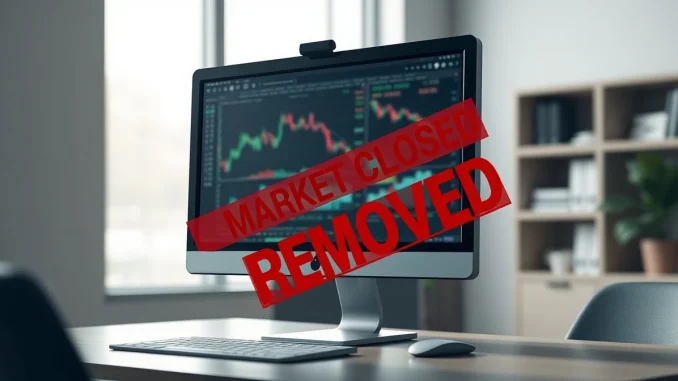
Polymarket, a major cryptocurrency-based prediction market, faced intense criticism and removed a market speculating on the fate of a missing US service member. The platform cited “integrity standards” but provided no specific rule violation, sparking user confusion and highlighting ongoing regulatory gray areas for these speculative platforms.
Polymarket removes controversial military market
On April 3, 2026, Polymarket delisted a prediction market asking whether US authorities would confirm the rescue of a pilot reportedly shot down over Iran. Data from the platform showed over 60% of users had bet that a rescue would not be confirmed until Saturday. The market’s existence drew immediate condemnation from US Representative Seth Moulton. “They could be your neighbor, a friend, a family member. And people are betting on whether or not they’ll be saved,” Moulton wrote on social media, calling the market “disgusting.” In response, Polymarket stated it took the market down immediately, admitting it “should not have been listed” and was reviewing how it passed internal checks.
Also read: Cambodia Crypto Scam Law: New Bill Imposes Harsh Prison Terms in Major Policy Shift
Vague “integrity standards” draw user scrutiny
Polymarket’s explanation failed to satisfy many users. The platform said the market violated its “integrity standards” but did not specify which rule was broken. This lack of clarity prompted questions about how Polymarket enforces its own policies. Jack Newsham, a correspondent for Business Insider, noted the ambiguity publicly. “I’m looking at the ‘Market Integrity’ page, and I checked the TOS, and I don’t see which prohibition is relevant here,” he wrote. This incident suggests a potential gap between the platform’s published rules and their practical application. Industry watchers note that inconsistent moderation can erode user trust, which is vital for any financial or speculative platform.
A pattern of problematic markets
This is not the first time prediction markets have hosted controversial bets. Markets related to tragic events, geopolitical conflicts, and personal misfortunes periodically appear. Platforms like Polymarket and others use a combination of automated filters and human review to screen markets. The failure in this case, as Polymarket itself acknowledged, points to a breakdown in that review process. What this means for investors is increased uncertainty about which markets might suddenly be deemed unacceptable after trading has begun.
Also read: Bitcoin Bloodbath: Whales Dump $30.9 Billion as Daily Losses Hit $337 Million
Rising revenue amid growing pains
The controversy comes as Polymarket experiences significant financial growth. According to a Cointelegraph report from March 2026, the platform saw a sharp increase in fees and revenue after adjusting its fee model. Daily fees reportedly jumped from around $363,000 to over $1 million, with peak revenue nearing $1 million. This monetization push involves higher taker fees across categories like finance, politics, and technology. The implication is clear: Polymarket is scaling up, but its operational and compliance frameworks may be struggling to keep pace with its commercial expansion.
Insider trading concerns loom large
Beyond controversial subjects, prediction markets face another major challenge: insider trading. Last month, reports surfaced that a group of traders made approximately $1 million by correctly betting on the timing of US strikes on Iran. Some trades were placed just hours before the attacks became public. The activity involved newly created wallets focused almost entirely on these specific bets, raising strong suspicions of non-public information being used. In response, at least 42 Democratic US lawmakers have urged regulators like the Commodity Futures Trading Commission (CFTC) and the Office of Government Ethics to warn federal employees against using confidential information to trade on prediction markets.
The regulatory horizon for prediction markets
The combination of ethically questionable markets and insider trading risks is drawing more regulatory attention. Prediction markets operate in a complex legal space. They are not traditional securities exchanges, but their function—allowing people to bet on real-world outcomes—blurs lines. The CFTC has previously taken action against certain prediction market operators for offering illegal off-exchange binary options. The current climate suggests increased scrutiny is likely. This could signal a future where platforms face stricter rules on market topics, user verification, and information transparency.
Conclusion
Polymarket’s removal of the missing pilot market underscores the tension between open speculation and ethical boundaries. While the platform acted after public backlash, its vague reasoning has fueled doubts about its rule enforcement. As prediction markets grow in popularity and revenue, they attract greater scrutiny from both the public and regulators. The path forward requires clearer standards, more solid safeguards, and transparent communication with users. Without these steps, the long-term viability of these innovative but controversial platforms may be at risk.
FAQs
Q1: What was the Polymarket market about?
The market asked users to predict whether US authorities would confirm the rescue of a missing US pilot reportedly shot down over Iran. Over 60% of bets were placed on “No” for a rescue confirmation before Saturday.
Q2: Why did Polymarket remove the market?
Polymarket stated the market violated its “integrity standards” and admitted it should never have been listed. The decision came after strong criticism from US Representative Seth Moulton and public backlash.
Q3: What are the main concerns about prediction markets?
Major concerns include the listing of markets on sensitive or tragic events, the potential for insider trading using non-public information, and a lack of clear, consistently applied rules from the platforms themselves.
Q4: Are prediction markets legal?
The legal status is complex and varies by jurisdiction. In the US, they often operate in a regulatory gray area. The Commodity Futures Trading Commission (CFTC) has authority over certain types of event contracts and has taken enforcement actions in the past.
Q5: What has been the response from US lawmakers?
Lawmakers have reacted in two ways: condemning specific markets, as Representative Moulton did, and pushing for broader regulatory action. A group of 42 Democratic lawmakers recently urged federal agencies to warn government employees against using confidential information to trade on these platforms.

This article was produced with AI assistance and reviewed by our editorial team for accuracy and quality.



Be the first to comment