US Inflation Gap Sparks Critical Doubts About Federal Reserve Policy Direction
Washington, D.C., February 2025: A significant discrepancy between official government inflation measurements and alternative real-time data is creating substantial uncertainty about the Federal Reserve’s current monetary policy stance. This inflation gap raises fundamental questions about whether policymakers possess accurate information to guide interest rate decisions that affect millions of Americans and global financial markets.
The Growing Chasm in Inflation Measurements
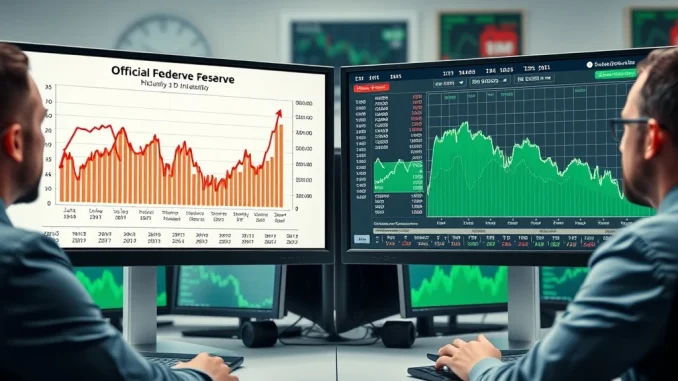
According to the latest Bureau of Labor Statistics report, the Consumer Price Index (CPI) showed annual inflation at 2.7% for December 2024. This figure remains above the Federal Reserve’s longstanding 2% target, providing justification for maintaining elevated interest rates. However, independent data provider Truflation presents a dramatically different picture, calculating year-over-year inflation at just 0.86% as of late January 2025.
This 1.84 percentage point difference represents more than just statistical variance—it reflects fundamentally different methodological approaches to measuring price changes across the economy. The government’s CPI relies on a fixed basket of goods and services with monthly collection and reporting lags, while alternative indices like Truflation’s utilize millions of disaggregated data points updated daily from dozens of providers.
Methodological Divergence: Traditional vs. Real-Time Approaches
The Federal Reserve primarily monitors the Personal Consumption Expenditures (PCE) price index, particularly the Core PCE that excludes volatile food and energy components. Official Core PCE stood at approximately 2.5% in recent reports, but Truflation estimates this critical metric at just 1.38%—well below the Fed’s target and suggesting substantially different economic conditions.
Several key differences explain the measurement gap:
- Data Collection Frequency: Government agencies collect price data monthly with publication lags, while alternative providers scrape real-time data from online retailers and service providers
- Basket Composition: Official indices use fixed consumption baskets updated periodically, whereas alternative approaches can dynamically weight categories based on actual spending patterns
- Geographic Coverage: Traditional methods rely on physical price collection in specific locations, while digital approaches capture nationwide online pricing
- Timeliness: Government reports reflect conditions from weeks prior, while alternative data shows current price movements
Historical Context of Inflation Measurement Challenges
This is not the first time measurement methodologies have created policy challenges. During the 1970s, economists debated whether CPI adequately captured quality improvements in goods. In the 1990s, the Boskin Commission identified upward bias in CPI calculations that led to methodological adjustments. The current divergence represents a new phase in this ongoing evolution, accelerated by digital data availability and changing consumption patterns.
Implications for Federal Reserve Policy Decisions
The Federal Reserve faces a complex dilemma. If alternative data more accurately reflects current inflation dynamics, the central bank may be maintaining restrictive monetary policy unnecessarily, potentially slowing economic growth and employment. However, abandoning established metrics for newer, less-proven alternatives carries its own risks to policy credibility and consistency.
Several Federal Reserve officials have acknowledged monitoring alternative data sources but emphasize the importance of consistent, verifiable metrics for policy decisions. The challenge lies in determining whether current discrepancies represent temporary measurement issues or fundamental shifts in how inflation manifests in a digital economy.
Recent Federal Open Market Committee statements have emphasized “data dependence” in policy decisions, but this reliance assumes data accuracy and relevance. The growing measurement gap complicates this framework, potentially creating policy errors in either direction—maintaining tight policy too long or easing prematurely.
Market Reactions and Financial Implications
Financial markets have begun pricing in this uncertainty. Treasury yields have shown increased volatility around inflation data releases, while equity markets demonstrate heightened sensitivity to inflation surprises. The cryptocurrency ecosystem, particularly sensitive to liquidity expectations, has shown notable reactions to inflation narratives.
| Metric | Official Government Data | Truflation Alternative Data |
|---|---|---|
| CPI Year-over-Year | 2.7% | 0.86% |
| Core PCE Estimate | ~2.5% | 1.38% |
| Update Frequency | Monthly with lag | Daily real-time |
| Data Sources | Traditional collection | Digital scraping |
| Policy Implications | Supports current stance | Suggests easing possible |
The Cryptocurrency Market’s Unique Sensitivity
Digital asset markets have developed particular sensitivity to inflation narratives and monetary policy expectations. Bitcoin and other cryptocurrencies often trade as potential hedges against currency debasement, making inflation measurements especially relevant. The discrepancy between data sources creates narrative uncertainty that can increase volatility as traders attempt to determine which metric will ultimately guide policy.
Historical patterns show cryptocurrency valuations often respond positively to expectations of monetary easing, as lower interest rates reduce opportunity costs for holding non-yielding assets. If market participants begin weighting alternative data more heavily in their analyses, this could accelerate capital flows into digital assets despite official metrics suggesting continued restrictive policy.
Broader Economic Consequences and Future Outlook
Beyond financial markets, the inflation measurement gap affects numerous economic decisions. Businesses making pricing, wage, and investment decisions rely on inflation expectations. Consumers considering major purchases or negotiating salaries reference inflation data. Pension adjustments and Social Security payments link directly to official inflation metrics.
The Federal Reserve faces several potential paths forward:
- Methodological Evolution: Incorporating alternative data sources into official metrics while maintaining methodological rigor
- Policy Framework Adjustment: Developing approaches that account for measurement uncertainty in decision-making
- Communication Strategy: More explicitly addressing data discrepancies in public statements and policy justifications
- Research Investment: Funding deeper investigation into measurement methodologies and their policy implications
Conclusion
The growing US inflation gap between traditional government measurements and alternative real-time data represents more than a statistical anomaly—it challenges the foundational information supporting critical monetary policy decisions. As the Federal Reserve navigates this complex landscape, market participants, businesses, and consumers must contend with increased uncertainty about the true state of price stability. The resolution of this measurement divergence will significantly influence interest rate policy, financial market trajectories, and broader economic conditions in the coming months. This inflation gap ultimately questions whether established economic indicators can adequately capture reality in an increasingly digital and rapidly evolving economy.
FAQs
Q1: What is the main difference between official inflation data and alternative measurements like Truflation?
The primary differences involve methodology and timeliness. Government data uses traditional collection methods with monthly reporting lags, while alternative providers use real-time digital data scraping with more frequent updates and different weighting approaches.
Q2: Why does the Federal Reserve care about this measurement gap?
The Fed bases interest rate decisions largely on inflation data. If measurements are inaccurate, policymakers might maintain restrictive policy unnecessarily or ease prematurely, both of which could harm economic stability.
Q3: How might this inflation gap affect ordinary consumers?
Consumers might experience different actual price changes than official statistics suggest, affecting purchasing power, wage negotiations, and financial planning. Policy decisions based on potentially inaccurate data could also impact employment and economic growth.
Q4: Are alternative inflation measurements like Truflation officially recognized?
While the Federal Reserve monitors various data sources, it continues to base formal policy primarily on established government metrics. Alternative measurements remain supplementary rather than replacement indicators for official policy.
Q5: What historical precedents exist for inflation measurement challenges?
Previous episodes include the 1970s debates about quality adjustments and the 1990s Boskin Commission findings that led to CPI methodology changes. The current situation represents a new phase driven by digital data availability.
Related News
- CLARITY Act Showdown: Coinbase CEO Reveals Crucial White House Negotiations Amid Regulatory Confusion
- Stablecoin Regulation: UK House of Lords Launches Critical Review of Market Impact
- Urgent Warning: Bithumb Delists Self Chain (SLF) - Critical Crypto Delisting News for Investors
Related: Tokenized U.S. Treasuries Stun Wall Street with $10B On-Chain Milestone
Related: NAKA Crash: $23.6B Erased in Stunning 99% Plunge After Bitcoin Treasury Gamble
Related: Cardano Price Prediction 2026-2030: Analyzing Market Shifts After Parsec Analytics Closure