WASHINGTON, D.C., May 22, 2026 — U.S. Democratic lawmakers are drafting urgent legislation to regulate cryptocurrency-based prediction markets following revelations of highly specific, profitable bets placed on the timing of recent U.S. military strikes against Iran. Senator Chris Murphy (D-CT) and Representative Mike Levin (D-CA) announced the planned bill on Wednesday, alleging that individuals with potential insider knowledge of the operation may have profited illegally. The move, which follows over $500 million in wagering volume on the strikes, signals a major regulatory push into the decentralized finance sector and raises profound questions about national security and financial integrity.
Core Allegations: ‘Very Specific Bets’ Preceded Strikes
Senator Chris Murphy posted a video statement to social media platform X, presenting a detailed timeline that forms the crux of the regulatory concern. Murphy stated that on Friday, April 25, 2026, several newly created accounts on the blockchain-based prediction platform Polymarket placed large, precise wagers predicting that the United States would initiate military action against Iran the following day, Saturday, April 26. “What we saw was a very specific bet,” Murphy asserted. “Obviously, there are people close to Donald Trump who, on Friday, knew what was happening on Saturday.”
Explosions were first reported in Tehran in the early hours of Saturday, April 26, confirming the market’s prediction. According to data from Polymarket and subsequent reporting by Reuters, the six accounts in question collectively earned approximately $1 million from their well-timed wagers. The total trading volume for contracts related to U.S. strikes on Iran has since surpassed $529 million, highlighting the massive scale of these unregulated markets. This incident follows a similar event last month where a trader netted about $400,000 betting on the capture of Venezuelan President Nicolás Maduro.
Legislative Response: Closing the ‘Event Contract’ Loophole
The proposed legislation aims to amend existing commodity trading laws to explicitly ban and police “event contracts” tied to military action, acts of terrorism, and other events deemed “contrary to the public interest.” Representative Mike Levin, co-sponsoring the bill, framed the issue in stark terms. “It’s unbelievably clear to me that if anyone is using prior knowledge of military action for financial gain, that should be absolutely illegal,” Levin told Reuters. He argued that while current Commodity Futures Trading Commission (CFTC) rules provide a framework, they grant prediction markets like Polymarket and its competitor Kalshi too much interpretive freedom.
Senator Murphy expanded on the national security implications, suggesting a perverse incentive could be created. “Allowing bets on war to continue could see those close to the president pushing us into war because they can cash in,” he warned. The bill is expected to grant the CFTC and potentially national security agencies enhanced oversight and enforcement powers over platforms facilitating such markets, potentially requiring real-time reporting of large or suspicious wagers on geopolitical events.
Expert Analysis on Market Integrity and Regulation
Financial regulation experts are divided on the approach. Dr. Sarah Chen, a professor of financial law at Georgetown University and former CFTC advisor, notes the existing legal gray area. “The Commodity Exchange Act bans gaming, but courts have wrestled with whether predictive markets on real-world events constitute gambling or legitimate financial hedging,” Chen explained. “This incident provides a concrete, high-stakes test case that will force regulators’ hands.” Conversely, David Krause, founder of the Decentralized Finance Governance Initiative, argues that over-regulation could stifle innovation. “These markets can provide valuable, aggregated information about event probabilities. The solution isn’t a blanket ban, but transparent, on-chain identity verification to deter and detect bad actors,” Krause stated.
Broader Context: The Rise and Scrutiny of Prediction Markets
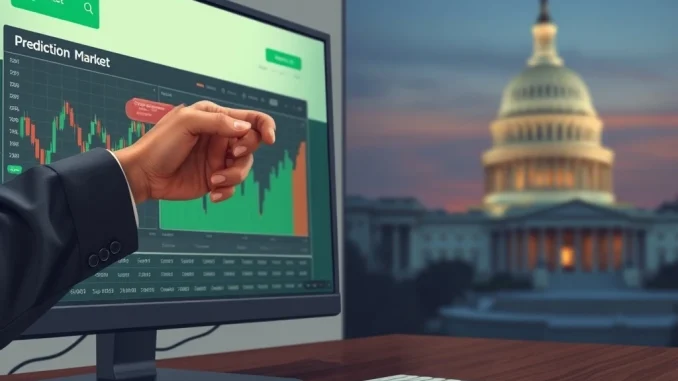
This legislative push did not emerge in a vacuum. Prediction markets, which allow users to trade shares in the outcome of future events, have grown exponentially with blockchain technology. Platforms like Polymarket operate globally, often beyond the direct reach of any single nation’s financial regulators. Their appeal lies in liquidity, anonymity, and the ability to speculate on everything from election results to pandemic outcomes. However, their intersection with sensitive state actions represents a new frontier of risk.
| Platform | Notable Event Market | Reported Volume |
|---|---|---|
| Polymarket | U.S. Strikes Iran (April 2026) | $529 Million |
| Polymarket | Capture of Nicolás Maduro (March 2026) | $85 Million |
| Kalshi | Federal Reserve Rate Decisions (Q1 2026) | $210 Million |
| PredictIt | 2024 U.S. Presidential Election | $142 Million |
The table above illustrates the significant capital flowing through these systems. The Iran strike market volume, in particular, dwarfs most previous geopolitical event markets, signaling both increased user adoption and the high-stakes nature of the underlying event. This growth has inevitably attracted scrutiny from lawmakers concerned about market manipulation, national security leaks, and the moral hazard of profiting from conflict.
What Happens Next: The Legislative and Enforcement Pathway
The draft bill is currently being finalized by legislative aides and is expected to be formally introduced in both the Senate and House within the next two weeks. Its passage faces an uncertain political landscape. While the insider trading allegations may garner bipartisan concern, the broader debate over cryptocurrency regulation remains deeply partisan. Observers expect vigorous lobbying from both the crypto industry and national security advocates. Simultaneously, the CFTC is likely to review its existing guidance on event contracts, and the Department of Justice may open investigations into the specific bets that triggered this crisis.
Industry and Public Reaction to the Proposed Crackdown
Initial reactions from the cryptocurrency community have been critical. A spokesperson for the Blockchain Association called the proposal a “knee-jerk reaction” that fails to distinguish between illicit activity and legitimate market function. On social media, proponents of prediction markets argue they provide a “wisdom of the crowd” signal that could, in theory, offer policymakers independent assessments of event likelihoods. Public opinion, as reflected in early polling, appears strongly in favor of restrictions, with a majority expressing concern about the idea of individuals profiting from advance knowledge of military casualties or conflict.
Conclusion
The move by Senators Murphy and Levin marks a pivotal moment in the collision between decentralized finance and national sovereignty. The core issue—insider trading prediction markets on matters of life, death, and national security—presents a clear regulatory target that transcends typical crypto debates. While the path of the proposed bill is uncertain, the event has irrevocably demonstrated the potential for real-world harm and market abuse within these ungoverned spaces. The coming weeks will test whether the U.S. can craft a nuanced regulatory response that protects state secrets and market integrity without completely foreclosing a novel technological sector. All eyes will now be on the bill’s text, the CFTC’s response, and whether other nations follow suit in policing what one lawmaker termed “betting on bloodshed.”
Frequently Asked Questions
Q1: What exactly are prediction markets, and how do they work?
Prediction markets are platforms where users can buy and sell shares based on the predicted outcome of future events. If you believe an event will happen, you buy “Yes” shares; if you believe it won’t, you buy “No” shares. The price fluctuates like a stock, reflecting the crowd’s collective probability estimate. Payouts occur after the event resolves.
Q2: Why is the Polymarket Iran strike case considered potential insider trading?
Insider trading involves using material, non-public information for financial gain. Lawmakers allege that the individuals who placed large, accurate bets hours before the strikes became public likely had access to confidential government planning information, which would constitute illegal insider trading if it occurred in a regulated securities market.
Q3: Are prediction markets currently illegal in the United States?
Their legal status is complex and platform-dependent. Some, like the academic-focused PredictIt, operate under specific CFTC no-action letters. Others, like Polymarket, which is based offshore, operate in a gray area, arguing they are decentralized platforms for information exchange rather than financial markets subject to U.S. commodity laws.
Q4: What would the proposed bill actually do?
The bill seeks to explicitly amend the Commodity Exchange Act to ban event contracts related to warfare, terrorism, assassination, and other publicly detrimental outcomes. It would empower the CFTC to shut down markets on these topics and impose severe penalties on platforms and traders who violate the ban.
Q5: Could this legislation affect betting on elections or sports?
Potentially, but the initial focus appears narrowly tailored to events with national security implications. However, legal experts note that once a regulatory framework is established for one type of event contract, it could be expanded later to cover other areas, depending on political will.
Q6: How does this impact the average cryptocurrency investor?
For most crypto investors, the direct impact may be minimal unless they actively use prediction markets. However, it represents a significant expansion of U.S. regulatory reach into the DeFi ecosystem and could set a precedent for how other decentralized applications (dApps) are governed, potentially affecting platform availability and compliance requirements.