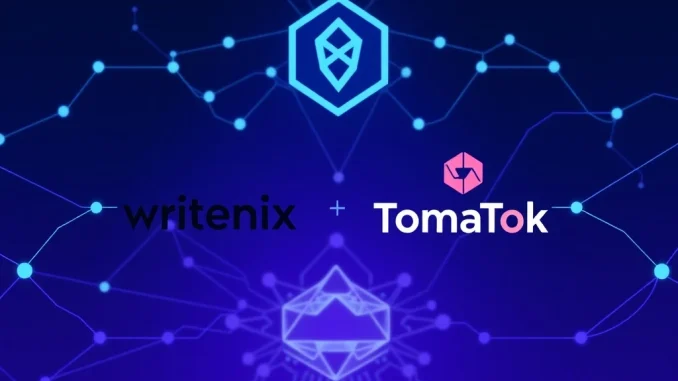
Global, May 2025: The decentralized finance landscape witnesses a significant convergence of artificial intelligence and blockchain communication as Writeonix and TomaTok announce their strategic partnership to launch AI-driven DeFi messaging on the Solana network. This collaboration represents a substantial step toward simplifying cryptocurrency management through an intelligent, unified SocialFi ecosystem that addresses longstanding user experience challenges in decentralized finance.
AI-Powered DeFi Messaging: A New Paradigm for Solana Users
The partnership between Writeonix, known for its advanced AI content generation capabilities, and TomaTok, a growing SocialFi platform, creates a novel infrastructure for blockchain communication. This integration specifically targets the Solana ecosystem, leveraging its high throughput and low transaction costs to enable real-time, intelligent messaging between decentralized applications and users. The system employs natural language processing algorithms to interpret complex DeFi transactions, providing users with simplified explanations and actionable insights directly through messaging interfaces.
Industry analysts note that this development addresses a critical gap in current DeFi interfaces. Traditional decentralized finance platforms often present users with technical jargon and complex transaction details that can be intimidating for newcomers. The AI-driven messaging solution translates these complexities into plain language, offers personalized recommendations based on user behavior patterns, and provides real-time alerts about market conditions, liquidity changes, and potential opportunities. This approach significantly lowers the barrier to entry for mainstream adoption of DeFi services.
Technical Architecture and Solana Integration
The technical implementation involves several innovative components working in concert on the Solana blockchain. Writeonix contributes its proprietary language models specifically fine-tuned for financial and blockchain terminology, while TomaTok provides the social layer infrastructure that enables user interactions and community features. The system architecture includes:
- Natural Language Interface: Converts blockchain transaction data into conversational messages
- Context-Aware Processing: Analyzes user history and preferences to personalize communication
- Real-Time Data Integration: Connects with multiple Solana-based protocols for up-to-date information
- Privacy-Preserving Design: Ensures user data remains secure while enabling personalized experiences
The integration with Solana’s high-performance blockchain is particularly significant. Solana’s capability to process thousands of transactions per second at minimal cost makes it an ideal foundation for messaging systems that require frequent, small data exchanges. This technical advantage allows the partnership to create a responsive user experience that would be challenging on networks with higher latency or transaction costs.
The Evolution of SocialFi and User Experience
The Writeonix-TomaTok collaboration represents the latest evolution in SocialFi, a sector that has grown substantially since its emergence in the early 2020s. SocialFi combines social media dynamics with decentralized finance principles, creating communities where financial interactions and social connections intersect. Previous SocialFi implementations often struggled with user experience challenges, particularly around the complexity of financial operations within social contexts.
This partnership directly addresses those challenges by introducing AI mediation between technical blockchain operations and user interactions. Historical context reveals that similar AI integration in traditional finance applications led to increased user engagement and reduced error rates. When applied to decentralized finance, these improvements could accelerate adoption among users who have been hesitant to navigate the technical complexities of blockchain-based financial services.
Market Implications and Competitive Landscape
The introduction of AI-powered DeFi messaging on Solana creates several important implications for the broader cryptocurrency market. First, it establishes a new standard for user experience in decentralized applications, potentially forcing competitors to enhance their own communication interfaces. Second, it demonstrates the practical utility of AI-blockchain integration beyond speculative applications, focusing instead on solving genuine user pain points.
Comparative analysis with existing solutions reveals distinct advantages:
| Feature | Traditional DeFi Interfaces | Writeonix-TomaTok Solution |
|---|---|---|
| Transaction Explanation | Technical data only | Plain language summaries |
| User Guidance | Minimal or generic | Personalized recommendations |
| Social Integration | Separate platforms | Unified ecosystem |
| Response Time | Variable | Real-time processing |
This competitive differentiation could influence how other projects approach user experience design, potentially leading to industry-wide improvements in accessibility and usability. The timing is particularly significant as regulatory frameworks for cryptocurrency continue to evolve globally, with user protection and transparency becoming increasingly important considerations.
Implementation Timeline and Development Roadmap
The partnership follows a structured implementation timeline designed to ensure system stability and user security. Initial deployment focuses on core messaging functionality between selected Solana-based DeFi protocols, with gradual expansion to additional services based on user feedback and technical performance. The development roadmap includes quarterly updates that will introduce increasingly sophisticated AI capabilities, including predictive analytics for market movements and automated portfolio management suggestions.
Security considerations remain paramount throughout this implementation. Both companies have committed to extensive auditing of their smart contracts and AI models, with particular attention to potential vulnerabilities in the interaction between language processing systems and financial transactions. This cautious approach reflects lessons learned from previous DeFi security incidents and demonstrates the partnership’s commitment to building trust within the cryptocurrency community.
Conclusion
The partnership between Writeonix and TomaTok to launch AI-driven DeFi messaging on Solana represents a meaningful advancement in making decentralized finance more accessible and user-friendly. By combining sophisticated artificial intelligence with blockchain communication infrastructure, this collaboration addresses fundamental usability challenges that have limited broader adoption of DeFi services. The resulting SocialFi ecosystem provides a template for how technical complexity can be mediated through intelligent interfaces, potentially influencing the next generation of blockchain applications across multiple networks beyond Solana. As the cryptocurrency industry continues to mature, solutions that prioritize user experience while maintaining decentralization principles will likely play an increasingly important role in shaping mainstream adoption.
FAQs
Q1: What exactly is AI-powered DeFi messaging?
AI-powered DeFi messaging refers to the use of artificial intelligence, specifically natural language processing, to interpret and explain decentralized finance transactions in simple terms. It acts as an intelligent interface between users and complex blockchain operations, providing explanations, alerts, and recommendations through conversational messaging formats.
Q2: Why did Writeonix and TomaTok choose Solana for this partnership?
The partnership selected Solana primarily for its technical advantages in speed and cost-efficiency. Solana’s high throughput capability supports real-time messaging requirements, while its low transaction costs make frequent small communications economically feasible. These characteristics are essential for creating a responsive user experience in DeFi applications.
Q3: How does this differ from existing cryptocurrency messaging platforms?
Unlike general cryptocurrency messaging platforms that primarily facilitate communication between users, this solution focuses specifically on communication between users and DeFi protocols. The AI component interprets transaction data and market conditions to provide personalized, actionable information rather than simply relaying messages between parties.
Q4: What security measures protect users in this system?
The system implements multiple security layers including end-to-end encryption for messages, rigorous smart contract auditing, and privacy-preserving AI models that minimize data exposure. Additionally, the partnership has committed to regular security assessments and transparent reporting of any vulnerabilities discovered during operation.
Q5: When will this technology be available to general users?
The partnership follows a phased rollout strategy, beginning with limited testing among selected user groups before expanding to broader availability. While specific dates depend on testing outcomes, the companies anticipate making core functionality available to the general public within the coming months, with more advanced features following in subsequent updates.
Updated insights and analysis added for better clarity.
This article was produced with AI assistance and reviewed by our editorial team for accuracy and quality.