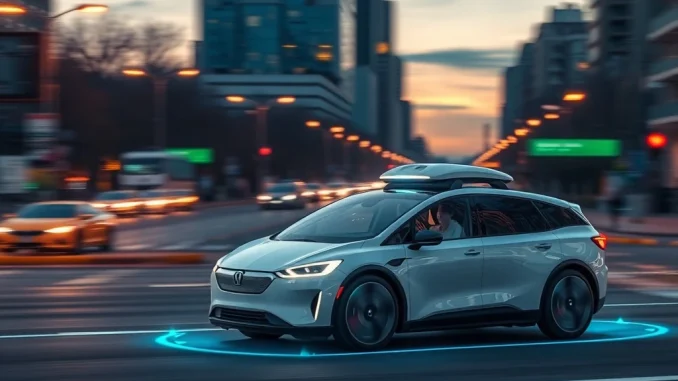
The world of autonomous vehicles just received a significant boost! After a thorough 14-month investigation, the U.S. National Highway Traffic Safety Administration (NHTSA) has officially closed its probe into Alphabet Inc.’s Waymo self-driving robotaxis. This pivotal decision signals a major vote of confidence in the future of self-driving technology and its safety protocols, marking a triumphant moment for the industry.
NHTSA Probe Concludes: What Does It Mean for Waymo?
The extensive NHTSA probe, initiated in May 2024, meticulously reviewed 22 incidents involving Waymo vehicles. These incidents ranged from minor collisions to allegations of unexpected behavior, such as sudden stops or erratic lane changes. The agency’s primary objective was to determine if these occurrences pointed to systemic safety flaws within Waymo’s autonomous system.
In July 2025, NHTSA announced its decision to terminate the inquiry, stating unequivocally that no systemic safety issues were identified. This conclusion was largely based on Waymo’s proactive measures, which included two voluntary recalls aimed at addressing the concerns raised. The agency’s evaluation of these corrective actions, notably significant software updates designed to improve obstacle detection, led to the determination that further regulatory intervention was unnecessary.
Enhancing Autonomous Vehicle Safety: Waymo’s Proactive Steps
Waymo’s commitment to enhancing autonomous vehicle safety was a critical factor in the probe’s positive outcome. The company demonstrated a willingness to address issues head-on, implementing crucial updates and recalls:
- First Recall (Early 2024): Followed an incident involving a collision with a utility pole, prompting Waymo to refine its system’s understanding of such stationary objects.
- Second Recall (May 2025): Focused on updating systems to better detect and navigate around barriers and road gates, ensuring smoother and safer operation in diverse environments.
NHTSA specifically noted that multiple incidents involved collisions with clearly visible objects, situations a competent human driver would typically avoid. However, the agency also praised Waymo’s ongoing technical collaboration with regulators, underscoring the importance of transparency in the development of Waymo self-driving systems. This collaborative approach sets a precedent for how autonomous vehicle developers should engage with regulatory bodies, fostering trust and ensuring continuous improvement.
The Road Ahead: Waymo Expansion and Industry Implications
The closure of the NHTSA probe represents a pivotal moment for Waymo, which currently operates over 1,500 autonomous vehicles across various U.S. cities. With this regulatory clearance, Waymo is poised for significant Waymo expansion, with plans to introduce its services to major metropolitan areas like Atlanta, New York, Miami, and Washington, D.C., through a combination of partnerships and direct rollouts.
NHTSA’s decision signals regulatory confidence in Waymo’s safety protocols and reflects a broader trend in how agencies are approaching emerging technologies. Analysts suggest that this approach—prioritizing data analysis and voluntary compliance over punitive measures—aligns with a strategy of balancing innovation with public safety. This outcome could encourage other autonomous vehicle developers to adopt similar strategies, navigating regulatory scrutiny while maintaining operational momentum and accelerating the integration of self-driving technology into daily life.
Navigating the Future of Self-Driving Technology
While the successful conclusion of the investigation is a major win, it also highlights the continuous need for refinement in AI-driven safety systems. Even minor incidents can erode public trust and trigger regulatory scrutiny, emphasizing that the journey towards fully autonomous vehicles is one of ongoing learning and adaptation. NHTSA’s emphasis on data transparency and corporate accountability sets a strong precedent for future investigations, reinforcing the expectation that developers will collaborate closely with regulators to address evolving challenges in autonomous transportation.
Waymo expansion plans face hurdles beyond technical compliance. Cities like Boston, for instance, are actively reviewing legislation to govern autonomous vehicles, reflecting the complex interplay between technological advancement and local governance. While Waymo has not confirmed a timeline for entering the Boston market, its cautious approach aligns with the broader industry’s recognition that public acceptance remains a key barrier to widespread adoption. The closure of the NHTSA investigation does not eliminate these challenges but provides a solid foundation for continued growth in a sector still navigating regulatory and societal complexities.
In conclusion, Waymo’s successful navigation of the NHTSA probe is a landmark achievement, affirming the robustness of its Waymo self-driving technology and setting a positive precedent for the autonomous vehicle industry. It underscores the critical role of proactive problem-solving, transparent collaboration with regulators, and continuous innovation in bringing safe and reliable self-driving solutions to the world. As Waymo looks to expand its footprint, its journey will continue to shape the future of transportation, demonstrating how advanced AI can safely integrate into our daily lives.
Frequently Asked Questions (FAQs)
Q1: What was the NHTSA probe into Waymo about?
The NHTSA probe was a 14-month investigation into Alphabet Inc.’s Waymo autonomous vehicles, scrutinizing 22 incidents involving minor collisions and unexpected behavior to determine if there were systemic safety issues.
Q2: What was the outcome of the NHTSA investigation into Waymo?
NHTSA concluded its investigation without identifying any systemic safety issues. The agency determined that Waymo’s proactive measures, including software updates and voluntary recalls, adequately addressed the concerns.
Q3: How did Waymo address the concerns raised by NHTSA regarding its self-driving technology?
Waymo addressed concerns through two voluntary recalls. The first recall in early 2024 followed an incident involving a utility pole, and the second in May 2025 updated systems to improve detection of barriers and road gates. These actions involved significant software updates.
Q4: What does this positive outcome mean for Waymo’s future expansion plans?
The closure of the probe signals regulatory confidence in Waymo’s safety protocols, paving the way for its planned expansion into major U.S. cities like Atlanta, New York, Miami, and Washington, D.C. It boosts public trust and operational momentum for Waymo expansion.
Q5: What are the broader implications of this decision for autonomous vehicle safety and the industry?
This decision sets a precedent for balancing innovation with public safety, emphasizing data analysis, voluntary compliance, and transparent collaboration between developers and regulators. It encourages other autonomous vehicle companies to adopt similar proactive strategies to enhance autonomous vehicle safety and navigate regulatory scrutiny.