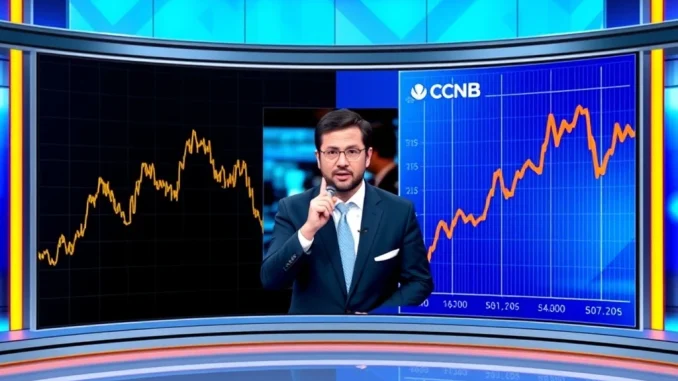
New York, April 2025: A notable shift in investor capital from traditional safe havens to digital assets could be on the horizon, according to a recent market analysis. Tom Lee, Chairman of the research firm Fundstrat Global Advisors and co-founder of the digital asset mining company Bitmine (BMNR), presented a compelling case on CNBC, suggesting the cryptocurrency market is poised for a significant surge once the current intense rally in gold and silver prices begins to stall. His analysis, based on historical market behavior and investor psychology, provides a framework for understanding potential capital rotation between asset classes.
Tom Lee’s Analysis of the Precious Metals and Crypto Dynamic
During his television appearance, Lee provided a clear explanation of the current market mechanics. He observed that the dramatic rise in gold and silver prices has created a powerful fear-of-missing-out (FOMO) effect among investors. This concentrated attention and capital flow toward precious metals, he argued, is temporarily diverting funds away from other speculative assets, including major cryptocurrencies like Bitcoin and Ethereum. Lee emphasized that this phenomenon is not a reflection of poor cryptocurrency fundamentals but rather a symptom of intense, short-term focus on a single bullish narrative in the commodities space. The underlying value propositions of decentralized digital assets, according to this view, remain intact but are being overshadowed by the precious metals frenzy.
Historical Precedent for Market Rotation
Lee’s prediction is not based on speculation but on observable historical patterns. He pointed to previous cycles where periods of exceptional strength in traditional safe-haven assets were often followed by robust rallies in risk-on, growth-oriented investments. The logic follows a simple capital allocation model. When a trend in one asset class becomes overextended or shows signs of exhaustion, investors and traders begin to seek the next opportunity for outsized returns. Cryptocurrencies, with their high volatility and proven capacity for rapid appreciation, naturally become a primary candidate for this rotating capital. This cycle of rotation is a fundamental aspect of global financial markets, driven by the constant search for yield and momentum.
- 2016-2017: A period of stability in gold was followed by the historic bull run in Bitcoin and the initial coin offering (ICO) boom.
- 2020-2021: Post the initial COVID-19 market crash, a rally in precious metals preceded and partially overlapped with a massive surge across the cryptocurrency market.
- Market Psychology: Investors driven by FOMO in one asset class often exhibit the same behavior in the next, creating a transfer of speculative energy.
The Current State of Precious Metals and Crypto Fundamentals
The recent rally in gold and silver has been attributed to several macroeconomic factors, including geopolitical tensions, persistent inflationary concerns, and central bank buying. These drivers have provided a strong narrative for precious metals as a store of value. Concurrently, the cryptocurrency ecosystem has continued to develop independently. Bitcoin has seen increased institutional adoption through new spot exchange-traded funds (ETFs), while Ethereum and other layer-1 networks have processed record levels of transactional activity and smart contract deployment. Lee’s core argument is that the fundamental progress in crypto is being masked, not negated, by the spotlight on metals. Once the metals rally cools, he suggests, the market will re-evaluate digital assets based on their own improved metrics and adoption trends.
Implications for Investor Portfolios and Market Structure
This analysis carries significant implications for portfolio strategy and market observation. For investors, it underscores the importance of understanding inter-market correlations and the cyclical nature of capital flows. A diversified portfolio that accounts for potential rotations can manage risk more effectively. From a broader market structure perspective, a large-scale movement from commodities to cryptocurrencies would represent a validation of digital assets as a mature, albeit volatile, alternative asset class. It would also test the liquidity and infrastructure of crypto markets as they absorb potentially substantial inflows. Analysts will be closely monitoring trading volume, derivatives market positioning, and inflows into crypto investment products for early signs of this predicted shift.
Conclusion
Tom Lee’s commentary provides a data-informed perspective on the evolving relationship between traditional commodities and digital assets. His prediction of a coming cryptocurrency surge, contingent on a cooling rally in gold and silver, is rooted in historical patterns of investor behavior and capital rotation. While market timing is inherently uncertain, the framework highlights how different asset classes compete for finite speculative capital. As the macroeconomic landscape continues to shift, observing the relative strength between precious metals and major cryptocurrencies like Bitcoin and Ethereum will be crucial for understanding the next phase of market dynamics. The potential rotation Lee describes matters because it reflects the ongoing integration of digital assets into the global financial system’s complex web of correlations and flows.
FAQs
Q1: What exactly did Tom Lee predict about cryptocurrencies?
Tom Lee predicted that the cryptocurrency market, specifically citing Bitcoin and Ethereum, is likely to experience a significant price surge once the current strong rally in gold and silver prices begins to slow down or reverse, based on historical capital rotation patterns.
Q2: Why does a rally in gold and silver affect cryptocurrency prices?
According to Lee’s analysis, a powerful rally in precious metals attracts intense investor attention and capital due to FOMO (fear of missing out). This can temporarily draw funds away from other speculative assets like crypto, suppressing their prices relative to their underlying fundamentals until the metals trend changes.
Q3: Is there historical evidence for this kind of market shift?
Yes, Lee and other analysts point to historical instances, such as periods in 2017 and 2021, where momentum shifted from traditional safe-haven assets to risk-on digital assets. Markets often see capital rotate from one overheated sector to another in search of returns.
Q4: Does this mean cryptocurrency fundamentals are currently weak?
No, Lee emphasized the opposite. He argued that the current strength in precious metals is preventing cryptocurrencies from being “properly valued based on their fundamentals.” This suggests crypto’s own developments (like ETF adoption, network usage) are being overlooked temporarily.
Q5: What should investors watch for to signal this potential change?
Investors should monitor for a deceleration or downturn in the upward momentum of gold and silver prices, coupled with increasing trading volume and positive price action in major cryptocurrencies like Bitcoin and Ethereum, which could indicate the start of the predicted capital rotation.