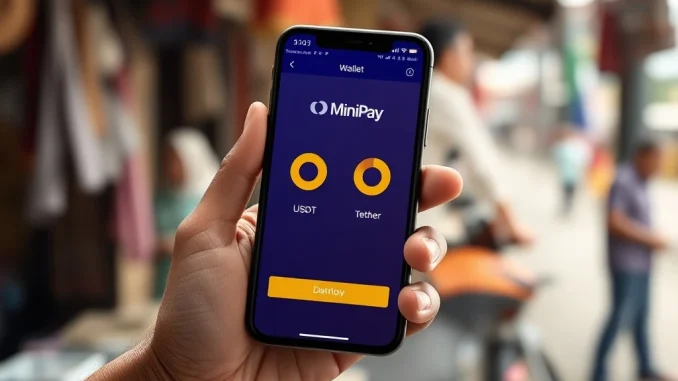
Global, May 2025: In a significant move for digital finance accessibility, Tether Operations Limited has integrated its flagship USDT stablecoin and Tether Gold (XAUT) token into Opera’s MiniPay wallet. This strategic partnership directly targets users in emerging markets, aiming to simplify mobile payments, savings, and cross-border transfers. The integration represents a concrete step in bridging traditional financial services with blockchain-based digital assets for populations with growing smartphone penetration but often limited access to conventional banking.
Tether USDT and Gold Integration Expands MiniPay’s Utility
The core of this announcement centers on the technical integration of two distinct Tether assets into the MiniPay ecosystem. USDT, the world’s largest stablecoin by market capitalization, is pegged 1:1 to the US dollar. Its inclusion provides MiniPay users with a stable digital currency option, shielding them from the high volatility often associated with other cryptocurrencies. This stability is crucial for everyday transactions, remittances, and storing value. Concurrently, the addition of Tether Gold, a digital token backed by physical gold held in a Swiss vault, offers a different proposition. It provides exposure to a traditional safe-haven asset through a blockchain token, potentially serving as a long-term savings or hedging instrument within the same wallet interface. Opera reports that MiniPay, a self-custodial wallet built directly into the Opera Mini browser, has seen accelerating adoption across Africa, particularly in countries like Nigeria, Ghana, and Kenya, where its ease of use and low data consumption are key advantages.
Strategic Focus on Mobile-First Emerging Economies
This partnership is not a random expansion but a targeted strategy informed by specific market dynamics. Opera designed the MiniPay wallet explicitly for regions with high mobile usage but underdeveloped banking infrastructure. The wallet operates on the Celo blockchain, chosen for its mobile-first design, low transaction fees, and proof-of-stake consensus, which aligns with the need for affordable and fast micropayments. By adding Tether’s assets, Opera significantly enhances the wallet’s inherent value proposition. Users can now access globally recognized stable assets without needing a traditional bank account, navigating complex exchange interfaces, or managing high on-chain gas fees associated with other networks. This move leverages several concurrent trends: the rapid growth of smartphone adoption, increasing familiarity with digital payments, and a search for financial stability in economies sometimes plagued by local currency volatility. The collaboration suggests a shared vision where basic financial tools—payments, savings, transfers—become universally accessible through a mobile browser.
Context and Implications for the Digital Asset Landscape
Historically, stablecoin adoption has been concentrated in trading and decentralized finance (DeFi) within developed markets. Tether’s push with Opera MiniPay signals a deliberate pivot towards utility and real-world use cases as primary drivers for growth. It follows a pattern of blockchain projects seeking deeper integration with existing, widely-used platforms to reach mainstream users. For the cryptocurrency industry, successful implementations in payments and remittances provide tangible evidence of blockchain’s utility beyond speculation. Furthermore, integrating a gold-backed token like XAUT into a consumer-facing payments app is a notable experiment. It tests whether users in emerging markets will utilize digital representations of commodity assets for purposes beyond investment, possibly as a more stable store of value than local fiat currencies. The long-term consequence could be a more diversified and resilient digital economy in these regions, less susceptible to single points of failure.
Opera’s Growing Wallet Ecosystem and User Adoption
Opera’s foray into crypto wallets is not new, but the MiniPay initiative represents its most focused effort. The company’s broader crypto ecosystem includes the Opera Crypto Browser and a built-in non-custodial wallet. However, MiniPay is distinct. It is lightweight, integrated into the data-saving Opera Mini browser, and uses a simplified onboarding process often requiring only a phone number. Opera has released data indicating strong user growth, though specific figures are often kept private. The integration of Tether acts as both a feature upgrade and a trust signal, associating the wallet with the most established name in the stablecoin sector. For Tether, placement within a wallet experiencing organic growth in target demographics provides a direct channel to millions of potential new users. This symbiotic relationship highlights how infrastructure providers (Opera) and asset issuers (Tether) can collaborate to expand the overall market.
Technical and Regulatory Considerations
The implementation on the Celo network involves specific technical considerations. Users receive USDT and XAUT as Celo network tokens (e.g., cUSDt, cXAU). This requires Tether to mint and manage these bridged versions, ensuring full backing and redeemability. From a regulatory standpoint, this expansion occurs in jurisdictions with evolving digital asset frameworks. Opera and Tether must navigate local regulations concerning money transmission, anti-money laundering (AML), and know-your-customer (KYC) requirements. MiniPay’s current design, with its simplified onboarding, may face increased scrutiny as it scales. The success of this integration will depend not only on user experience but also on the partners’ ability to work within and help shape constructive regulatory environments in their target markets.
Conclusion
The integration of Tether USDT and Tether Gold into Opera’s MiniPay wallet marks a pivotal development in making stable digital assets practical for everyday use in emerging markets. This move transcends mere technical compatibility, addressing fundamental needs for financial stability, accessibility, and low-cost transactions. By focusing on mobile-first users, the partnership leverages existing technology trends to deliver tangible financial tools. The long-term impact will be measured by user adoption, the emergence of real-world use cases, and the demonstration that blockchain-based assets can reliably support essential economic activities. This collaboration between a major stablecoin issuer and a widely-used browser platform provides a compelling blueprint for the next phase of cryptocurrency adoption: utility-driven, accessible, and integrated into the tools people already use.
FAQs
Q1: What exactly did Tether and Opera announce?
Tether announced the integration of its USDT stablecoin and Tether Gold (XAUT) token into the Opera MiniPay wallet. This allows MiniPay users to store, send, and receive these digital assets directly within the wallet.
Q2: Why is this integration important for emerging markets?
It provides access to stable, globally-recognized digital dollars (USDT) and a gold-backed asset (XAUT) for users who may have limited access to traditional banking, face local currency volatility, or need affordable cross-border payment options, all through a mobile-first application.
Q3: On which blockchain does Opera MiniPay operate?
Opera MiniPay is built on the Celo blockchain network. Celo is designed for mobile use with fast transactions and very low fees, making it suitable for the small, frequent payments common in target markets.
Q4: Is Tether Gold (XAUT) the same as owning physical gold?
Each XAUT token is backed by one fine troy ounce of physical gold held in a Swiss vault. While it provides ownership exposure to the gold’s value, it is a digital token representing that ownership, not physical bullion you hold yourself.
Q5: How does this differ from other crypto wallets?
MiniPay is uniquely integrated into the Opera Mini browser, which is popular in emerging markets for its data-saving features. It emphasizes extreme simplicity and low data usage, targeting first-time crypto users rather than advanced traders, with a focus on payments over complex trading.
This article was produced with AI assistance and reviewed by our editorial team for accuracy and quality.