Financial markets face a potential reckoning as analysts warn traders are dangerously miscalculating geopolitical risks through the ‘TACO trade,’ a strategy betting on quick conflict resolution that may ignore lasting oil market disruptions and economic consequences in early 2026.
TACO Trade Definition and Current Market Assumptions
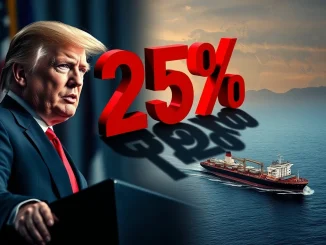
The term ‘TACO’ represents ‘Trump Always Chickens Out,’ a Wall Street-coined phrase reflecting trader expectations that former President Donald Trump would de-escalate geopolitical conflicts. Market participants have historically priced this assumption into oil futures and related assets during tensions. However, this perspective now faces serious challenges according to market analysts. Recent Middle East developments have created sustained energy market disruptions that extend beyond any single political figure’s control. Consequently, the fundamental premise of the TACO trade appears increasingly disconnected from on-ground realities.
Nic Puckrin, founder of Coin Bureau and market analyst, directly challenged this trading thesis in recent commentary. He emphasized that ‘Trump is not in sole control of the situation,’ highlighting the complex geopolitical web involving multiple state and non-state actors. Puckrin further noted there are ‘no easy or quick exits from the war,’ suggesting markets may be underestimating both conflict duration and economic spillover effects. This analysis comes as oil prices maintain elevated levels, with West Texas Intermediate (WTI) crude experiencing significant volatility since conflict escalation.
Oil Price Dynamics and Economic Transmission Channels
Energy markets have demonstrated acute sensitivity to Middle East developments. WTI crude oil prices surged following recent conflict escalation, briefly approaching $120 per barrel before stabilizing at elevated levels. This price action reflects genuine supply concerns rather than speculative froth. The Strait of Hormuz, a critical maritime chokepoint, handles approximately 20% of global oil shipments. Any sustained closure or even reduced transit capacity creates immediate global supply shortfalls. Historical data from the U.S. Energy Information Administration shows petroleum flows through this strait represent a non-substitutable component of global energy infrastructure.
Puckrin’s analysis projects specific economic impacts from sustained high oil prices. He stated that if oil ‘continues to trade above $100 per barrel, economic growth will slow, and Personal Consumption Expenditures (PCE) inflation will rise by up to 1 percentage point.’ This dual impact creates a policy dilemma for central banks. Energy serves as a critical input across all economic sectors. Therefore, price increases transmit rapidly through production and transportation costs, ultimately elevating consumer prices for goods and services broadly. This environment directly challenges the Federal Reserve’s inflation management goals.
The Stagflation Risk Scenario
Prolonged oil price elevation creates credible stagflation risks, an economic condition combining rising inflation with stagnant growth and employment. Puckrin described this as a ‘dreaded’ scenario, drawing parallels to the 1970s experience. During that decade, the S&P 500 delivered essentially zero real returns as stagflation persisted. The current economic structure differs significantly from the 1970s, particularly regarding energy intensity and central bank policy frameworks. However, the core vulnerability remains: energy shocks can simultaneously boost prices while depressing demand.
The Federal Reserve acknowledges these crosscurrents. Chairman Jerome Powell recently stated, ‘The implications of events in the Middle East for the U.S. economy are uncertain in the near term. Higher energy prices will push up overall inflation.’ Powell added it remains ‘too soon’ to accurately gauge the full economic effects, indicating the central bank monitors developments closely. This cautious stance reflects recognition that energy-driven inflation presents particularly difficult policy challenges, as rate hikes to combat inflation may further weaken growth.
Federal Reserve Policy Implications
Market expectations for Federal Reserve policy have shifted dramatically alongside geopolitical developments. The Federal Open Market Committee (FOMC) maintained interest rates steady at its March 2026 meeting, holding the federal funds rate target between 3.5% and 3.75%. However, futures markets, as tracked by the CME Group’s FedWatch Tool, now show vanishing probabilities for April rate cuts. Moreover, a measurable probability—approximately 12%—has emerged for a potential rate hike at the upcoming meeting. This represents a stark reversal from earlier 2026 expectations that envisioned a continued easing cycle.
This policy shift carries direct implications for financial markets. Elevated inflation from energy prices reduces the likelihood of stimulative rate cuts that typically benefit risk assets like cryptocurrencies and growth stocks. Instead, the Fed may maintain restrictive policy or even tighten further, prolonging tight liquidity conditions. Recent blockchain data shows Bitcoin whales moving over $100 million worth of assets amid oil market volatility, suggesting crypto markets already price in some macro risk repricing. The interconnection between traditional energy markets, central bank policy, and digital assets grows increasingly evident.
Infrastructure Damage and Recovery Timelines
Beyond immediate shipping disruptions, physical damage to oil-producing infrastructure in the Gulf region presents longer-term supply challenges. Puckrin emphasized that ‘even if the Strait of Hormuz were to open today, the disruption to the Gulf’s oil-producing infrastructure will take months to rebuild.’ This assessment aligns with historical precedents where conflict-related damage required extensive repair periods. Key infrastructure components—including pipelines, refining capacity, and export terminals—often face complex reconstruction processes involving specialized equipment and security considerations.
The global energy system possesses limited spare capacity to offset prolonged Gulf supply reductions. Strategic petroleum reserves in consuming countries provide temporary buffers but cannot replace continuous production flows indefinitely. Furthermore, alternative shipping routes typically involve longer transit times and higher costs, creating persistent price premiums even if some oil continues moving. These structural constraints mean oil market volatility may persist well beyond any immediate ceasefire announcements, challenging the TACO trade’s short-term resolution assumption.
Historical Context and Market Psychology
Market participants frequently exhibit recency bias, anchoring expectations to recent experiences where geopolitical tensions proved transient. The TACO trade arguably embodies this psychological tendency, extrapolating from past episodes where escalation gave way to rapid de-escalation. However, historical analysis reveals considerable variation in conflict duration and market impact. The 1970s oil shocks demonstrated how sustained supply disruptions can reshape economic trajectories for years. More recently, the post-2014 oil price collapse showed how structural shifts in energy markets can have prolonged effects.
Puckrin warns markets might experience a ‘rude awakening’ if they underestimate the current conflict’s severity and duration. This awakening would involve rapid repricing of assets across multiple classes as growth and inflation expectations adjust. Equity markets, particularly energy-sensitive sectors, would likely revalue lower while traditional inflation hedges might gain appeal. The bond market would face competing forces from growth concerns and inflation pressures, potentially increasing volatility across the yield curve. Such a scenario underscores the importance of scenario analysis beyond base-case assumptions.
Conclusion
Traders relying on the TACO trade thesis face significant risks as 2026 unfolds. The strategy’s core assumption—quick geopolitical de-escalation—conflicts with evidence of sustained oil market disruption and infrastructure damage. With oil prices elevated above $100 per barrel, the U.S. economy confronts renewed stagflation risks that could alter Federal Reserve policy trajectories. Market participants should monitor Strait of Hormuz developments, infrastructure repair timelines, and Fed communications closely. As history demonstrates, energy shocks can produce lasting economic effects that transcend short-term political resolutions. Prudent risk management now requires moving beyond the TACO trade’s simplistic framework to address complex, interconnected realities.
FAQs
Q1: What does ‘TACO trade’ stand for?
The acronym TACO represents ‘Trump Always Chickens Out.’ It describes a market position betting that former President Donald Trump will de-escalate geopolitical conflicts quickly, limiting economic disruption.
Q2: Why are analysts warning about this trade now?
Analysts warn the current Middle East conflict involves complex factors beyond any single leader’s control, with oil infrastructure damage causing supply disruptions that may persist for months regardless of political developments.
Q3: How do high oil prices affect inflation and growth?
Sustained oil prices above $100 per barrel can raise inflation by increasing production and transportation costs across the economy while simultaneously reducing consumer spending power, potentially creating stagflation (rising prices with slowing growth).
Q4: What is the Strait of Hormuz’s importance?
The Strait of Hormuz is a critical maritime passage connecting Persian Gulf oil producers to global markets. Approximately 20% of global oil shipments transit this narrow waterway, making it a key chokepoint for energy supplies.
Q5: How has the Federal Reserve responded to these developments?
The Fed acknowledges uncertainty from Middle East events, noting higher energy prices push up inflation. Market expectations have shifted from anticipating rate cuts to pricing in possible rate hikes as the central bank monitors the situation.
Updated insights and analysis added for better clarity.
This article was produced with AI assistance and reviewed by our editorial team for accuracy and quality.