San Francisco, April 2025 – The cryptocurrency market faces renewed pressure as Bitcoin’s recent price correction confirms a persistent bearish trend, according to analysis from Kraken executive Matt Howells-Barby. This development signals concerning market dynamics where negative news triggers disproportionate reactions compared to positive developments. Market observers now scrutinize how geopolitical tensions and macroeconomic policies influence digital asset valuations.
Bitcoin Price Dip Confirms Broader Market Trend
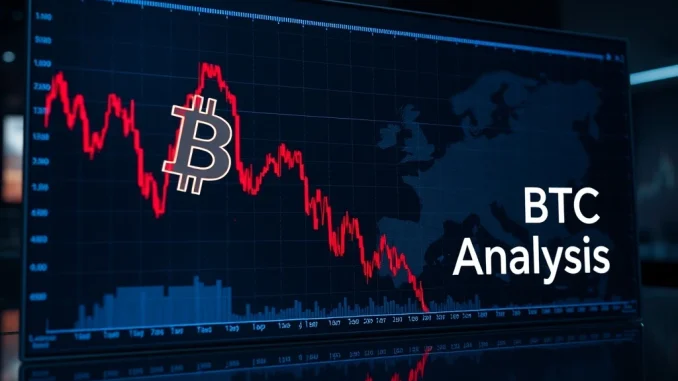
Matt Howells-Barby, Vice President at leading cryptocurrency exchange Kraken, identifies significant patterns in recent market behavior. Since October 10, 2024, Bitcoin has demonstrated consistent vulnerability to negative catalysts. The digital asset shows limited upward momentum during positive developments. Conversely, negative news triggers substantial downward movements. This asymmetry creates challenging conditions for traders and investors.
Howells-Barby brings fifteen years of financial market experience to his analysis. He previously worked at traditional financial institutions before joining Kraken in 2021. His perspective combines cryptocurrency expertise with conventional market understanding. This background provides valuable context for interpreting current market conditions.
Technical Analysis and Support Levels
Before the recent correction, Bitcoin approached crucial technical support levels. These levels typically indicate potential price stabilization or reversal points. Market participants monitored these thresholds closely. However, emerging geopolitical concerns disrupted this technical setup. The breakdown occurred despite initially promising chart patterns.
The correction measured approximately 3.5% from recent highs. This relatively contained decline suggests some market resilience. Traders appear to maintain positions despite volatility. Historical patterns influence current market psychology. Similar situations occurred during previous geopolitical tensions.
Geopolitical Factors Driving Cryptocurrency Volatility
International trade tensions significantly impact cryptocurrency markets. Recent statements regarding U.S.-EU tariff policies create uncertainty. Digital assets increasingly respond to macroeconomic developments. This correlation represents an evolving market characteristic. Traditional safe-haven assets also experience related movements.
Howells-Barby references last year’s U.S.-China tensions as precedent. During that period, tariff threats created similar market conditions. Some traders anticipate potential policy moderation. This expectation may explain the limited correction extent. Market participants remember previous resolutions to similar situations.
Comparative Market Analysis
The table below illustrates recent cryptocurrency market reactions to geopolitical events:
| Event Date | Geopolitical Trigger | Bitcoin Reaction | Recovery Time |
|---|---|---|---|
| Oct 2024 | Initial tariff announcements | -8.2% | 11 days |
| Jan 2025 | Trade negotiation signals | +4.1% | 3 days |
| Mar 2025 | Recent EU statements | -3.5% | Ongoing |
This data reveals several important patterns. First, negative triggers create larger movements than positive ones. Second, recovery periods vary significantly. Third, market sensitivity appears to increase over time. These observations support Howells-Barby’s asymmetric risk assessment.
Market Psychology and Trader Behavior
Current market conditions reveal evolving trader psychology. Several factors influence decision-making processes. Understanding these elements provides context for price movements.
- Risk Assessment: Traders weigh geopolitical uncertainty against potential gains
- Position Management: Many maintain holdings despite volatility expectations
- Historical Reference: Previous similar situations inform current strategies
- Policy Anticipation: Expectations regarding political decisions affect positioning
Market participants demonstrate cautious optimism in some cases. However, overall sentiment remains guarded. The limited correction suggests calculated risk-taking. Traders balance multiple considerations when making decisions.
Institutional Perspective on Market Dynamics
Financial institutions monitor cryptocurrency markets increasingly closely. Traditional analysis methods apply to digital assets. Technical indicators provide important signals. Fundamental factors also influence valuations. The intersection creates complex analytical challenges.
Kraken’s market analysis incorporates multiple data sources. Exchange flow data reveals investor behavior. Order book analysis shows support and resistance levels. Macroeconomic indicators provide broader context. This comprehensive approach informs their market assessments.
Regulatory Environment and Market Impact
Cryptocurrency regulations continue evolving globally. Policy developments affect market conditions. Regulatory clarity influences investor confidence. Uncertainty creates additional volatility factors. Market participants monitor several key areas.
The United States considers digital asset framework legislation. European Union implements Markets in Crypto-Assets regulations. Asian jurisdictions develop varied approaches. These developments create complex cross-border considerations. Traders must navigate this evolving landscape.
Regulatory changes historically impact cryptocurrency prices. Positive developments sometimes generate limited responses. Negative regulatory news often triggers significant reactions. This pattern reinforces the asymmetric risk dynamic. Howells-Barby’s observations reflect this regulatory sensitivity.
Historical Context and Market Evolution
Cryptocurrency markets demonstrate evolving characteristics over time. Early markets showed extreme volatility with different catalysts. Current markets respond to more traditional financial factors. This evolution represents increasing market maturation. However, unique digital asset characteristics persist.
The 2017-2018 market cycle featured different dynamics. Retail speculation drove much market activity. The 2021 cycle included significant institutional participation. Current markets balance multiple participant types. Each group brings different perspectives and strategies.
Technical Market Structure Analysis
Market structure reveals important information about current conditions. Several technical factors merit consideration. These elements help explain recent price movements.
Liquidity distribution affects price discovery. Support and resistance levels indicate market psychology. Trading volume patterns reveal participant engagement. Volatility metrics measure market uncertainty. Correlation with traditional assets shows integration degree.
Recent data shows increasing correlation with equity markets. This development represents a significant change. Previously, cryptocurrencies demonstrated more independent movement. Current correlations suggest evolving market relationships. These connections influence risk management approaches.
Risk Management Considerations
Asymmetric downside risk requires careful risk management. Traders and investors adapt strategies accordingly. Several approaches help navigate current conditions.
- Position Sizing: Adjusting exposure based on volatility expectations
- Hedging Strategies: Using derivatives to manage downside risk
- Diversification: Spreading exposure across different assets
- Scenario Planning: Preparing for various geopolitical outcomes
Professional market participants emphasize risk management. Retail investors increasingly adopt similar approaches. Education resources improve available to all participants. Knowledge dissemination supports more informed decision-making.
Future Market Outlook and Monitoring Points
Several factors will influence future cryptocurrency market directions. Monitoring these elements provides market insight. Howells-Barby identifies key areas for observation.
Geopolitical developments remain crucial. Trade policy statements will affect market sentiment. Economic indicators provide broader context. Regulatory announcements create specific impacts. Technological developments influence fundamental valuations.
Market participants should track multiple information sources. No single factor determines market direction. Instead, interconnected elements create complex dynamics. Understanding these relationships supports better decision-making. Continuous monitoring remains essential.
Expert Consensus and Diverging Views
Financial analysts present varying cryptocurrency market perspectives. Some emphasize traditional financial analysis methods. Others focus on unique digital asset characteristics. Most agree that multiple factors influence prices.
Howells-Barby’s analysis represents one informed perspective. Other experts may emphasize different elements. This diversity of opinion reflects market complexity. Considering multiple viewpoints provides balanced understanding. Investors benefit from comprehensive analysis.
Conclusion
The recent Bitcoin price dip confirms ongoing bearish market trends according to Kraken analysis. Matt Howells-Barby identifies asymmetric downside risk as a key characteristic. Geopolitical factors significantly influence cryptocurrency valuations. Market participants navigate complex and evolving conditions. Careful analysis and risk management remain essential. The Bitcoin price dip reflects broader market dynamics requiring continued monitoring and informed decision-making.
FAQs
Q1: What does asymmetric downside risk mean in cryptocurrency markets?
Asymmetric downside risk refers to markets reacting more strongly to negative news than positive developments. In current conditions, Bitcoin shows significant price declines on negative catalysts but limited gains on positive news.
Q2: How did Bitcoin recently test key support levels?
Before the recent correction, Bitcoin approached technical price levels that historically indicate potential stabilization or reversal points. These support levels represent areas where buying interest traditionally increases.
Q3: Why are geopolitical factors affecting cryptocurrency prices?
Cryptocurrency markets increasingly correlate with traditional financial markets. Geopolitical events create economic uncertainty that affects all risk assets. Digital assets now respond to similar macroeconomic factors as stocks and commodities.
Q4: What market behavior suggests traders are maintaining positions?
The limited 3.5% correction despite negative news indicates some traders are holding positions. This behavior suggests expectations that geopolitical tensions may moderate, similar to previous situations that resolved favorably.
Q5: How does current market volatility compare to historical patterns?
Current volatility reflects evolving market characteristics. While still significant, cryptocurrency volatility now relates more to traditional financial factors than earlier periods dominated by speculation and technological developments alone.
Updated insights and analysis added for better clarity.
This article was produced with AI assistance and reviewed by our editorial team for accuracy and quality.