Global, May 2025: Recent volatility in the cryptocurrency markets, characterized by significant price corrections for major assets like Bitcoin (BTC) and RENDER, has prompted a notable shift in trader attention. Market analysts are observing capital rotation into emerging sectors, with decentralized artificial intelligence (AI) projects like DeepSnitch AI garnering increased scrutiny. This movement reflects broader trends in investor strategy during periods of market consolidation, where search for high-growth potential often intensifies. This analysis examines the current market dynamics, the underlying technology of AI-driven crypto assets, and the factors influencing contemporary investment decisions.
Bitcoin Price Prediction and Current Market Context
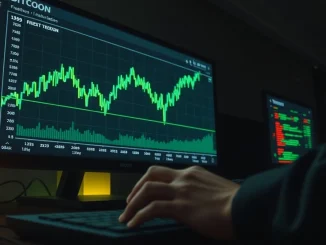
The cryptocurrency market in 2025 continues to exhibit the high volatility for which it is known. Bitcoin, the leading digital asset by market capitalization, has experienced a notable price correction over recent weeks. This movement aligns with historical patterns where Bitcoin undergoes periodic consolidations after significant rallies. Several macroeconomic factors typically influence these cycles, including shifts in global monetary policy, institutional investment flows, and regulatory developments in key jurisdictions. Analysts from traditional finance firms and crypto-native research groups emphasize that Bitcoin’s price action rarely occurs in isolation; it often sets the tone for broader market sentiment. The current pullback has led traders to reassess portfolio allocations, a common behavior during downturns where capital seeks alternative avenues for growth.
The RENDER Network and GPU Computing Market Dynamics
Concurrent with Bitcoin’s movement, the RENDER token, which powers a decentralized GPU rendering network, has also faced downward pressure. The RENDER network connects users needing rendering power with those who have idle GPU capacity. Its value is intrinsically linked to the demand for digital rendering services from industries like animation, visual effects, and architectural visualization. Market analysts note that the token’s price often correlates with broader crypto market trends but is also susceptible to specific industry demand cycles. The recent co-movement with Bitcoin suggests a strong correlation during risk-off market environments, where investors reduce exposure to altcoins perceived as higher risk. However, the fundamental utility of the RENDER network provides a distinct value proposition separate from pure monetary assets, focusing on a tangible service within the digital creation economy.
Understanding Capital Rotation in Crypto Markets
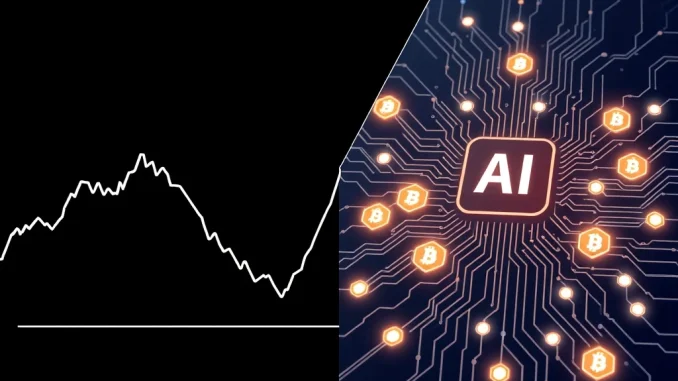
Capital rotation is a well-documented phenomenon in financial markets, including cryptocurrencies. When established, large-cap assets like Bitcoin enter a corrective phase, a portion of trading capital often migrates towards smaller, emerging projects in search of asymmetric returns. This activity does not necessarily imply a fundamental flaw in the larger assets but highlights the diverse risk appetites present within the crypto investor base. Some traders employ a strategy of taking profits from appreciated large-cap holdings and allocating a percentage to early-stage projects within nascent sectors like decentralized AI, gaming, or real-world asset (RWA) tokenization. This rotation is a sign of a maturing market with increasingly specialized sectors, each attracting capital based on different technological theses and growth timelines.
The Emergence of Decentralized AI Cryptocurrencies
The intersection of artificial intelligence and blockchain technology represents a rapidly evolving sector. Projects like DeepSnitch AI aim to leverage decentralization for AI model training, data sourcing, or inference services. The core proposition involves creating a marketplace or network where AI resources and services can be accessed without centralized control, potentially addressing concerns about data privacy, algorithmic bias, and resource monopolization held by large tech companies. It is critical to distinguish between projects with functional, testable technology and those that are merely conceptual. The sector attracts attention due to the transformative potential of AI, but investors are advised to conduct deep technical due diligence, examining factors such as:
- Team Expertise: The background of developers in both AI/ML and blockchain systems.
- Technical Whitepaper: The clarity and innovation of the proposed protocol or network architecture.
- Testnet/Mainnet Status: Whether the project has a live, functional product or is still in development.
- Token Utility: How the native token is essential for accessing or governing the network, beyond mere speculation.
Evaluating High-Growth Potential in Early-Stage Projects
The concept of a “moonshot” or seeking exponential returns is inherent to high-risk, high-reward investing, particularly in technology startups and certain crypto assets. However, professional analysts stress that such outcomes are statistically rare and involve extreme risk. Predictions of specific multiples, such as “100x,” are inherently speculative and should not be construed as financial forecasts. A more measured approach involves analyzing the total addressable market (TAM) of a solution, the competitive landscape, and the project’s ability to execute its roadmap. In the AI crypto space, success depends on achieving technological milestones, fostering developer adoption, and creating sustainable network effects that are not solely dependent on token price appreciation.
Risk Assessment and Responsible Market Participation
The cryptocurrency market offers opportunities but is accompanied by significant risks, including extreme volatility, regulatory uncertainty, and technological immaturity. Investors, from institutions to individuals, are increasingly adopting more rigorous frameworks for participation. These include proper portfolio diversification, understanding the difference between long-term holding (“HODLing”) and active trading, and using secure, self-custody solutions for asset storage. Regulatory clarity continues to evolve globally, with jurisdictions like the European Union implementing comprehensive frameworks like MiCA (Markets in Crypto-Assets), which aims to provide consumer protection and market integrity. Compliance with local laws regarding securities, taxation, and reporting is a non-negotiable aspect of market participation for all serious investors.
Conclusion
The recent price action in Bitcoin and related assets underscores the dynamic and interconnected nature of the cryptocurrency ecosystem. The observed rotation of trader interest towards emerging sectors like decentralized AI is a natural feature of a maturing market with multiple growth narratives. While projects such as DeepSnitch AI exemplify the innovative convergence of blockchain and artificial intelligence, their long-term success will depend on demonstrable utility and adoption, not speculative price predictions. A prudent approach for anyone involved in this space combines an understanding of broad market cycles, a commitment to fundamental technical research, and a clear assessment of personal risk tolerance. The evolution of the Bitcoin price prediction landscape remains tied to both macroeconomic forces and the organic development of groundbreaking technologies within the wider digital asset industry.
FAQs
Q1: What typically causes Bitcoin’s price to crash or correct?
Bitcoin price corrections are often caused by a combination of factors, including profit-taking after large rallies, negative macroeconomic news (like interest rate hikes), regulatory announcements, large-scale liquidations in leveraged derivative markets, or shifts in institutional investment flows. It is a normal part of its volatile market cycle.
Q2: What is the RENDER token used for?
The RENDER token is the native currency of the Render Network, a decentralized platform that connects users who need GPU computing power for tasks like 3D rendering and animation with providers who have idle GPU capacity. Users pay with RENDER tokens for the service, and providers earn them.
Q3: What is a “decentralized AI” cryptocurrency project?
Decentralized AI projects aim to use blockchain technology to create open, permissionless networks for AI-related services. This could include decentralized marketplaces for AI models, federated learning where data privacy is maintained, or distributed computing resources for training large models, reducing reliance on centralized tech giants.
Q4: How should investors evaluate new AI crypto projects?
Investors should look beyond hype and examine the project’s technical whitepaper, the experience and credibility of the development team, the progress of its testnet/mainnet, the real utility of its token within the network, the size of its community and developer activity, and the clarity of its roadmap and governance model.
Q5: Is capital rotation from Bitcoin to altcoins a common strategy?
Yes, it is a common trading strategy, sometimes called “altcoin season” dynamics. The theory is that when Bitcoin’s price stabilizes or consolidates after a bull run, investor confidence rises, and capital flows into smaller-cap altcoins with higher perceived growth potential. However, this pattern is not guaranteed and carries high risk, as altcoins are often more volatile and less liquid than Bitcoin.
Updated insights and analysis added for better clarity.
This article was produced with AI assistance and reviewed by our editorial team for accuracy and quality.