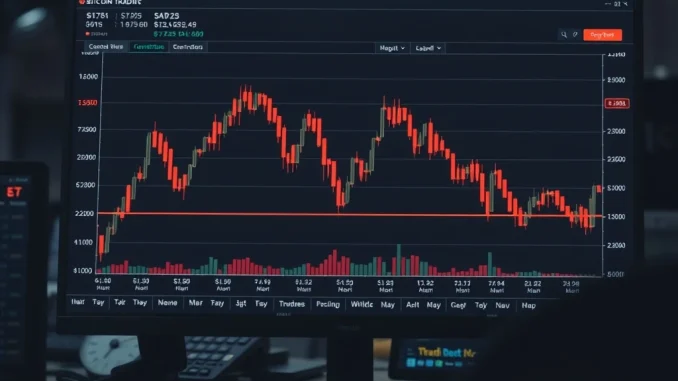
Bitcoin Downtrend: Shocking Analysis Predicts Multi-Month Slide to Mid-$50K
New York, April 2025: Bitcoin, the world’s leading cryptocurrency, has entered a technical phase that veteran trader Eric Crown warns could signal a prolonged downtrend lasting several months, with a potential price target in the mid-$50,000 range. This analysis, emerging from a detailed technical and psychological assessment of the market, challenges the prevailing sentiment and underscores the volatile nature of digital asset cycles. The forecast hinges on a confluence of bearish chart patterns and shifting investor behavior following significant market disruptions.
Bitcoin Downtrend: A Technical Breakdown
Eric Crown, a former NYSE Arca options trader, bases his cautious outlook on a series of classical technical indicators that have historically preceded extended corrections in asset prices. In an exclusive interview with CoinDesk, Crown highlighted that Bitcoin’s price action has been characterized by sideways movement and gradual decline since October of the previous year. This consolidation phase, he argues, is now giving way to a more defined bearish structure. The primary technical red flag is the formation of a “death cross” on the monthly Moving Average Convergence Divergence (MACD) indicator, a signal that long-term momentum is waning. Furthermore, Crown points to the behavior of key weekly moving averages—the 21-day and 55-day—which are also flashing bearish signals, suggesting sustained selling pressure is building across multiple timeframes.
Understanding the Market Psychology Behind the Slide
The technical picture is only one part of the story. Crown’s analysis delves deeply into the behavioral economics currently at play. He notes a classic pattern where investors begin shedding their most speculative holdings first during periods of uncertainty. This risk-off behavior has been acutely observed across the broader cryptocurrency altcoin market, which often leads Bitcoin in both rallies and retreats. A pivotal event shaping current trader psychology was the massive forced liquidation event in October, which Crown describes as the largest on record. This event, likely involving leveraged positions being automatically closed by exchanges, created a climate of heightened caution. Traders have since become wary of re-establishing aggressive long positions, fearing a repeat of such volatility. This collective hesitation removes a key source of buy-side demand, allowing downward pressure to persist.
Historical Context: Cycles Within the Crypto Supercycle
To fully grasp Crown’s forecast, one must view it within the context of Bitcoin’s historical market cycles. Since its inception, Bitcoin has experienced multi-year patterns of explosive bull runs followed by deep, often prolonged bear markets and lengthy accumulation phases. Notable examples include the 2013 peak and subsequent 80%+ drawdown, the 2017 mania and the 2018-2020 crypto winter. Crown is careful to distinguish the current potential downturn from a cycle-ending event. He posits that the market is more likely entering a “value accumulation phase.” This is a period where prices stabilize or decline gradually, allowing long-term investors and institutions to build positions at lower price points, setting the stage for the next major advance. This perspective reframes a potential drop to the $50,000s not as a catastrophe, but as a necessary and healthy recalibration within a longer-term upward trajectory.
Key Technical Indicators Explained for Investors
For non-technical readers, understanding the tools used in this analysis is crucial. Below is a breakdown of the primary indicators cited by Eric Crown:
- Death Cross (MACD): This occurs on a chart when the MACD line (the difference between two exponential moving averages) crosses below its signal line on a monthly chart. It is widely interpreted by analysts as a confirmation of shifting from a bullish to a bearish long-term trend.
- 21-Day and 55-Day Weekly Moving Averages (WMAs): These are trend-following indicators that smooth out price data. When the shorter-term 21-day WMA crosses below the longer-term 55-day WMA, it suggests weakening momentum and can act as dynamic resistance, pushing prices lower.
- Forced Liquidation Event: This is a cascade of automatic sell orders triggered when leveraged traders’ positions fall below a certain collateral threshold. The October event was exceptionally large, creating a vacuum of liquidity and instilling fear in the market.
The Institutional Perspective and Macro Backdrop
The current analysis cannot be divorced from the broader financial landscape. Rising interest rates, geopolitical tensions, and shifting regulatory stances towards digital assets globally contribute to a complex macro environment. Institutional investors, who now hold significant Bitcoin through ETFs and corporate treasuries, are highly sensitive to these factors. A prolonged downtrend may reflect not just technical breakdowns but also a recalibration of institutional risk models. However, this same institutional presence provides a floor of demand that did not exist in previous cycles, potentially making a collapse to pre-2020 levels highly improbable.
Conclusion: Navigating Uncertainty in the Crypto Market
The forecast of a bitcoin downtrend extending for months and potentially reaching the mid-$50,000s presents a sobering counter-narrative to perpetual bullish optimism. Eric Crown’s analysis, rooted in technical chart patterns and market psychology, provides a framework for understanding the current risk. While the short-term outlook appears challenging, the characterization of this phase as a potential accumulation period offers a crucial long-term perspective. For investors, this underscores the importance of risk management, diversification, and a focus on multi-cycle time horizons rather than reacting to short-term volatility. The coming months will test the resilience of Bitcoin’s underlying network value against the powerful forces of technical sentiment and global capital flows.
FAQs
Q1: What is a “death cross” and why is it significant for Bitcoin?
A death cross is a technical chart pattern that occurs when a short-term moving average crosses below a long-term moving average, typically on a monthly chart. It is considered a major bearish signal by many traders, suggesting that long-term momentum has turned negative and a prolonged downtrend may be beginning.
Q2: How does the October liquidation event affect today’s market?
The record-sized forced liquidation in October 2024 caused significant, rapid losses for leveraged traders. This event created a lasting sense of caution, making traders hesitant to use high leverage or re-enter the market aggressively. This reduced participation can contribute to lower trading volumes and increased vulnerability to downward price moves.
Q3: Is a drop to $50,000 considered a crash for Bitcoin?
While a decline from current levels to the mid-$50,000s would represent a substantial correction, within the context of Bitcoin’s volatile history it would not be unprecedented. Given Bitcoin’s rise from much lower levels, many analysts would view this as a deep correction within a ongoing market cycle rather than a catastrophic crash.
Q4: What is a “value accumulation phase”?
An accumulation phase is a period where the price of an asset trades in a range or trends sideways/down gently after a prior rally. During this time, informed investors and institutions often steadily purchase the asset, building a base of ownership at lower prices before the next major upward price movement begins.
Q5: Should retail investors sell their Bitcoin based on this analysis?
This analysis is a forecast, not a certainty. Investment decisions should be based on individual financial goals, risk tolerance, and time horizon. Professional advice often recommends against making drastic portfolio changes based on any single prediction. A common strategy is dollar-cost averaging, which involves investing a fixed amount regularly regardless of price, to mitigate timing risk.
Related News
- BlockDAG's $0.00016 Entry Sparks Analysis as Dogecoin Surges and Zcash Navigates Regulations Before March 4
- Ethereum Post-Quantum Security Team Launches to Defend Blockchain Against Imminent Quantum Threats
- USDC Transfer Stuns Market: 500 Million Stablecoin Whale Move to Binance Analyzed
Related: Vitalik Buterin's ETH Movement: Analyzing the 3,500 Aave Withdrawal and On-Chain Context
Related: Crypto Presale 2026: DeepSnitch AI's 1000X Buzz Meets Reality as Bitcoin ETFs Bleed $166M
Related: Solana Whale Awakens: 50,000 SOL Shift from Exchanges to Staking Signals Major Confidence