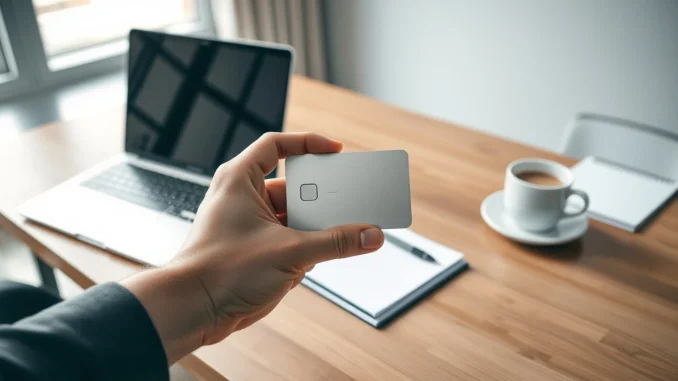
In an era defined by information overload, professionals globally are turning to a new class of powerful hardware: physical AI notetaking devices. These compact gadgets, which record, transcribe, and summarize conversations, are fundamentally changing how people capture and act on meeting insights. Unlike purely software-based solutions, these dedicated devices offer versatility for both in-person discussions and remote calls, providing a tangible tool for the modern knowledge worker. The market for these devices has matured significantly since early models emerged around 2023, with 2026 seeing a diverse range of options from wearable pins to credit-card-sized recorders.
AI Notetaking Devices: Bridging the Digital and Physical World
The core function of these devices is straightforward: they capture audio and use artificial intelligence to process it into actionable text. However, their value extends far beyond simple transcription. Consequently, modern AI notetakers generate concise summaries, extract action items, and even provide live translation. This functionality addresses a critical pain point in business communication, where key details are often lost between conversations and execution. Moreover, the shift toward hybrid work models has increased demand for tools that perform consistently regardless of setting.
These devices typically connect to dedicated mobile applications. Through these apps, users manage recordings, access transcripts, and customize AI summary formats. Importantly, the hardware itself is designed for discretion and portability. For instance, many models feature multiple microphones for clear audio pickup within a radius of three to five meters. Battery life is another crucial differentiator, with some devices offering continuous recording for over 24 hours on a single charge.
Comparing Leading Hardware Options
The market features several prominent devices, each with distinct specifications and pricing models. A primary consideration for buyers is often the associated software subscription, as some devices require ongoing fees for advanced AI features, while others include lifetime basic transcription.
The following table compares key devices available as of March 2026:
Device Comparison Table
Plaud Note Pro: Price: $179. Key Features: Credit-card size, 4 mics, small screen, 300 free transcription mins/month. Form Factor: Standalone recorder.
Mobvoi TicNote: Price: $159. Key Features: 600 free transcription mins, 120+ language translation, 25hr battery. Form Factor: Rectangular standalone.
Comulytic Note Pro: Price: $159. Key Features: Unlimited basic transcription, 45hr battery, optional advanced AI plan. Form Factor: Standalone recorder.
Anker Soundcore Work: Price: $159. Key Features: Coin-sized pin, 8-32hr battery, 300 free transcription mins/month. Form Factor: Wearable pin.
Omi Pendant: Price: $89. Key Features: Requires phone connection, open-source, 10-14hr battery. Form Factor: Wearable pendant.
The Subscription Model and Cost of Ownership
When evaluating these devices, the total cost of ownership is a major factor. Significantly, companies employ different business models. For example, Comulytic and the basic version of Pocket offer unlimited transcription without a subscription, which appeals to users with high-volume needs. Conversely, devices like the Plaud Note Pro and Anker Soundcore Work include a monthly allotment of free transcription minutes, often around 300, with paid plans required beyond that limit.
Advanced AI features, such as instant summaries, custom template creation, and chatting with an AI assistant about the transcript, frequently reside behind premium subscriptions. These plans typically cost between $10 and $20 per month. Therefore, professionals must assess their expected usage volume and need for advanced analytics before selecting a device.
The Rise of Wearable and Versatile Form Factors
Beyond traditional recorders, the category has expanded to include wearable technology. Devices like the Plaud NotePin S and the Anker Soundcore Work pin represent this trend. Specifically, these wearables offer discreet recording through lapel pins, pendants, or wristbands. Their design prioritizes ease of use in dynamic, in-person environments where placing a device on a table is impractical.
The Omi Pendant takes a minimalist approach. Priced at $89, it functions as a microphone that streams audio directly to a connected smartphone. Because it lacks onboard storage, it remains a lower-cost entry point. Notably, its open-source hardware and software have fostered a community of developers creating custom applications, demonstrating an alternative to closed ecosystems.
Another innovative form factor comes from Viaim, whose RecDot earbuds integrate transcription capabilities directly into audio wearables. This approach is particularly useful for call-centric professionals, merging communication and documentation into a single device.
Privacy, Ethics, and Practical Considerations
The use of recording devices naturally raises important questions about privacy and consent. Ethically and often legally, users must inform all meeting participants that the conversation is being recorded. Most reputable companies emphasize this requirement in their guidelines. Furthermore, the quality of transcription can vary based on audio environment; meetings with background noise, multiple overlapping speakers, or strong accents may require manual correction of the AI-generated text.
Data security is another critical concern. Users should review where their audio files and transcripts are processed and stored. Devices that offer local processing on the smartphone, rather than cloud-only processing, can provide an additional layer of privacy for sensitive discussions.
Conclusion
Physical AI notetaking devices have evolved from niche gadgets into robust productivity tools for professionals. They effectively solve the universal problem of capturing and utilizing information from conversations. The current market offers choices for every preference, from subscription-free models to feature-rich wearables. When selecting a device, users should carefully balance factors like form factor, transcription accuracy, battery life, and long-term cost. Ultimately, these powerful AI notetaking devices are not just recording audio; they are helping to structure workflow, ensure accountability, and unlock the latent value in every meeting.
FAQs
Q1: Do I need an internet connection for these AI notetaking devices to work?
Most devices require an internet connection to upload audio for cloud-based AI processing and transcription. However, the initial audio recording typically happens locally on the device, with syncing occurring once a connection is available.
Q2: Is it legal to record meetings with these devices?
Laws regarding recording conversations vary by country, state, and locality. Many jurisdictions require the consent of all parties involved. It is the user’s responsibility to understand and comply with relevant laws and to inform participants they are being recorded.
Q3: How accurate is the AI transcription?
Transcription accuracy is generally high in quiet environments with clear speech, often cited by manufacturers in the high 90th percentile. Accuracy can decrease with background noise, technical jargon, strong accents, or multiple people talking simultaneously.
Q4: What happens to my audio and transcript data?
Data handling policies differ by manufacturer. Typically, audio is uploaded to secure servers for processing. Users should review each company’s privacy policy to understand data retention, usage, and deletion practices. Some apps offer options to delete recordings automatically after processing.
Q5: Can these devices translate languages in real-time?
Several devices, like the Mobvoi TicNote and Viaim RecDot, advertise real-time translation features supporting dozens of languages. This functionality usually works during playback or within the companion app, providing translated text alongside or instead of the original transcript.
Updated insights and analysis added for better clarity.
This article was produced with AI assistance and reviewed by our editorial team for accuracy and quality.