DAO Governance Crisis: Vitalik Buterin’s Critical Warning on Human Attention Scarcity
Global, May 2025: Ethereum co-founder Vitalik Buterin has identified a fundamental, human constraint threatening the future of decentralized governance. In a detailed social media analysis, Buterin argues that DAO governance is hitting a wall not of technology, but of biology: the severe scarcity of human attention. His proposed solution involves a nuanced, privacy-preserving role for artificial intelligence to augment, not replace, human decision-makers in decentralized autonomous organizations.
Vitalik Buterin Exposes the Core DAO Governance Bottleneck
The vision for Decentralized Autonomous Organizations (DAOs) promised a revolution in collective decision-making. By encoding rules on a blockchain and allowing token holders to vote, these entities could, in theory, operate without traditional corporate hierarchies. However, as Buterin outlined, a critical flaw emerges in practice. The volume and complexity of proposals in active DAOs—covering treasury management, protocol upgrades, grants, and partnerships—far exceed the cognitive bandwidth of any individual participant. This creates what governance researchers call “voter fatigue,” where engagement drops, and decision-making power inadvertently concentrates among a small group of highly dedicated, and often well-resourced, individuals. Buterin’s intervention shifts the conversation from scaling blockchain transactions to scaling human comprehension within decentralized systems.
The Perils of Direct AI Control in Decentralized Systems
Buterin’s post served as a direct caution against a tempting but dangerous shortcut: handing governance power directly to AI systems. He reasoned that creating a centralized AI oracle to make decisions would simply recreate a centralized point of failure and control, antithetical to a DAO’s purpose. Furthermore, the “black box” nature of many advanced AI models makes their decision-making process opaque and unaccountable. A DAO governed by an inscrutable AI would struggle to maintain legitimacy among its members. History offers a parallel in the early internet’s shift from centralized portals (like AOL) to open protocols (like the web). Buterin’s argument suggests that for DAOs, the path forward is not a new central ruler, whether human or silicon, but a tool that empowers every participant.
From Sci-Fi to Smart Contracts: The Evolution of Automated Governance
The concept of automated governance isn’t new. It traces its philosophical roots to ideas of futarchy—a system where decisions are made based on prediction markets—and has been explored in academic circles for decades. The blockchain era, starting with Bitcoin’s proof-of-work and evolving through Ethereum’s smart contracts, provided the first viable infrastructure to test these theories at scale. Early DAOs like The DAO in 2016 highlighted security flaws, while modern giants like Uniswap, Compound, and Arbitrum DAOs now manage billions in assets, making the efficiency and security of their governance a matter of significant financial consequence. Buterin’s focus on attention scarcity marks a maturation of this discourse, moving past technical hurdles to address human factors.
The Personal AI Agent: A Proposed Solution for Voter Support
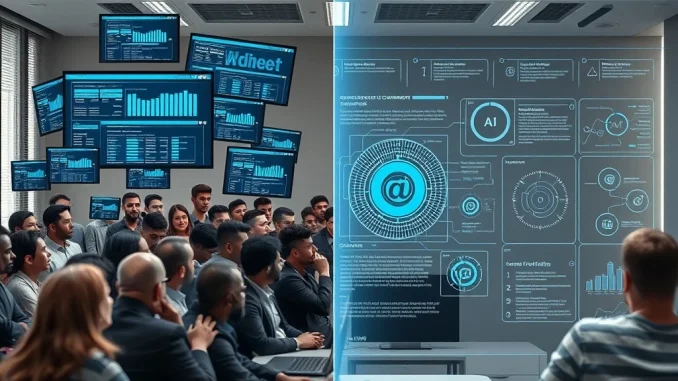
Buterin’s counter-proposal centers on the use of personal AI agents. Imagine a software assistant, customized and controlled by an individual DAO member. This agent could perform several critical, time-consuming tasks while remaining under the user’s ultimate authority. Its functions might include:
- Proposal Summarization: Digesting long, technical governance forum posts and documentation into concise, clear briefs.
- Due Diligence: Analyzing the code changes, financial implications, and historical context of a proposal by scanning blockchain data and related discussions.
- Conflict Checking: Cross-referencing a new proposal with a voter’s past stated values or preferences to flag potential alignments or contradictions.
- Privacy-Preserving Voting: Potentially enabling more complex voting mechanisms (like quadratic voting) without exposing a user’s full strategy, by handling the cryptographic computations locally.
This model preserves the decentralized ethos. No single AI has power; instead, empowered individuals use their own tools to make better decisions. The table below contrasts the traditional, AI-controlled, and agent-assisted models of DAO governance.
| Governance Model | Decision Maker | Key Strength | Critical Weakness |
|---|---|---|---|
| Traditional DAO Voting | Human Voters | Direct legitimacy, aligned incentives | Attention scarcity, voter fatigue, low participation |
| Centralized AI Oracle | AI System | Efficiency, handles complexity | Central point of failure, opacity, loss of decentralization |
| Personal AI Agent-Assisted | Human + AI Tool | Scales human judgment, preserves autonomy & privacy | Technical complexity to build, requires user adoption |
The Privacy Imperative in AI-Augmented Governance
Buterin specifically emphasized privacy as a non-negotiable feature. A personal agent that learns a user’s preferences and voting history becomes a repository of sensitive political and financial data. Buterin’s vision likely implies agents that run locally on a user’s device or use advanced cryptographic techniques like zero-knowledge proofs. This ensures that a voter can receive personalized analysis without broadcasting their private priorities and strategies to the entire network, preventing manipulation and preserving the integrity of the democratic process.
Broader Implications for the Future of Work and Governance
The challenge Buterin describes extends beyond crypto. It touches on a universal condition of the information age: cognitive overload. From corporate boards to citizen assemblies, any group making complex decisions faces the same scarcity of attention. The solution space Buterin is exploring—using AI to augment human intelligence in deliberative processes—could have applications in municipal governance, open-source project management, and corporate shareholder voting. The core principle is that technology should be a tool for human empowerment and better collective judgment, not a substitute for it. The success or failure of this approach in the high-stakes, transparent laboratory of DAOs will provide valuable lessons for these wider fields.
Conclusion
Vitalik Buterin’s analysis moves the DAO governance conversation to a necessary, human-centric level. By identifying attention scarcity as the primary bottleneck, he reframes the problem from one of blockchain engineering to one of cognitive ergonomics. His proposed remedy—personal, privacy-focused AI agents acting as aides to human voters—offers a path that upholds the decentralized values of the ecosystem while pragmatically addressing its operational limits. As DAOs continue to manage increasingly substantial resources and make decisions with global impact, developing and testing these augmented governance models will be critical to their long-term legitimacy, resilience, and success.
FAQs
Q1: What is “attention scarcity” in the context of DAOs?
A1: Attention scarcity refers to the limited time, mental energy, and focus that individual DAO members have to thoroughly review, understand, and vote on the often numerous and technically complex governance proposals. This leads to low participation and informed voting.
Q2: Why is Vitalik Buterin against letting an AI directly govern a DAO?
A2: Buterin argues that a centralized AI governor would create a single point of control and failure, undermining the core decentralized principle of a DAO. It would also lack transparency and accountability, as AI decision-making can be opaque and difficult for humans to audit or challenge.
Q3: How would a personal AI agent for DAO voting work?
A3: A personal AI agent would be software controlled by an individual voter. It could summarize proposals, analyze their financial and technical impact, check for alignment with the voter’s past decisions, and handle complex voting mechanics—all while operating privately on the user’s device to protect their data and strategy.
Q4: Does this solve the problem of low voter turnout in DAOs?
A4: It directly addresses a major cause of low turnout: the high cost of becoming informed. By drastically reducing the time and effort needed to cast a well-considered vote, AI agents could significantly increase participation rates among token holders.
Q5: Are there any real-world examples of AI being used in governance today?
A5: While not yet widespread in DAOs, AI tools for summarizing documents, analyzing data, and modeling outcomes are increasingly used in traditional corporate and policy settings. Buterin’s proposal is notable for applying these tools within a decentralized, user-centric framework rather than a top-down one.
Related News
- Bitcoin's Revolutionary Independence: Coinbase CEO Declares Superiority Over Central Banks at Davos Summit
- BRICS CBDC Link Proposal: India's Strategic Move to Revolutionize Global Payments
- Cloud Mining: Start Your Sustainable Digital Asset Investment Journey
Related: Cardano Price Prediction 2026-2030: Analyzing Market Shifts After Parsec Analytics Closure
Related: Parabolic SAR Indicator: The Essential Guide to Spotting Trends and Reversals
Related: Bitdeer Stuns Market: Sells All Bitcoin Holdings While Overtaking Marathon as Top Miner