Sonic Labs Spawn: The Revolutionary AI That Builds Web3 Apps Instantly
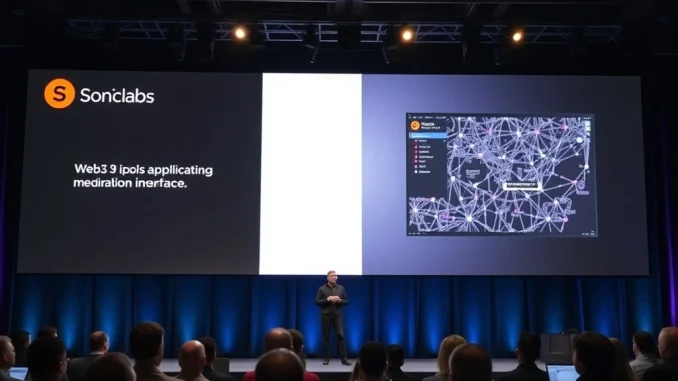
Denver, Colorado – February 28, 2026: In a landmark announcement at the ETHDenver 2026 conference, Sonic Labs unveiled Spawn, a groundbreaking AI platform designed to democratize Web3 development. This innovative tool allows users to build and deploy fully functional decentralized applications (dApps) on the Sonic blockchain using simple, natural language prompts, a process that reportedly completes in minutes. The announcement marks a significant leap toward lowering the technical barriers to blockchain innovation, potentially accelerating the creation of the next generation of internet applications.
Spawn AI Platform: A Technical Breakdown
Sonic Labs positions Spawn as an end-to-end generative AI assistant for Web3. The core functionality involves a user inputting a descriptive prompt outlining a desired application’s purpose, features, and logic. The Spawn AI engine then interprets this request, generates the necessary smart contract code, designs a user interface, configures the backend infrastructure, and handles the deployment process onto the Sonic blockchain. This represents a paradigm shift from traditional development, which requires deep expertise in programming languages like Solidity, blockchain architecture, and cybersecurity. The platform’s integration with the Sonic blockchain is critical; Sonic is a Layer-2 scaling solution built for Ethereum compatibility, offering high speed and low transaction costs, which are essential for user-friendly dApps.
The Evolution of No-Code and AI in Blockchain Development
The introduction of Spawn did not occur in a vacuum. It represents the convergence of two powerful trends in software development. First, the rise of no-code and low-code platforms has empowered non-technical users to build websites and basic applications for over a decade. Second, the recent explosion of generative AI, capable of writing functional code from descriptions, has begun to transform professional software engineering. Spawn appears to be the first platform to apply this combined force specifically to the complex domain of Web3. Historically, creating a secure and functional dApp required months of work by specialized developers. Tools like Spawn aim to compress that timeline to a single sitting, analogous to how website builders like WordPress simplified web publishing.
Implications for Developers and the Broader Ecosystem
The immediate reaction within the ETHDenver community was a mix of excitement and measured scrutiny. For entrepreneurs and creators with limited technical resources, Spawn could unlock unprecedented opportunities to prototype and launch blockchain-based ideas. However, experts caution that the quality, security, and auditability of AI-generated smart contracts will be paramount. A single vulnerability in a smart contract can lead to catastrophic financial losses, as history has shown with numerous high-profile exploits. Sonic Labs has indicated that Spawn incorporates security-focused training data and automated audit checks, but the industry will likely demand rigorous third-party verification standards for AI-generated code. For professional developers, the tool may shift their role from writing foundational code to reviewing, refining, and optimizing AI outputs, potentially increasing overall productivity.
Sonic Blockchain: The Foundation for Spawn’s Speed
The choice of the Sonic blockchain as Spawn’s native deployment environment is a strategic one. As a Layer-2 rollup, Sonic batches transactions off the main Ethereum chain before settling them, which provides two key benefits for Spawn-generated apps: drastically reduced gas fees and near-instant transaction finality. For an AI platform promising rapid app creation, a slow or expensive underlying network would cripple the user experience. The following table contrasts the development paradigm before and after Spawn’s introduction:
| Development Aspect | Traditional Web3 Development | With Spawn AI Platform |
|---|---|---|
| Time to MVP | Weeks to Months | Minutes to Hours |
| Required Skills | Solidity, Web3.js, Cybersecurity, DevOps | Domain Knowledge, Prompt Crafting |
| Deployment Complexity | Manual configuration, wallet management, gas optimization | Automated, handled by the platform |
| Primary Cost | Developer salaries, audit fees, gas costs | Platform usage fees (anticipated), Sonic network gas |
The Road Ahead: Challenges and Industry Impact
While the demonstration at ETHDenver showcased impressive capabilities, the real test for Spawn will be its public launch and adoption. Key challenges include ensuring the scalability of the AI model, maintaining security as the system generates novel contract combinations, and establishing a sustainable business model. Furthermore, the platform’s success could catalyze a wave of innovation, but also potentially lead to market saturation with low-quality or derivative applications. The long-term impact may be a fundamental broadening of who can participate in building the decentralized web, moving the needle from a niche, developer-led ecosystem to a more creator-centric economy. This aligns with the original Web3 vision of democratized ownership and participation.
Conclusion
The unveiling of the Spawn AI platform by Sonic Labs at ETHDenver 2026 represents a pivotal moment in the maturation of Web3 technology. By leveraging generative artificial intelligence to translate prompts into deployed applications on the Sonic blockchain, the tool tackles one of the sector’s most persistent hurdles: developer accessibility. If it delivers on its promise of secure, efficient, and user-friendly app generation, Spawn could significantly accelerate the pace of decentralized innovation and onboard a new wave of builders. The industry will now watch closely as Sonic Labs moves from demonstration to live product, a process that will ultimately determine whether this ambitious vision of prompt-to-app Web3 development becomes a practical reality.
FAQs
Q1: What exactly is the Spawn AI platform?
Spawn is a generative artificial intelligence platform developed by Sonic Labs. It allows users to create and launch fully functional Web3 applications on the Sonic blockchain by simply describing what they want the app to do in a text prompt.
Q2: On which blockchain does Spawn build applications?
Spawn is built specifically for the Sonic blockchain, which is a Layer-2 scaling solution for Ethereum. This integration is designed to provide the high speed and low transaction costs necessary for apps generated in minutes.
Q3: Do I need to know how to code to use Spawn?
According to Sonic Labs, no coding knowledge is required. The platform is designed for users with an idea and the ability to describe it clearly in natural language, abstracting away the complex smart contract programming and deployment steps.
Q4: How does Spawn ensure the security of the apps it creates?
While full technical details are pending, Sonic Labs stated that Spawn’s AI is trained on secure coding practices and incorporates automated audit checks during the generation process. However, the industry standard of independent, manual smart contract audits will likely remain crucial for high-value applications.
Q5: What was the significance of announcing Spawn at ETHDenver 2026?
ETHDenver is one of the largest and most influential annual gatherings for the Ethereum and broader Web3 ecosystem. Announcing Spawn there ensured maximum visibility among developers, investors, and industry leaders, positioning it as a major technical advancement for the community.
Related News
- Tether's Strategic Move: Bo Hines Boosts US Expansion Efforts
- Unlocking Opportunities: Binance Expands Chainbase (C) Support Across Key Offerings
- Urgent: Arbitrum DAO's Official X Account Hacked, Protocol Funds Remain Secure
Related: Supreme Court Stuns Nation by Declining Trump Tariffs Case, Igniting Fierce Trade Policy Debate
Related: Critical Analysis: Why the 2025 Bitcoin Selloff Fundamentally Differs From Past Cycles
Related: Crypto Market Holds Steady: Defying Extreme Fear with Measured Gains