Bitcoin Mining Giants Slash Output as Brutal Winter Storm Grips US Power Grids
United States, February 2025: A brutal winter storm paralyzed major Bitcoin mining operations across the United States in mid-January, forcing industry giants to dramatically curtail production to prevent regional power grid collapses. This event exposed a critical vulnerability in the world’s largest cryptocurrency network, which now relies heavily on American energy infrastructure and weather patterns. Data from analytics firms shows a precipitous drop in daily Bitcoin production and global network hashrate, raising fundamental questions about the resilience of a system designed for decentralization.
Bitcoin Mining Output Plummets Amid Arctic Blast
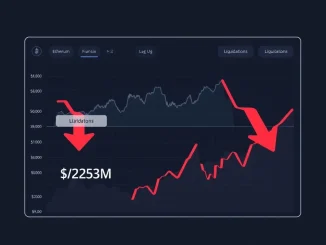
The extreme cold wave that swept across the United States from January 14 to 17 did more than disrupt travel and commerce; it directly attacked the computational heart of the Bitcoin network. According to a detailed report from CryptoQuant, the combined daily Bitcoin production from major publicly traded mining companies in the U.S. fell from a typical range of 70–90 BTC to just 30–40 BTC. This represents a reduction of more than 50% in output from some of the world’s most significant mining entities, including Core Scientific, Marathon Digital Holdings, Riot Platforms, and CleanSpark.
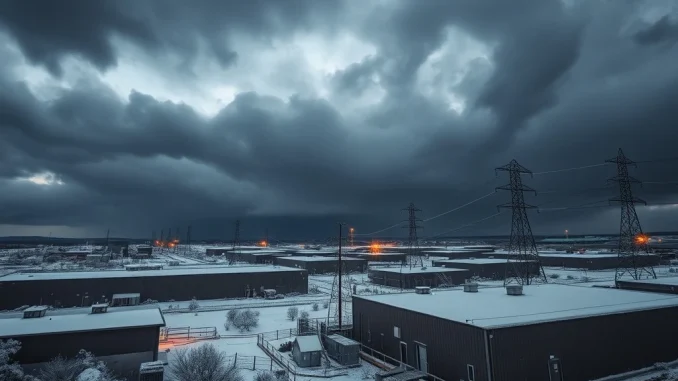
The primary cause was not mechanical failure from the cold, but a coordinated, voluntary shutdown. Mining companies, particularly in Texas—a state that has become a global hub for cryptocurrency mining—entered into pre-arranged agreements with grid operators like ERCOT (Electric Reliability Council of Texas). These programs incentivize large energy consumers to power down during periods of peak demand to prevent blackouts. When temperatures plummeted and heating demand spiked, the call went out, and the miners responded, flipping off thousands of power-hungry application-specific integrated circuit (ASIC) machines almost simultaneously.
Energy Grid Strain and the Miner’s Dilemma
The episode highlights the complex and increasingly symbiotic relationship between cryptocurrency mining and modern energy grids. On one hand, miners provide a flexible, interruptible load that grid operators can call upon for stability, often receiving payments for this service. On the other, it makes the Bitcoin network’s security and transaction processing speed dependent on regional weather and energy policies.
The measures taken during the storm were systematic and revealed a mature industry protocol:
- Voluntary Load Curtailment: Miners proactively reduced their power consumption to alleviate acute stress on overloaded transmission lines and power generation facilities.
- Geographic Coordination: Reductions were targeted in the most affected states, with Texas—home to a massive concentration of hashrate—seeing the most significant drop in activity.
- Partial to Total Suspension: Some mining farms completely powered down their operations, while others ran at a fraction of capacity, often during specific peak demand hours in the early morning and evening.
- Direct Communication with Authorities: Mining operators maintained open lines with energy authorities to anticipate demand surges and schedule their downtime efficiently, minimizing network disruption while maximizing grid relief.
The immediate technical consequence was a slowdown in block production. With fewer machines competing to solve the cryptographic puzzles that secure the network, the average time between new Bitcoin blocks increased temporarily. While the Bitcoin protocol automatically adjusts mining difficulty every 2,016 blocks (approximately two weeks), such acute, short-term drops can lead to delayed transaction confirmations during the event itself.
The Ripple Effect on Global Hashrate and Mining Economics
The impact was not confined to the balance sheets of a few public companies. The global Bitcoin hashrate—the total combined computational power dedicated to the network—experienced a sharp, visible decline. This metric, often viewed as a measure of network security, fell significantly as terahash upon terahash of power went offline in North America.
The economic repercussions were immediate. Data from YCharts indicated that daily mining revenues across the entire network dipped to around $28.3 million on January 14, marking one of the lowest points in the preceding year. For miners operating with thin profit margins, especially those with high energy costs or significant debt loads, such volatility presents an existential threat. Their revenue is a function of both Bitcoin’s price and their share of the hashrate. A forced shutdown means their share drops to zero, while fixed costs often remain.
This event has sparked a serious debate within the industry about geographic risk. The great migration of Bitcoin mining from China in 2021 led to a redistribution to the United States, Kazakhstan, and other nations. The U.S., with its deregulated energy markets in states like Texas, became the new epicenter. However, this concentration creates a new single point of failure: the North American power grid and its susceptibility to extreme weather events, which scientists note are increasing in frequency and intensity due to climate change.
Historical Context and the Resilience Narrative
Bitcoin’s foundational narrative is one of antifragility and resilience. It was designed to withstand the failure of any single node or group of nodes. The January storm tested this principle in a new way. Historically, threats to the network were perceived as regulatory crackdowns (like China’s ban) or technological attacks. A widespread climate event affecting physical energy infrastructure presents a different category of risk.
Previous stress tests have been passed. The network survived the Chinese mining exodus, though the hashrate took months to fully recover and relocate. It operates continuously through geopolitical conflicts and financial crises. However, the winter storm scenario is novel because it triggers a *voluntary*, economically rational withdrawal of hashrate to serve a broader societal need (grid stability). This suggests that Bitcoin’s security model is now intertwined with the priorities and stability of national and regional energy systems.
Some analysts argue this is a sign of maturation—the industry integrating responsibly with critical infrastructure. Others see it as a worrying centralization of influence; a handful of grid operators in key states now possess de facto power to significantly slow the Bitcoin network. The long-term implication could be a gradual re-diversification of mining geography, as companies seek jurisdictions with more robust and weather-resistant energy grids, even if power costs are slightly higher.
Conclusion: A Wake-Up Call for Decentralization
The January winter storm served as a stark, real-world stress test for the Bitcoin mining industry. While the network continued to function and the protocol’s difficulty adjustment will eventually account for the lost hashrate, the event laid bare a significant vulnerability. The concentration of mining power in regions prone to energy grid instability creates a systemic risk. The voluntary production cuts by mining giants were a necessary and responsible action to support public infrastructure, but they also highlighted a dependency that contradicts Bitcoin’s decentralized ethos. Moving forward, the industry’s challenge will be to balance its economic pursuit of cheap, abundant energy with the need for geographic and infrastructural resilience to ensure the Bitcoin network can withstand not just financial shocks, but physical ones as well.
FAQs
Q1: Why did Bitcoin miners shut down during the winter storm?
Miners shut down primarily due to participation in grid relief programs. During extreme cold, demand for heating skyrockets, straining power generation. Mining operations, as large flexible loads, voluntarily power down to prevent blackouts, often receiving financial compensation from grid operators for doing so.
Q2: Did the Bitcoin network stop working during this event?
No, the Bitcoin network did not stop. Transaction processing continued globally, but the rate of new block creation slowed temporarily because a large portion of the total computational power (hashrate) went offline. This led to slightly longer confirmation times for transactions until the hashrate returned.
Q3: Which US state was most affected by the mining shutdowns?
Texas was the most significantly affected state. It has become a global hub for Bitcoin mining due to its deregulated energy market and frequent surplus power. Consequently, it also has the most extensive agreements for miners to curtail operations during grid emergencies.
Q4: What is hashrate and why did it drop?
Hashrate is the total combined computational power used by miners to process transactions and secure the Bitcoin network. It dropped sharply because thousands of mining machines in the central U.S. were powered off to relieve the stressed energy grid, removing their processing power from the global pool.
Q5: Does this make Bitcoin a bad investment?
This event is not inherently an investment commentary. It is an operational disclosure of a real-world risk factor. Investors should be aware that extreme weather can temporarily impact the mining industry’s revenue and the network’s transaction speed, adding a layer of physical-world volatility to the asset’s profile.
Related News
- Exodus Wallet Forges Crucial Partnership with Crypto.com for Enhanced Custody
- Sui Wallet Integrates DeepBook's Revolutionary Point Program for Enhanced User Rewards
- Upbit Unveils Monumental Linea (LINEA) Listing: Boost for South Korean Crypto Market
Related: Cardano Price Prediction 2026-2030: Analyzing Market Shifts After Parsec Analytics Closure
Related: Parabolic SAR Indicator: The Essential Guide to Spotting Trends and Reversals
Related: Bitdeer Stuns Market: Sells All Bitcoin Holdings While Overtaking Marathon as Top Miner