Plume Network’s Crucial Q4 2025 Sets Stage for Ambitious 2026 RWA Expansion
San Francisco, January 15, 2026: Plume Network, a blockchain protocol purpose-built for the compliant tokenization of real-world assets (RWA), has published a comprehensive review of its fourth-quarter 2025 performance alongside a detailed strategic roadmap for the current year. The announcement, made via an official company blog post, highlights a period of significant operational growth and lays out a clear plan to solidify its position within the rapidly maturing RWA sector. The project’s focus remains on navigating complex regulatory landscapes while expanding access to tokenized assets for both institutional and retail participants.
Plume Network’s Q4 2025: A Foundation of Institutional Trust and Global Reach
The final quarter of 2025 proved transformative for Plume Network, marked by several key infrastructural and strategic milestones. Industry analysts view these achievements as critical for any blockchain aiming to handle regulated, high-value real-world assets. Success in this domain requires more than just technological prowess; it demands regulatory foresight, institutional-grade security, and strategic market entry. Plume’s reported accomplishments directly address these core requirements, moving the project from a promising protocol to an established player.
First, the network successfully onboarded its first cohort of institutional partners. While specific names were not disclosed in the public summary, the move signals a crucial vote of confidence from traditional finance entities. Institutional participation is often seen as a key validator for RWA projects, bringing with it rigorous compliance checks, operational scale, and significant capital. This step suggests Plume’s regulatory-first architecture is meeting the stringent demands of professional asset managers and financial institutions.
Second, Plume executed a strategic multi-chain expansion. Initially built on its own dedicated blockchain, the protocol has extended its reach to other major networks. This interoperability reduces friction for users and developers, allowing assets and applications to leverage Plume’s compliance modules across different ecosystems. It is a pragmatic approach that acknowledges the fragmented yet interconnected nature of the current blockchain landscape, prioritizing utility over maximalism.
Strategic Market Entries and Exchange Listings Enhance Liquidity and Access
Beyond technical and partnership growth, Plume Network made decisive moves into high-potential geographic markets. The project formally entered the United Arab Emirates (UAE), a jurisdiction that has actively positioned itself as a global hub for digital asset innovation and regulation. The UAE’s progressive Virtual Asset Regulatory Authority (VARA) framework provides a clear, if demanding, pathway for compliant crypto businesses. Plume’s establishment there indicates a long-term commitment to operating within defined regulatory perimeters, a necessity for handling real estate, equity, or debt instruments.
Perhaps the most publicly visible successes came from the cryptocurrency exchange front. Plume’s native token, PLUME, secured listings on two of the world’s most prominent and selective trading platforms: Upbit in South Korea and Coinbase in the United States. The Upbit listing provides direct access to one of the world’s most active and sophisticated retail crypto markets. The Coinbase listing, following the exchange’s rigorous asset review process, offers unparalleled visibility and credibility in the North American and European markets. Together, these listings dramatically improve PLUME’s liquidity, price discovery, and accessibility to a global investor base.
The Evolving Context of Real-World Asset Tokenization
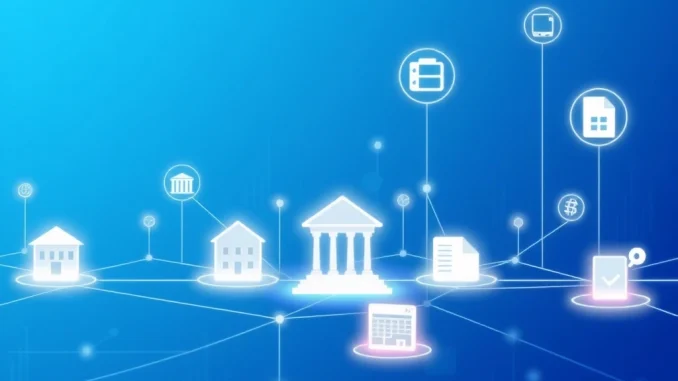
Plume’s progress occurs against a backdrop of accelerating interest in RWA tokenization. The concept involves representing ownership of physical or traditional financial assets—such as real estate, treasury bills, private credit, or commodities—as digital tokens on a blockchain. Proponents argue this process can unlock trillions in dormant capital by enabling fractional ownership, increasing liquidity for traditionally illiquid assets, and streamlining settlement and custody processes.
However, the sector faces significant hurdles. Regulatory clarity remains a patchwork globally, with jurisdictions like the EU, UK, UAE, and Singapore taking leading but differing approaches. Technical challenges around oracle reliability (for off-chain data) and legal enforceability of on-chain ownership persist. Furthermore, achieving scale requires deep integration with legacy financial systems, a slow and complex endeavor. Plume’s reported focus on “regulatory-compliant” infrastructure directly targets these primary friction points.
Plume Network’s 2026 Roadmap: From Infrastructure to Revenue and Scale
Looking forward, Plume Network has outlined a focused set of priorities for 2026, shifting from foundational building to scalable growth and sustainability. The roadmap centers on four interconnected pillars: distribution, compliance, asset diversity, and economic utility.
Expanding Distribution Channels: The project aims to move beyond direct integrations and listings to embed its technology within broader financial and DeFi ecosystems. This could involve partnerships with wealth management platforms, broker-dealers, and decentralized applications (dApps) that seek to offer RWA exposure to their users.
Ensuring Regulatory Compliance: This remains a continuous, non-negotiable priority. Plume will likely invest in legal teams, compliance software, and proactive engagement with regulators in its operational markets. The goal is not just to react to regulation but to design systems that can adapt to new rules across multiple jurisdictions.
Adding New Assets and Protocols: The utility and appeal of the Plume blockchain hinge on the diversity and quality of assets tokenized on it. The roadmap suggests a pipeline of new asset classes, which could include green bonds, intellectual property, fine art, or supply chain finance instruments. Adding new protocols refers to expanding the suite of smart contract tools available to developers building on Plume, such as for automated compliance checks or specialized trading.
Enhancing Token Utility to Generate Fee Revenue: This is a critical evolution for the project’s long-term viability. The PLUME token must transition beyond a speculative asset to having core utility within the network’s economy. Plans may include using PLUME for paying transaction/gas fees, staking for network security or governance rights, or as a required bond for asset issuers. The explicit goal of “generating fee revenue” indicates a move towards a sustainable business model where network activity directly funds ongoing development and operations.
The Competitive Landscape and the Quest to Become the Largest RWA Blockchain
Plume’s stated ambition to become “the world’s largest RWA blockchain” sets it against considerable competition. Other layer-1 and layer-2 blockchains like Ethereum, Polygon, and Avalanche host significant RWA projects from players like Centrifuge, Maple Finance, and Ondo Finance. Traditional financial institutions and fintech companies are also developing their own tokenization platforms. Plume’s differentiating strategy appears to be a holistic, vertically integrated approach—providing not just a blockchain but a full stack of compliant issuance, trading, and settlement tools specifically tailored for RWAs.
Success will depend on execution speed, the ability to attract high-quality asset issuers, and maintaining a technological edge in compliance automation. The company’s acknowledgment that it “will adapt to the rapidly evolving market and regulatory environment” is a tacit admission of the fluid and unpredictable nature of this emerging industry.
Conclusion
Plume Network’s report on its Q4 2025 achievements and 2026 roadmap presents a case study of a blockchain project maturing in step with its sector. By prioritizing institutional onboarding, strategic global expansion, and major exchange listings, the network has built substantial credibility. Its forward-looking plan correctly identifies distribution, relentless compliance, asset diversity, and sustainable tokenomics as the next frontiers. The real-world asset tokenization space promises to reshape finance, but its path is fraught with regulatory and technical complexity. Plume Network’s recent progress and stated ambitions position it as a serious contender aiming to provide the compliant infrastructure upon which this future may be built. The coming year will test its ability to execute on this ambitious 2026 roadmap and convert strategic positioning into tangible, scaled adoption.
FAQs
Q1: What is Plume Network’s primary function?
Plume Network is a specialized blockchain protocol designed specifically for the compliant tokenization, trading, and management of real-world assets (RWAs) like real estate, commodities, and financial instruments.
Q2: What were Plume Network’s key achievements in Q4 2025?
Major achievements included onboarding institutional partners, expanding to other blockchains for interoperability, entering the UAE market, and securing listings for its PLUME token on the Upbit (South Korea) and Coinbase exchanges.
Q3: What does Plume Network plan to focus on in 2026?
Its 2026 roadmap prioritizes expanding distribution channels, ensuring ongoing regulatory compliance, adding new tokenized asset classes and developer protocols, and enhancing the utility of the PLUME token to begin generating sustainable fee revenue.
Q4: Why are exchange listings like Coinbase and Upbit important for Plume?
These listings provide greater liquidity, price discovery, and legitimacy. They make the PLUME token accessible to millions of retail and institutional investors, which is crucial for funding network growth and attracting ecosystem participants.
Q5: What are the main challenges facing the RWA tokenization sector that Plume must navigate?
The sector faces significant hurdles including fragmented and evolving global regulations, technical challenges in bridging off-chain assets to the blockchain, competition from other protocols, and the need to integrate with traditional financial systems.
Related News
- Duckchain Unveils Electrifying Crypto Bash at KBW 2025
- Crypto Theft Exposes Critical Flaws in U.S. Government's $40 Million Digital Asset Custody
- WARNING: Senior Crypto Losses Hit $2.84 Billion in 2023, FBI Report Reveals
Related: Solana Whale Awakens: 50,000 SOL Shift from Exchanges to Staking Signals Major Confidence
Related: OpenClaw Discord Crypto Ban: The Shocking Policy That Silenced Bitcoin Talk
Related: Essential Analysis: 4 Cryptocurrencies Showing Strong Growth Signals for 2026