Global, March 2025: The intersection of digital privacy and economic value represents one of the most significant technological frontiers of this decade. The ZKP Project, a new ecosystem currently in its development and early funding phase, aims to address this convergence directly. Its foundational technology, Zero Knowledge Proofs (ZKPs), allows one party to prove to another that a statement is true without revealing any information beyond the validity of the statement itself. This technical capability, moving from academic theory to practical application, forms the core of a broader discussion about data sovereignty and value creation in the digital age.
The ZKP Project and the Evolution of Privacy Technology
Zero Knowledge Proofs are not a new concept in computer science. Researchers Shafi Goldwasser, Silvio Micali, and Charles Rackoff first formalized the theory in the 1980s. For decades, ZKPs remained largely theoretical, a fascinating cryptographic puzzle with limited real-world application due to computational intensity. The breakthrough arrived with the development of more efficient proving systems, such as zk-SNARKs (Zero-Knowledge Succinct Non-Interactive Argument of Knowledge) and zk-STARKs. These advancements drastically reduced the time and resources needed to generate and verify proofs, making the technology viable for blockchain networks and other distributed systems.
The ZKP Project enters this landscape by building an ecosystem designed to operationalize these proofs. The project’s stated goal is to create a suite of tools and protocols that enable developers and organizations to integrate privacy-preserving verification into their applications easily. This approach contrasts with earlier privacy-focused cryptocurrencies that often implemented ZKPs at the base layer for transaction obfuscation. Instead, the ZKP Project appears to position itself as an infrastructure layer, providing the plumbing for privacy across various use cases, from decentralized finance (DeFi) to secure identity verification and confidential business logic.
Technical Mechanics of Zero Knowledge Proofs
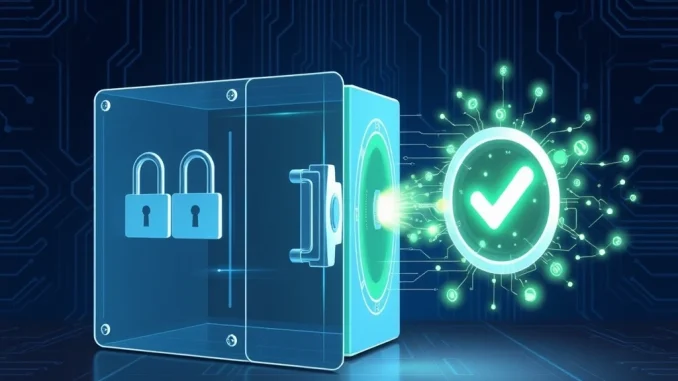
Understanding the ZKP Project requires a basic grasp of how Zero Knowledge Proofs function. Imagine you want to prove you are over 21 years old without revealing your exact birth date or any other personal information. A ZKP protocol allows you to do just that. The system involves two parties: a prover and a verifier. The prover generates a proof based on secret information (the private data). The verifier can then check this proof against a public statement (“this person is over 21”) and confirm its truth without learning the secret itself.
The process relies on complex mathematics, often involving elliptic curve cryptography and polynomial commitments. The key innovation of modern ZKPs is their efficiency. Earlier versions required multiple rounds of communication between prover and verifier. Modern non-interactive proofs, like zk-SNARKs, require only a single message from the prover, which anyone can verify using a common reference string established during a trusted setup. The ZKP Project likely utilizes or builds upon these efficient proving systems to ensure its network remains scalable and usable for high-frequency applications.
- Completeness: If the statement is true, an honest prover can convince an honest verifier.
- Soundness: If the statement is false, no dishonest prover can convince an honest verifier of its truth (except with negligible probability).
- Zero-Knowledge: The verifier learns nothing beyond the fact that the statement is true.
The Market Context and Presale Dynamics
The emergence of projects like the ZKP Project occurs within a specific market context. Regulatory scrutiny around data privacy, exemplified by laws like the GDPR in Europe and various state-level laws in the U.S., has increased the cost and complexity of handling personal data. Simultaneously, high-profile data breaches have eroded public trust in centralized data custodians. This environment creates demand for technological solutions that can demonstrate compliance or enable new services without aggregating sensitive data.
A project presale, or early funding round, is a common mechanism in the cryptocurrency and Web3 space for raising capital to fund development before a public token launch. It allows early supporters to acquire project tokens at a potentially lower price, assuming development milestones are met and the ecosystem gains adoption. For technical projects, these funds are typically allocated to core protocol development, security audits, developer grants, and ecosystem growth initiatives. Potential participants in such phases generally conduct due diligence on the technical whitepaper, the experience of the development team, the clarity of the roadmap, and the legal structure of the offering.
Potential Applications and Industry Implications
The theoretical applications for a robust ZKP ecosystem are vast and extend far beyond cryptocurrency transactions. In decentralized finance, ZKPs can enable private trading and lending where users can prove their creditworthiness or sufficient collateral without exposing their entire financial portfolio. For digital identity, users could prove citizenship, professional accreditation, or membership status without handing over easily copied documents. In supply chain management, a company could prove the ethical sourcing of materials or adherence to safety standards to regulators or partners without disclosing confidential supplier relationships or internal processes.
The healthcare industry presents a compelling use case. Medical research often requires large datasets, but patient privacy laws strictly govern data sharing. A ZKP-based system could allow hospitals to contribute to a study by proving that their patient data meets certain criteria (e.g., “patients over 50 with condition X”) without ever transmitting the raw, identifiable patient records. This preserves privacy while enabling valuable aggregate analysis. The success of the ZKP Project would depend on its ability to make these complex cryptographic tools accessible to developers in these diverse industries, who may not be cryptography experts.
Challenges and Considerations for 2026
As the technology aims for broader adoption by 2026, several significant challenges remain. The first is computational overhead. While vastly improved, generating ZKPs still requires more computation than a simple, non-private verification. Projects must optimize this to prevent high costs and slow performance, especially for real-time applications. Second is the issue of trusted setup for some proving systems. Some ZKP constructions require a one-time ceremony to generate public parameters; if this ceremony is compromised, the privacy guarantees of the entire system can fail. Newer systems like zk-STARKs avoid this, but with other trade-offs like larger proof sizes.
Finally, there is the regulatory and adoption hurdle. Privacy-enhancing technologies can sometimes face scrutiny from financial regulators concerned about their potential use for illicit activities. Projects must navigate this landscape carefully, often by designing for compliance—enabling selective disclosure or auditability under specific legal authority—without breaking the core privacy model. Furthermore, convincing established enterprises to migrate from familiar, albeit flawed, data-handling practices to novel cryptographic protocols requires demonstrating clear, tangible business value and a smooth integration path.
Conclusion
The ZKP Project represents a tangible step in the long-term trend of encoding digital rights into technology. By focusing on Zero Knowledge Proof technology as a foundational service, it attempts to shift the paradigm from data as an asset to be collected to data as a right to be protected, while still enabling verification and trust. Its potential success by 2026 will not be measured solely by token price, but by the breadth and depth of applications built upon its protocols that solve real-world problems in finance, identity, and data sharing. The journey from cryptographic theory to a functional privacy economy is complex, fraught with technical and market challenges, but it underscores a growing consensus: in an increasingly datafied world, the ability to prove without revealing may become one of the most valuable capabilities of the digital age.
FAQs
Q1: What is a Zero Knowledge Proof (ZKP)?
A Zero Knowledge Proof is a cryptographic method that allows one party (the prover) to prove to another party (the verifier) that a given statement is true, without conveying any additional information apart from the fact that the statement is indeed true.
Q2: How is the ZKP Project different from a privacy coin like Zcash?
While both use ZKP technology, privacy coins like Zcash typically implement it at the base protocol layer specifically for shielding transaction details. The ZKP Project appears to be building a more generalized ecosystem or infrastructure layer, offering tools for developers to integrate ZKPs into various applications beyond just payments, such as identity, DeFi, and enterprise logic.
Q3: What does a “presale” mean for a technology project?
In this context, a presale is an early funding round where the project offers its native tokens to selected investors or community members before a public launch. The capital raised is intended to fund further development, audits, and ecosystem growth. Participation typically involves understanding the project’s technical roadmap and associated risks.
Q4: What are the main technical challenges facing ZKP adoption?
Key challenges include computational efficiency (proof generation speed and cost), the potential need for and security of trusted setup ceremonies, achieving scalability for high-throughput networks, and creating developer-friendly tools that abstract away the underlying cryptographic complexity.
Q5: Could ZKP technology help with data privacy regulations like GDPR?
Yes, conceptually. ZKPs can enable “data minimization” by design—allowing services to verify necessary facts (e.g., user is of legal age) without collecting or storing the underlying personal data (the user’s birth date). This can reduce compliance overhead and breach risk. However, practical, standardized implementations for regulatory compliance are still in development.
Updated insights and analysis added for better clarity.
This article was produced with AI assistance and reviewed by our editorial team for accuracy and quality.