Global, March 2025: In an era where data breaches make weekly headlines and privacy concerns dominate technological discourse, a cryptographic concept from the 1980s has emerged as a potential solution to some of our most pressing digital security challenges. Zero Knowledge Proof technology represents a fundamental shift in how we approach verification, authentication, and privacy in digital systems. This mathematical innovation enables one party to prove to another that a statement is true without revealing any information beyond the validity of the statement itself.
Understanding Zero Knowledge Proof Technology
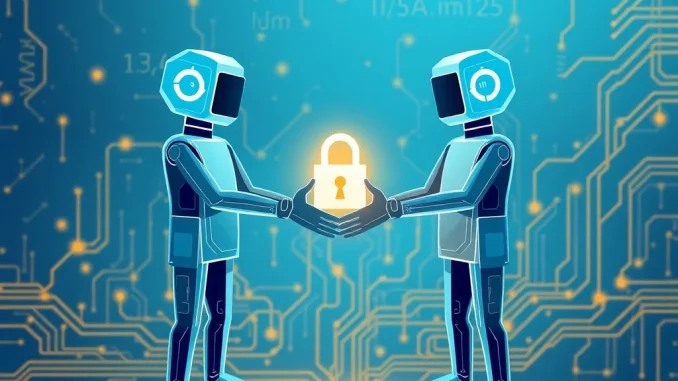
Zero Knowledge Proofs represent a class of cryptographic protocols that enable verification without disclosure. The concept originated in a 1985 paper by researchers Shafi Goldwasser, Silvio Micali, and Charles Rackoff, who formalized the mathematical foundations of proving knowledge without revealing that knowledge. These protocols operate on a simple yet powerful principle: you can prove you know something without revealing what you know.
The classic analogy involves a color-blind person and two differently colored balls. If someone claims the balls are different colors, how can the color-blind person verify this claim without knowing the actual colors? Through a series of interactions where the balls are hidden, shuffled, and revealed, the color-blind person can statistically verify the claim without learning the specific colors. This interactive proof system forms the basis of Zero Knowledge Proofs.
Modern implementations have evolved significantly from these theoretical foundations. Today’s ZKPs typically fall into two main categories: interactive proofs, which require back-and-forth communication between prover and verifier, and non-interactive proofs, which can be verified without ongoing communication. The development of succinct non-interactive arguments of knowledge has been particularly transformative, enabling practical applications across various industries.
The Mathematical Foundations of Secure Verification
Zero Knowledge Proofs rely on sophisticated mathematical constructs that ensure both security and efficiency. The technology operates on three fundamental properties that define its capabilities and limitations. First, completeness guarantees that if a statement is true, an honest prover can convince an honest verifier. Second, soundness ensures that if a statement is false, no dishonest prover can convince an honest verifier. Third, the zero-knowledge property maintains that the verifier learns nothing beyond the statement’s truth.
Several mathematical approaches enable these properties:
- ZK-SNARKs: Zero-Knowledge Succinct Non-Interactive Arguments of Knowledge use elliptic curve cryptography and pairing-based cryptography to create efficient proofs
- ZK-STARKs: Zero-Knowledge Scalable Transparent Arguments of Knowledge rely on hash functions and offer quantum resistance
- Bulletproofs: These short non-interactive proofs work without trusted setup and are particularly efficient for range proofs
The computational complexity of these systems varies significantly, with different approaches offering trade-offs between proof size, verification speed, and setup requirements. Recent advancements have focused on reducing proof generation times and minimizing the computational overhead for practical deployment.
Historical Development and Modern Evolution
The journey from theoretical concept to practical technology spans four decades of cryptographic research. Following the initial 1985 paper, researchers developed increasingly sophisticated implementations throughout the 1990s and early 2000s. The breakthrough came with the development of practical non-interactive proofs in the 2010s, coinciding with the rise of blockchain technology that provided both a use case and development platform.
Major milestones in ZKP development include:
| Year | Development | Significance |
|---|---|---|
| 1985 | Original ZKP concept published | Theoretical foundation established |
| 1991 | First efficient implementations | Practical feasibility demonstrated |
| 2012 | ZK-SNARKs introduced | Non-interactive proofs became practical |
| 2016 | Zcash implementation | First major cryptocurrency application |
| 2018 | ZK-STARKs developed | Transparent, quantum-resistant alternative |
| 2022 | Ethereum rollup integration | Scalability solutions for blockchain |
This evolutionary path demonstrates how theoretical mathematics gradually transformed into practical technology with real-world applications across multiple sectors.
Real-World Applications in Private Artificial Intelligence
The integration of Zero Knowledge Proofs with artificial intelligence systems addresses fundamental privacy concerns in machine learning deployment. As AI systems increasingly process sensitive personal data for healthcare diagnostics, financial analysis, and personalized services, ZKPs offer a mechanism to verify AI outputs without exposing the underlying data or models.
In healthcare applications, researchers have developed systems where medical AI can prove it has correctly analyzed patient data according to established protocols without revealing the patient’s identity or specific medical information. This enables collaborative research and diagnostic assistance while maintaining strict privacy controls required by regulations like HIPAA and GDPR.
Financial institutions employ ZKPs to verify the validity of AI-driven credit scoring models without disclosing proprietary algorithms or sensitive customer data. This allows regulators to audit AI fairness and compliance while protecting trade secrets and individual privacy. The technology also enables secure federated learning, where multiple organizations can collaboratively train AI models on their combined data without actually sharing that data.
Several specific implementations demonstrate the practical value of this integration:
- Privacy-preserving medical diagnostics: Hospitals can verify AI-assisted diagnoses without patient data leaving their secure systems
- Secure financial modeling: Banks can prove compliance with lending regulations without revealing customer information
- Confidential research collaboration: Academic institutions can jointly develop AI models while protecting sensitive research data
- Transparent autonomous systems: Self-driving car algorithms can prove decision-making rationale without exposing proprietary code
Technical Implementation Challenges and Solutions
Implementing Zero Knowledge Proofs in AI systems presents several technical challenges that researchers continue to address. The computational overhead of generating proofs for complex neural networks requires specialized optimization techniques. Recent approaches include using specialized hardware accelerators, developing more efficient proof systems specifically for machine learning operations, and creating hybrid systems that balance proof complexity with verification requirements.
Standardization efforts have emerged to create frameworks for ZKP integration in AI systems. Organizations like the IEEE and various industry consortia are developing protocols for interoperable privacy-preserving AI verification. These standards aim to ensure that different ZKP implementations can work together seamlessly while maintaining security guarantees.
Secure Data Systems and Privacy Preservation
Beyond artificial intelligence, Zero Knowledge Proofs enable fundamentally new approaches to data security and privacy across multiple domains. The technology’s ability to verify claims without revealing underlying information transforms how organizations handle sensitive data in compliance with increasingly strict privacy regulations.
In identity management systems, ZKPs allow users to prove they meet certain criteria without revealing unnecessary personal information. For example, a person can prove they are over 21 without revealing their exact birth date, or prove they are a citizen without disclosing their passport number. This selective disclosure capability represents a significant advancement over traditional identity verification methods.
Supply chain applications utilize ZKPs to verify product authenticity and compliance without revealing proprietary manufacturing processes or supplier relationships. Companies can prove their products meet environmental standards or ethical sourcing requirements while protecting competitive information. This transparency without disclosure helps build consumer trust while maintaining business confidentiality.
The financial sector has been particularly active in adopting ZKP technology for various applications:
- Private transactions: Cryptocurrencies like Zcash use ZKPs to enable confidential transactions
- Regulatory compliance: Financial institutions can prove anti-money laundering compliance without revealing customer transaction details
- Credit verification: Lenders can verify borrower qualifications without accessing complete financial histories
- Audit transparency: Companies can prove financial statement accuracy without exposing all underlying records
Industry Adoption and Implementation Patterns
Different industries have adopted Zero Knowledge Proof technology according to their specific needs and regulatory environments. The technology sector has led implementation efforts, particularly in blockchain and cryptocurrency applications. Financial services followed closely, driven by both privacy requirements and regulatory pressures. Healthcare adoption has been more measured, balancing innovation potential with strict compliance requirements.
Government applications have emerged in digital identity systems and secure voting mechanisms. Several countries are exploring ZKP-based national identity systems that would allow citizens to prove eligibility for services without revealing unnecessary personal information. Research institutions use the technology for secure data sharing in collaborative projects while protecting sensitive research data.
Future Developments and Research Directions
The field of Zero Knowledge Proof technology continues to evolve rapidly, with researchers addressing both theoretical limitations and practical implementation challenges. Current research focuses on several key areas that will shape the technology’s future development and application.
Quantum resistance represents a major research direction, as some current ZKP implementations rely on cryptographic assumptions that quantum computers could potentially break. Researchers are developing post-quantum ZKP systems that maintain security even against quantum attacks. These systems typically use different mathematical foundations that don’t rely on factoring or discrete logarithm problems.
Performance optimization remains crucial for broader adoption. While ZKP technology has improved dramatically in recent years, proof generation times and computational requirements still limit some applications. Researchers are developing more efficient algorithms, specialized hardware accelerators, and hybrid approaches that balance security with performance.
Standardization efforts are gaining momentum as the technology matures. Industry consortia, standards organizations, and open-source communities are working to establish common protocols, interfaces, and security guarantees. These standards will facilitate interoperability between different ZKP implementations and increase confidence in the technology’s security.
Several emerging trends suggest future development directions:
- Cross-chain interoperability: Using ZKPs to verify transactions and state across different blockchain networks
- Decentralized identity systems: Self-sovereign identity platforms built on ZKP foundations
- Privacy-preserving analytics: Secure data analysis across multiple organizations without data sharing
- Regulatory technology: Automated compliance verification for complex regulatory requirements
Conclusion
Zero Knowledge Proof technology represents a fundamental advancement in how we approach privacy, security, and verification in digital systems. From its theoretical origins in the 1980s to its current practical applications in private AI and secure data systems, ZKPs have evolved into a crucial tool for addressing modern privacy challenges. The technology’s ability to enable verification without disclosure creates new possibilities for collaboration, compliance, and innovation across multiple sectors.
As research continues and implementations mature, Zero Knowledge Proofs will likely play an increasingly important role in our digital infrastructure. The ongoing development of more efficient algorithms, standardized protocols, and practical applications suggests that this cryptographic innovation will continue to transform how we manage privacy and security in an increasingly interconnected world. The fundamental promise of proving what needs to be proven while protecting what needs to be protected addresses core challenges in our digital age.
FAQs
Q1: What exactly is a Zero Knowledge Proof?
A Zero Knowledge Proof is a cryptographic method that allows one party to prove to another that a statement is true without revealing any information beyond the validity of the statement itself. It enables verification without disclosure.
Q2: How do Zero Knowledge Proofs work in simple terms?
Imagine you want to prove you know a secret password without revealing the password itself. Through a series of mathematical interactions, you can demonstrate you know the password without ever saying what it is. The verifier becomes convinced of your knowledge without learning the secret.
Q3: What are the main types of Zero Knowledge Proofs?
The two primary categories are interactive proofs, which require back-and-forth communication, and non-interactive proofs, which can be verified without ongoing interaction. Common implementations include ZK-SNARKs, ZK-STARKs, and Bulletproofs, each with different characteristics and use cases.
Q4: Are Zero Knowledge Proofs secure against quantum computers?
Some implementations are vulnerable to quantum attacks, while others are designed to be quantum-resistant. ZK-STARKs, for example, use hash-based cryptography that’s considered quantum-resistant, while some ZK-SNARK implementations rely on cryptographic assumptions that quantum computers could potentially break.
Q5: What are the practical limitations of Zero Knowledge Proof technology?
Current limitations include computational overhead for proof generation, implementation complexity, and sometimes large proof sizes. Performance varies significantly between different approaches and applications, with ongoing research focused on improving efficiency and reducing these limitations.