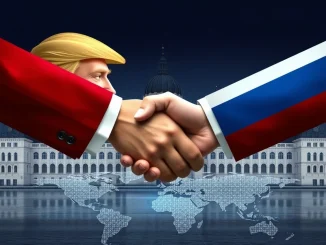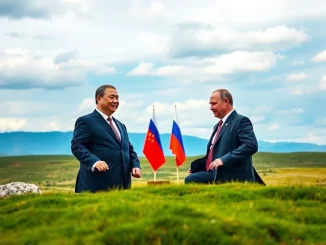
In a development signaling a potential historic pivot, Ukrainian President Volodymyr Zelenskyy stated on Tuesday that a foundational document aimed at ending the protracted Russia-Ukraine war is nearly complete, according to a report by Walter Bloomberg. This announcement, made from Kyiv, Ukraine, injects a note of cautious optimism into a conflict that has reshaped global geopolitics since Russia’s full-scale invasion began in February 2022. The revelation suggests behind-the-scenes diplomatic efforts may be reaching a critical juncture, though significant hurdles undoubtedly remain before any formal cessation of hostilities.
Zelenskyy’s Announcement on the Russia-Ukraine War Document
President Zelenskyy’s statement, relayed by the financial news service Walter Bloomberg, represents one of the most direct acknowledgments from Kyiv regarding concrete progress toward a written framework for peace. Crucially, the Ukrainian leader did not specify the document’s contents, the parties involved in its drafting, or a definitive timeline for its finalization. However, the mere existence of a nearly-ready text indicates sustained negotiation tracks, potentially involving intermediary nations or international bodies. Analysts immediately scrutinized the language, noting that “nearly ready” differs substantially from “signed” or “agreed upon,” highlighting the delicate phase between drafting and implementation.
Furthermore, this development follows a complex backdrop of military stalemates and shifting frontlines. The announcement may serve multiple strategic purposes: reassuring domestic and international allies of Ukraine’s commitment to a diplomatic track, testing Russian responsiveness, or solidifying terms before potential political shifts in partner nations. The international community, particularly European and U.S. leaders, has long advocated for a peace grounded in Ukraine’s sovereignty and territorial integrity, principles that will form the bedrock of any enduring agreement.
Context and Background of the Conflict
To understand the gravity of this announcement, one must consider the conflict’s devastating scale. The war has resulted in profound human suffering and regional instability. Key contextual elements include:
- Origins and Escalation: The conflict’s roots extend to Russia’s 2014 annexation of Crimea and support for separatists in Donbas. However, the February 2022 full-scale invasion marked a severe escalation, triggering widespread international condemnation and sanctions.
- Humanitarian and Territorial Impact: Millions of Ukrainians have been displaced, and cities like Mariupol and Bakhmut have witnessed destruction. Control of territories, including Crimea and the Donbas region, remains the central, unresolved issue.
- Global Repercussions: The war has disrupted global energy and food supplies, intensified inflation, and prompted a historic reassessment of European security architecture and defense spending.
Previous negotiation attempts, such as the early talks in Belarus and Turkey, ultimately faltered. Consequently, the reported progress on a new document suggests potentially different parameters or parties involved, possibly building upon earlier discarded frameworks or introducing novel security guarantees.
Expert Analysis on Diplomatic Feasibility
Regional security experts urge tempered expectations while acknowledging the significance of Zelenskyy’s statement. Dr. Anya Petrova, a senior fellow at the Center for European Policy Analysis, notes, “The drafting of a document is a necessary but insufficient step. The core challenges—territorial concessions, security guarantees, reparations, and justice for war crimes—remain monumental. The key will be the enforcement mechanisms and the political will in Moscow to adhere to terms.” Historical precedents, such as the Minsk agreements, demonstrate how fragile paper agreements can be without robust, verifiable implementation and mutual trust, which is currently in short supply.
Moreover, the military situation on the ground will heavily influence the negotiation dynamics. A stable or shifting frontline can alter perceived leverage. The document’s completion likely depends on aligning Ukraine’s fundamental requirements—often summarized as sovereignty, security, and reconstruction—with realities on the battlefield and the geopolitical interests of its international partners who provide crucial military and economic support.
Potential Impacts and Next Steps
Should this document transition from a draft to a signed agreement, the impacts would be immediate and far-reaching. First, a ceasefire would presumably take effect, halting active combat and allowing urgent humanitarian access. Subsequently, a long-term process would begin, involving:
- Demilitarized Zones & Peacekeeping: Establishing buffer areas and deploying international monitors to oversee compliance.
- Security Guarantees: Crafting binding assurances for Ukraine, potentially akin to NATO’s Article 5, to deter future aggression.
- Reconstruction & Justice: Launching a multi-trillion-dollar rebuilding effort and creating pathways for accountability, possibly through a special tribunal.
The global economic implications would also be significant. Markets would likely react to reduced geopolitical risk, potentially stabilizing energy prices. However, the structure of sanctions on Russia would become a major point of negotiation, linking economic pressure directly to compliance with the peace terms. The path forward involves not just signing a document but building a durable peace architecture, a task that may prove more challenging than ending the active fighting.
Conclusion
President Volodymyr Zelenskyy’s announcement that a document to end the Russia-Ukraine war is nearly ready marks a pivotal moment in a conflict that has endured for years. While the statement offers a glimmer of hope, it opens a new and complex phase of diplomacy where every clause will be contested. The journey from a nearly-complete text to a lasting peace will demand extraordinary political courage, verifiable compromises, and sustained international engagement. The world now watches closely to see if this document can become the foundation for ending Europe’s largest armed conflict in decades, or if it will join the history of failed diplomatic endeavors. The focus now shifts to the contents of the document and the political will required to transform its words into a stable reality.
FAQs
Q1: What exactly did President Zelenskyy announce?
President Zelenskyy announced, via a report from Walter Bloomberg, that a document aimed at ending the war with Russia is nearly complete. He did not disclose specific details about its contents or the signing parties.
Q2: Does this mean the war is about to end?
Not immediately. A “nearly ready” document is a step in diplomacy, but it must be agreed upon, signed, and implemented. The hardest parts—negotiating final terms and ensuring compliance—likely still lie ahead.
Q3: Who is Walter Bloomberg?
Walter Bloomberg is a financial news service known for real-time market and geopolitical news reporting. It is often cited by traders and analysts for timely updates.
Q4: What are the biggest obstacles to a final peace agreement?
The primary obstacles include the status of Russian-occupied territories (like Crimea and Donbas), security guarantees for Ukraine, reparations for damages, and mechanisms for ensuring accountability for war crimes.
Q5: How have other countries reacted to this news?
As this is a recent development, formal reactions from world capitals are still emerging. Typically, allied nations would express cautious support for any genuine diplomatic progress that upholds Ukraine’s sovereignty and territorial integrity within its internationally recognized borders.
Updated insights and analysis added for better clarity.
This article was produced with AI assistance and reviewed by our editorial team for accuracy and quality.